Since the establishment of the Museion in Alexandria in the 3rd century BCE, a renowned center for scholarship and the arts often considered a historical precursor to modern institutions, art has held a significant place in Western cultural discourse. In the 20th century, artists and cultural theorists increasingly explored the complex functions of museums, challenging their traditional role as passive repositories of objects and transforming them into dynamic social arenas and sites of critical inquiry.
Historically, the founders and administrators of museums clearly articulated their motivations for collecting, preserving, and researching objects. Despite evolving missions and diverse contexts, museums have consistently served as vital barometers of cultural, social, and political shifts. The 17th-century spirit of scientific reform, exemplified by the Ashmolean Museum at Oxford (founded in 1683), championed "natural knowledge" as essential for human progress and understanding. The Parisian Louvre, famously transformed from a royal palace into a public museum under Napoleon I, significantly democratized access to art. By the 19th century, American museums rapidly developed, often establishing themselves as key "cultural enterprises" deeply integrated into their respective economies. These institutional transformations not only reflected but also actively shaped the historical and societal changes of their eras.
For much of the early to mid-20th century, modern art often occupied a limited role in traditional museums, frequently overshadowed by historical masterworks or deemed controversial. This dynamic gradually shifted as a growing public awareness of the rapid changes in the contemporary era fostered a re-evaluation of artistic relevance. While some theoretical frameworks sought to connect these artistic shifts with broader socio-economic transformations, modern art concurrently emerged as a powerful tool for individual self-expression and societal critique. The Museum of Modern Art (MoMA) in New York, founded in 1929, embodied this progressive spirit, aiming to be a driving force for artists' creativity rather than merely a storage facility. The latter half of the 20th century saw a proliferation of public museums dedicated to modern art globally—from the Centre Pompidou in Paris (opened 1977) to the Guggenheim Bilbao (1997) and Tate Modern in London (2000)—significantly increasing the dissemination of artistic information and making contemporary art more accessible to broader audiences.
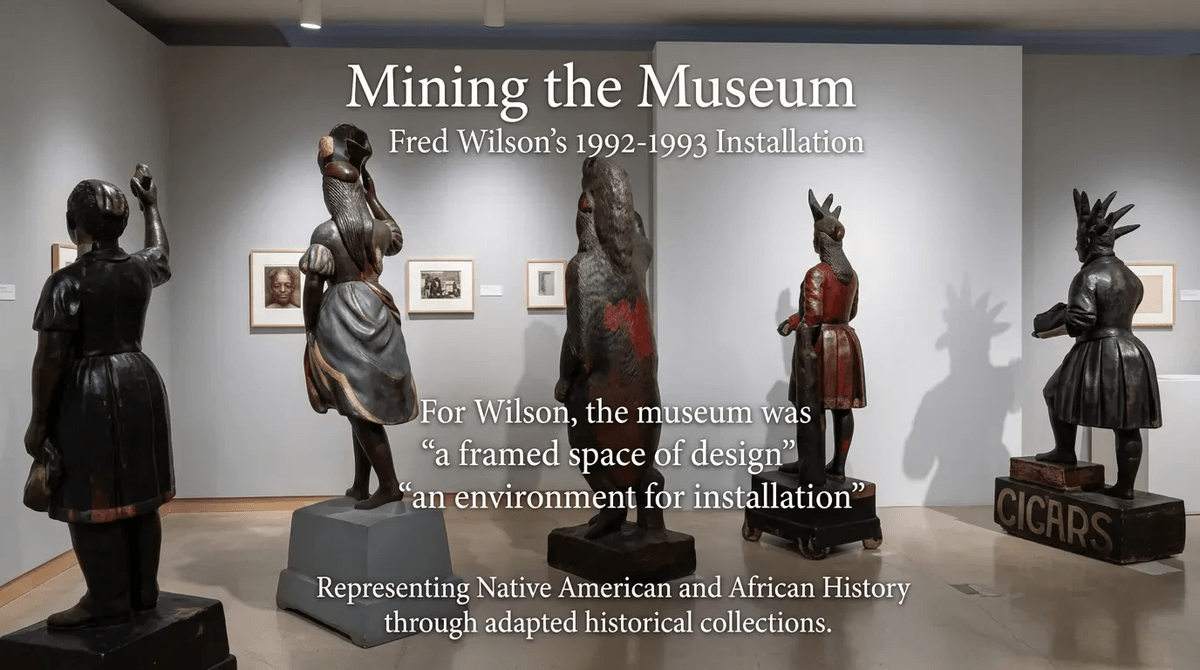
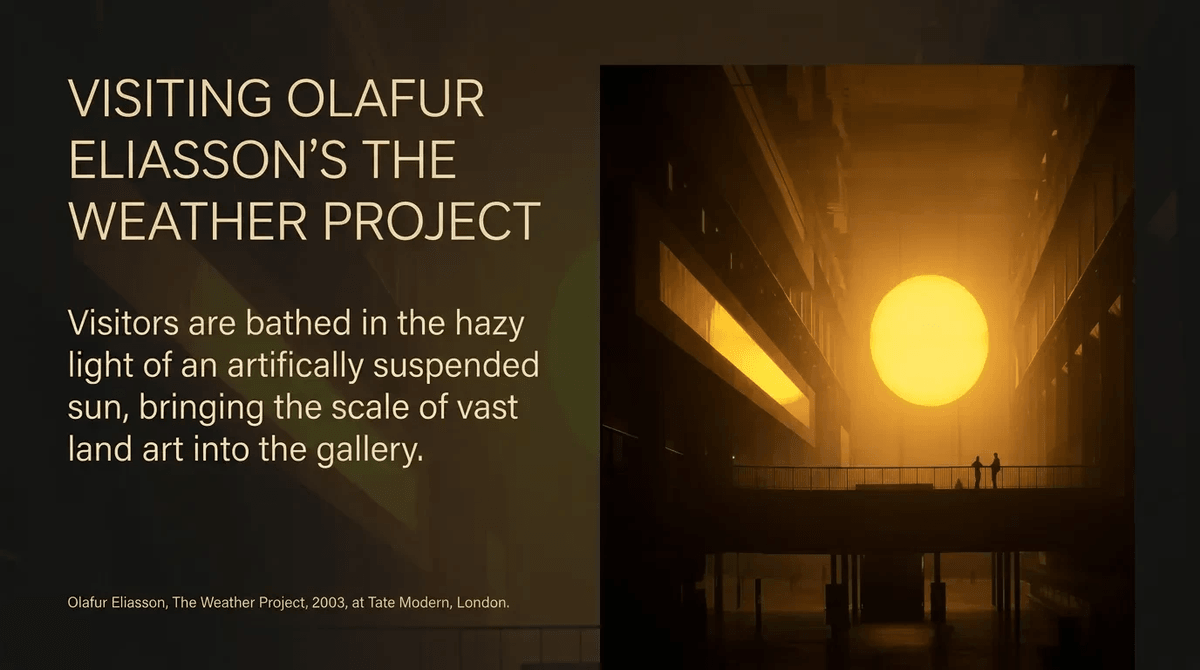
Museum directors and curators have increasingly adopted innovative strategies to attract new audiences and reconceptualize collections, an approach that gained significant traction in the 1980s. This involved allowing artists to actively engage with and disrupt traditional museum classifications by re-organizing or re-contextualizing objects. Installation artist Fred Wilson, for example, pioneered this approach with works like Mining the Museum (1992-1993), where he re-categorized historical artifacts to reveal hidden narratives and biases within institutional displays. Presently, art continues to engage viewers in spectacular and immersive ways, as exemplified by Olafur Eliasson’s The Weather Project (2003), where the museum space itself becomes an integral and transformative part of the artistic experience.