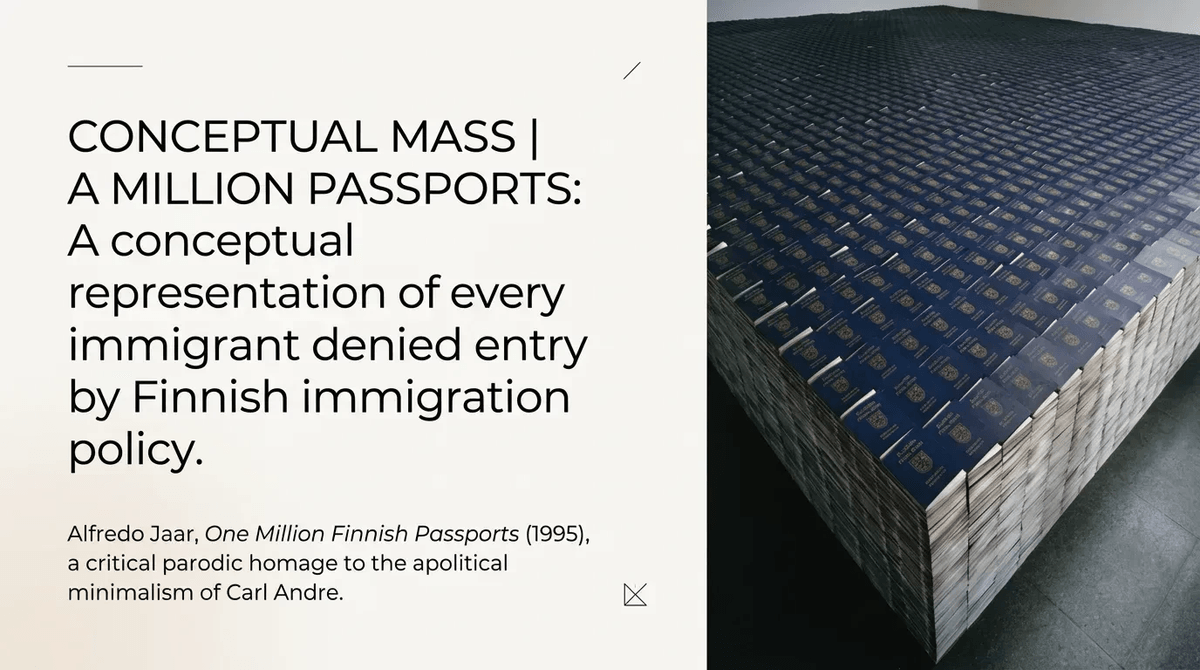
The term "globalization," widely prevalent since the 1990s, describes the increasing interconnectedness between nations, leading to a blurring of cultural, economic, and other boundaries. Whether understood in cultural or economic terms, the concept of globalization has become deeply embedded in the practices of biennials, international curators, and various contemporary artists, profoundly shaping artistic discourse and production.
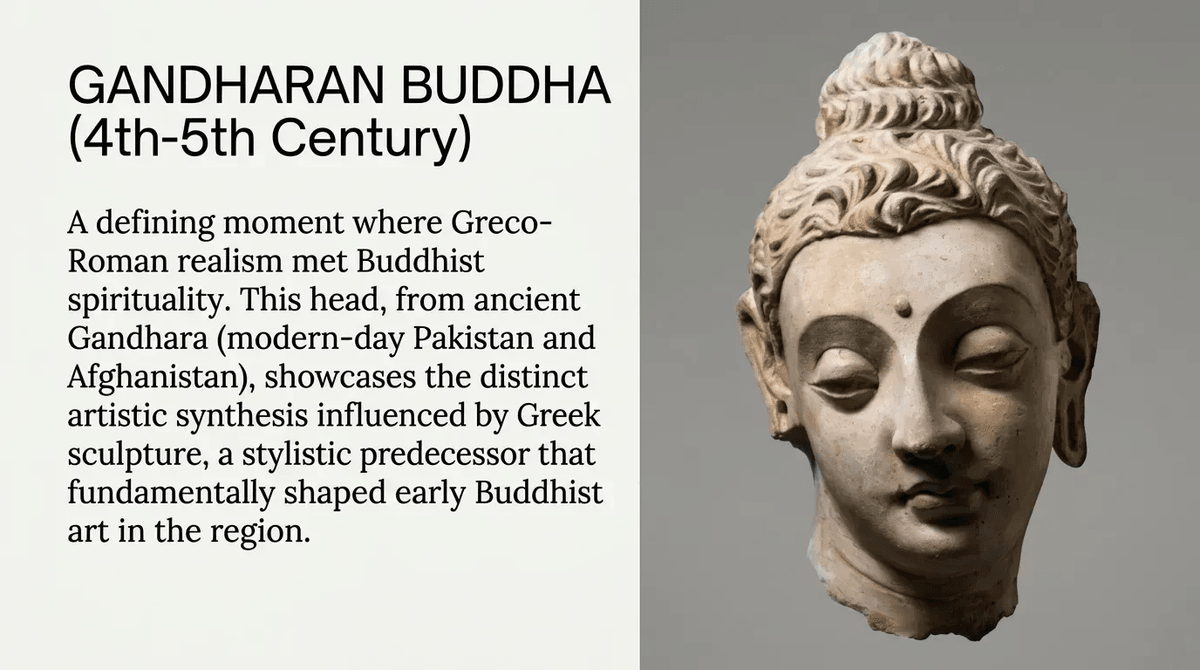
The modern nation-state, defined by clear geographical boundaries, is a relatively recent political construct. Historically, prior to widespread colonialism, various empires and trade networks facilitated extensive inter-regional cultural and material exchange. The diffusion of ancient Greek art, for instance, traversed linguistic, cultural, and religious borders, much like the way Roman emperors adapted Greek artistic forms for political power and propaganda. While Greek art achieved widespread adoption, its formal language, emphasizing ideals of humanism and order, served as a powerful visual rhetoric. Late 20th and early 21st-century globalization, in some ways, echoes these ancient patterns of widespread cultural transmission. Within sovereign nations, rapid technological and economic shifts have superseded older geopolitical models, signifying a major transformation. The powerful forces of multinational corporations, mobile labor, and real-time global communication often act as invisible drivers, frequently operating below the public’s immediate awareness. Art, in this dynamic context, serves as a formal means to critically engage with, and reflect upon, the complex processes of globalization.
By the late 20th century, art had developed its own global operational model, primarily through the proliferation of international biennials. These large-scale, themed contemporary art exhibitions aim to enhance the prestige of host cities and attract investment. Biennials are typically shaped by "super-curators," the international art market, and local artistic practices. Alongside long-established events like the Venice and São Paulo Biennales, new ones have emerged since the 1980s in cities such as Berlin, Dakar, Johannesburg, Liverpool, Shanghai, and Sharjah, fostering a truly global art ecosystem. Okwui Enwezor’s curatorial approach, as chief curator of the second Johannesburg Biennale (1997), titled Trade Routes: History and Geography, has often been cited as a textbook case of globalization in art. Enwezor and his transnational curatorial team explicitly aimed to explore "questions of citizenship and borders" and to critique traditional celebratory narratives, framing their exhibition within "specific contexts of shifting political landscapes" to foster deeper, more nuanced engagement with global realities.
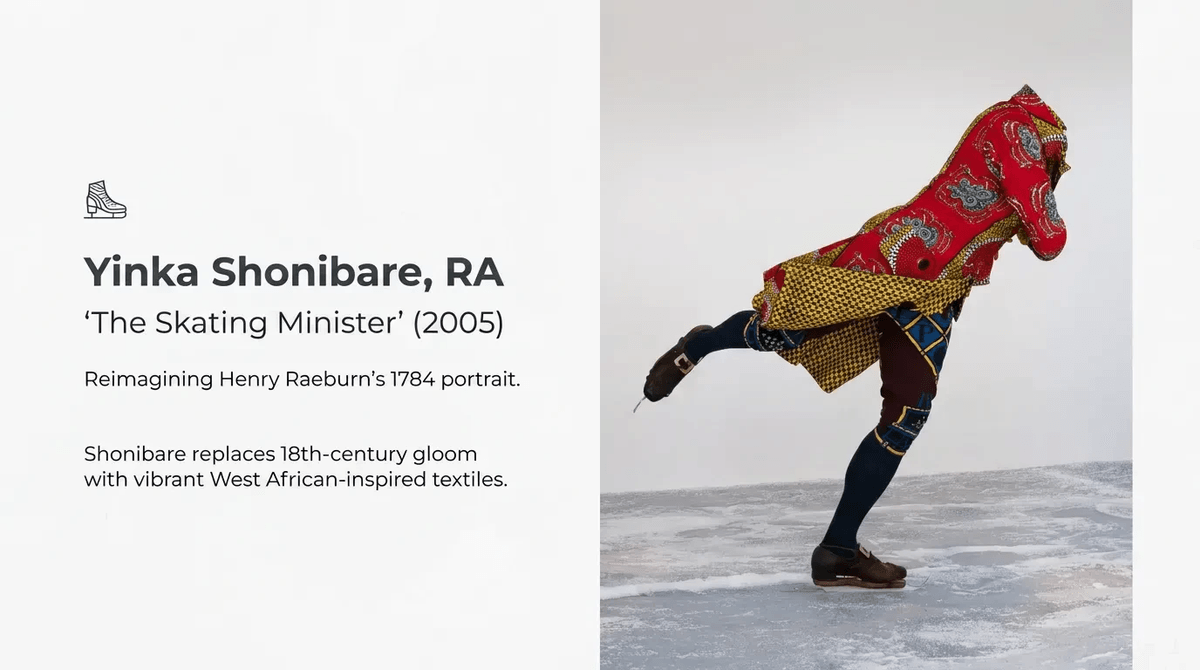
Yinka Shonibare materially expresses the history and geography of globalization through his sculptural figures, often based on 18th- and 19th-century portraits, dressed in vibrant Dutch wax print fabrics. This choice symbolizes both the complexities of colonialism and the global circulation of goods, including textiles manufactured in African factories and marketed to African consumers, a phenomenon known as "reverse globalization." Shonibare states, "Something as simple as fabric carries political, social, historical, and cultural metaphors," underscoring the layered meanings embedded in everyday objects. Other contemporary artists, such as Renée Cox, Chris Ofili, and Alfredo Jaar, also critically reflect global influences and themes in their work, often challenging simplistic binaries and exploring the intricate relationships between politics, society, history, and culture, demonstrating how the world defies a simple "Eastern and Western" dichotomy.