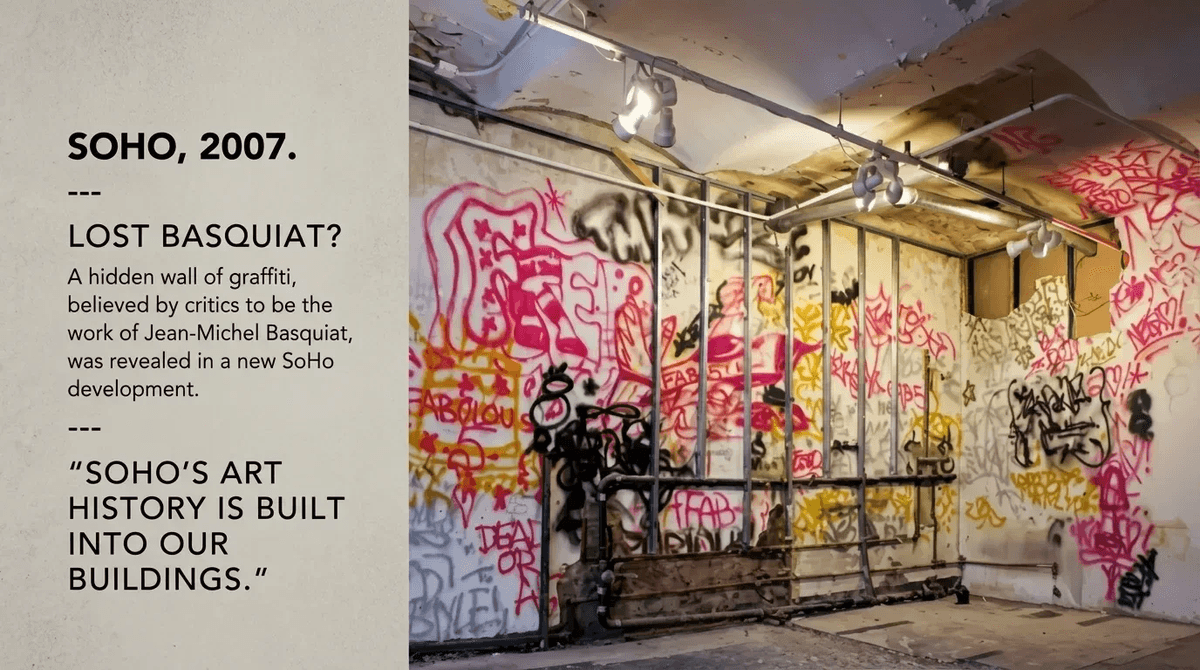
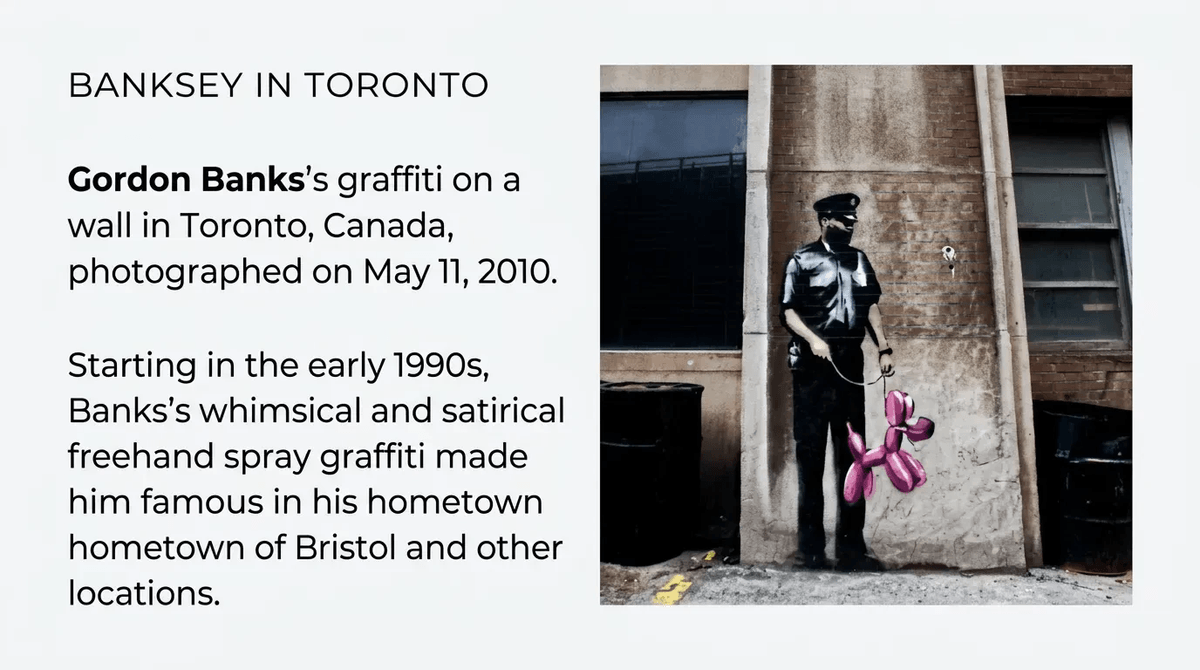
The concept of street art operates at the intersection of design and fine art, often created without official permission in public spaces, transforming urban surfaces and, as a result, challenging established artistic and commercial products. Key figures in this movement include Jean-Michel Basquiat and Keith Haring, whose seminal works emerged in New York in the 1980s, and Banksy, who rose to global prominence in the 2000s for his impactful public art interventions.
The presence of marks, paintings, and images on city walls has existed since antiquity, reflecting humanity's primal urge for expression. However, the specific type of mark-making that evolved into street art in the 20th century captured significant artistic interest. The contemporary understanding of the city now involves a complex accumulation of histories, a concept resonating with Walter Benjamin’s examination of how mechanical reproduction transformed art's "aura" and its political potential. From a cultural perspective, the sophisticated visual environment of the city is now understood by a broader audience not solely for its utilitarian function but as a form of non-traditional art with inherent cultural significance.
Throughout the 1980s, artists like Jean-Michel Basquiat emerged from the vibrant New York street art scene, notably with his SAMO© tag, before transitioning to established gallery exhibitions. His raw, neo-expressionist style, frequently incorporating text, symbols, and figures, aimed to bring art directly to the public sphere, infusing urban spaces with critical commentary and visual dynamism. The anonymity often associated with graffiti, combined with the technical versatility of spray paint—which evolved from industrial applications to facilitate large-scale, rapid interventions—contributed significantly to a new urban aesthetic. New York subway graffiti, particularly prominent in the 1970s and 80s, became a classic street art style, characterized by intricate letterforms and bold, dynamic compositions. This form inherently challenged traditional art spaces and definitions, rather than being merely constrained by them.
In the 1960s, Pop Art actively engaged with concepts of intellectual property and the dichotomy between "high" art and "mass" culture. British art critic Lawrence Alloway famously described Pop Art as "art for the masses and a popular art." While the commercial success of Pop Art sometimes prompted critics to question its artistic legitimacy, this approach undeniably enabled artists to directly engage with popular culture, thus democratizing art as an element of urban life.
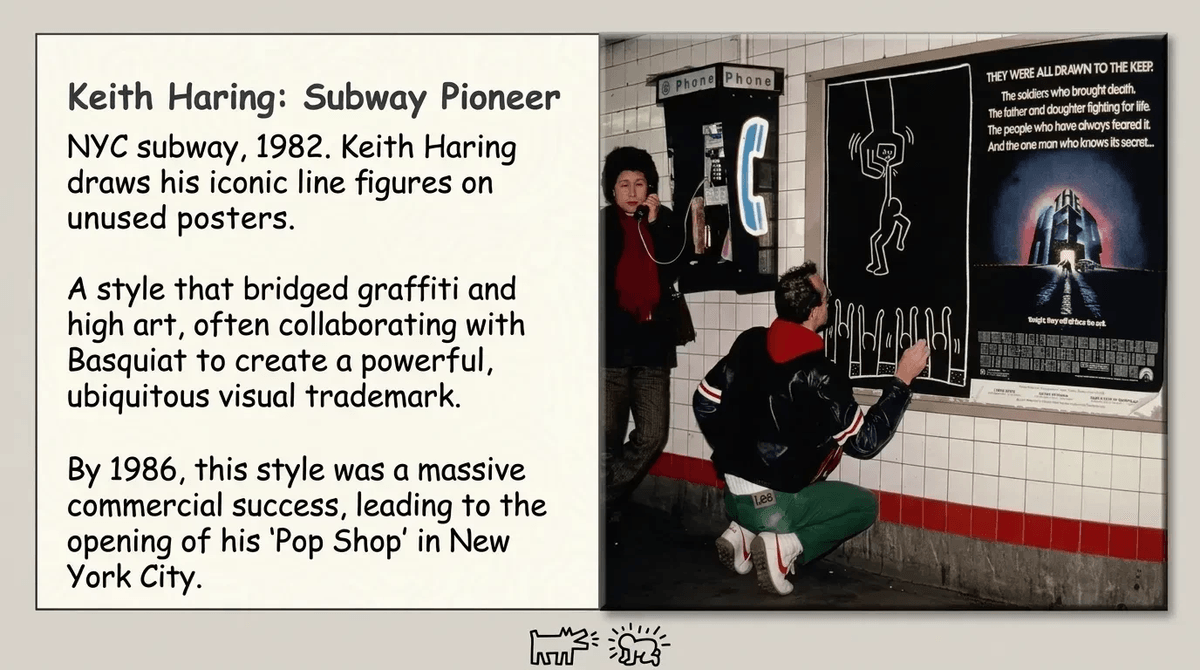
By the 1970s, mainstream art institutions and markets began to acknowledge and absorb elements from street art. Concurrently, the emergence of the internet further blurred the lines between the clandestine street art market and the overt art world, enabling artists to gain broader recognition. This fluidity between art, popular culture, and commodity became a defining characteristic of movements exemplified by Keith Haring, whose distinctive public drawings garnered widespread attention in New York. His significant collaborations with figures like Madonna, Andy Warhol, and Jean-Michel Basquiat were instrumental in bringing this work to a global audience. The blurring of art, popular culture, and commodity relationships became a pervasive theme in the work of many late 20th-century artists.