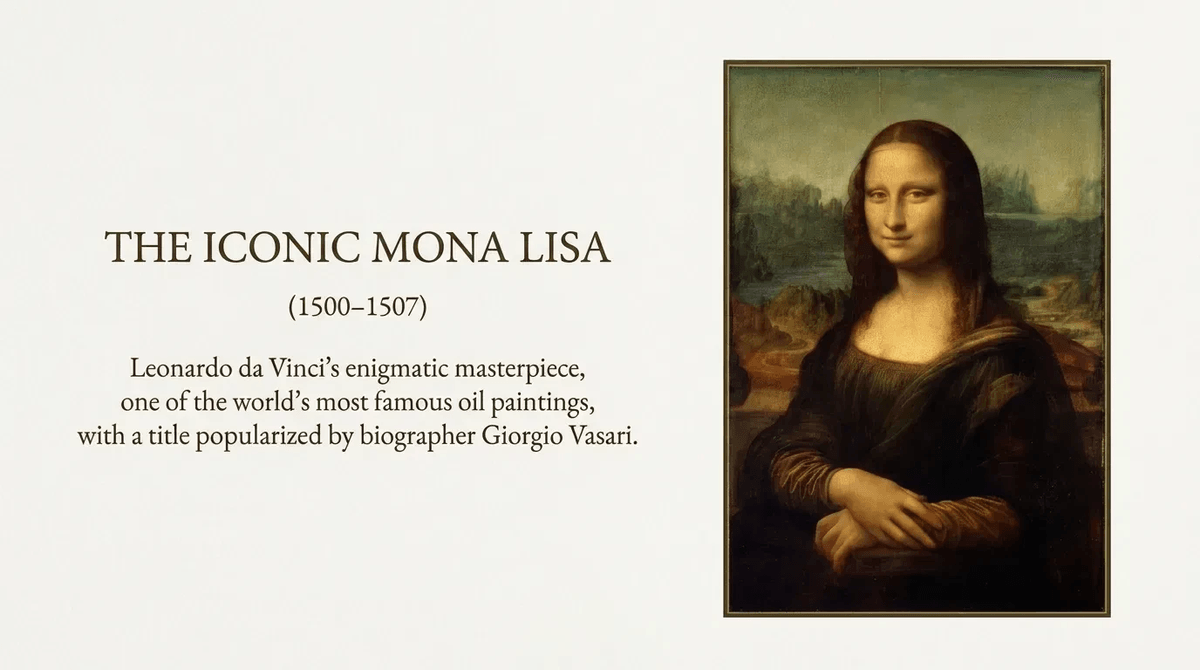
Naming and comprehension are intrinsically linked. In art, beyond mere identification, titles have become an indispensable means for artists to frame their intent and for viewers to engage with meaning. They offer a crucial initial point of entry, guiding interpretation and shaping the reception of artworks.
From antiquity, and particularly throughout Western art history, titles have played a crucial role in shaping the reception and interpretation of artworks. In museum and gallery displays, they function as didactic tools, focusing attention and guiding viewer engagement, distinct yet integral to the artwork itself. During the Renaissance, descriptive titles often provided crucial context or narrative explanation. For instance, Leonardo da Vinci's Mona Lisa or his Lady with an Ermine illustrate how titles could anchor a work's identity, a practice further evident in Jan van Eyck's Arnolfini Portrait (1434) and Rogier van der Weyden's Saint Luke Drawing the Virgin (c. 1435–1440). These titles were not just identifiers but integral to understanding the depicted narratives and symbolic meanings, even within an art world valuing ideal beauty. By the 17th and 18th centuries, titles continued to be descriptive, guiding the viewer through complex allegories or historical events, as seen in Jacques-Louis David’s The Death of Marat (1793). Later, Romantic artists like Eugène Delacroix with his Liberty Leading the People (1830) used titles to imbue works with emotional or political resonance. The 19th century, particularly with Impressionism, saw titles shift from mere explanation to functioning as critical tools, aiding identification and fostering diverse interpretations within an evolving art market.
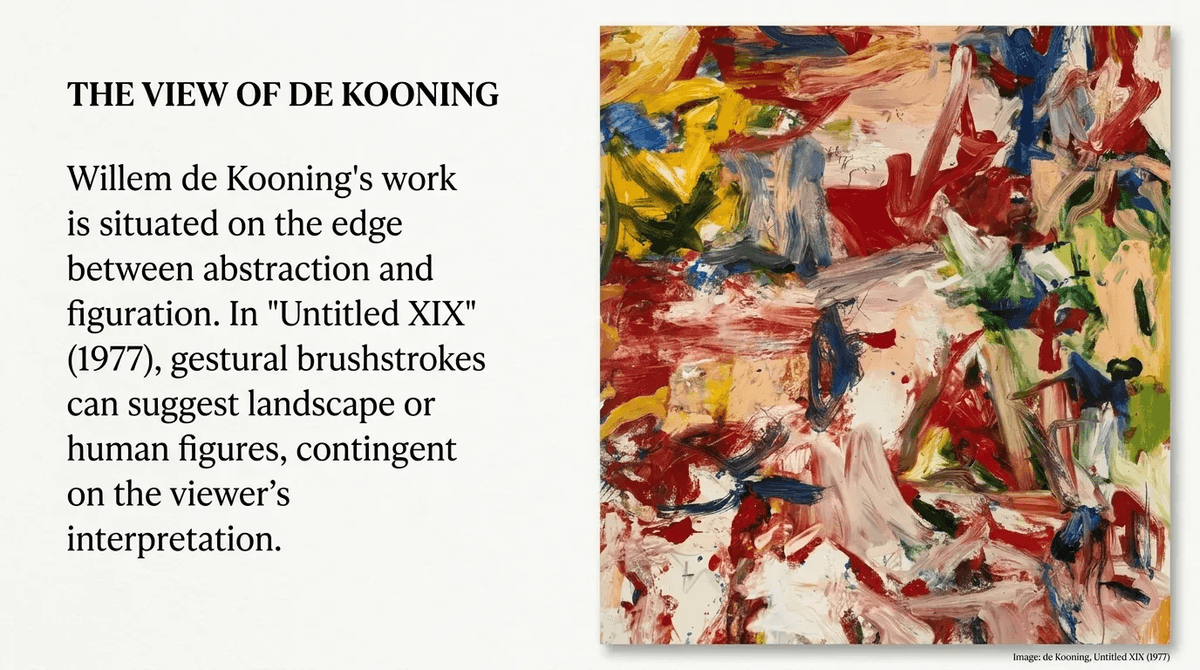
The 20th century further diversified the function of titles, moving beyond simple descriptions to open interpretations and conceptual provocations. Marcel Duchamp, a pivotal figure, used titles ironically or playfully, as in Fountain (1917) and L.H.O.O.Q. (1919). Rather than merely identifying the object, these "readymade" titles were integral to his challenge of art's definition, shifting focus from the artist's hand to the artist's choice and intellectual gesture. In Abstract Expressionism, titles often alluded to the process or psychological state, rather than overt subject matter. Jackson Pollock's Number 1A, 1948 (1948) emphasizes process over representation, reflecting the raw energy of its creation. For Willem de Kooning, whose work navigated between abstraction and figuration, titles like Untitled XIX (1977) allowed gestural brushstrokes to suggest forms, inviting subjective interpretation.
Pop Art, exemplified by Andy Warhol's Brillo Boxes (1964) or Campbell's Soup Cans (1962), used titles that elevated mundane everyday objects to iconic status, blurring the lines between art and consumer culture. Surrealist artists, such as René Magritte with The Treachery of Images (1929) ("This is not a pipe"), employed enigmatic titles to create mystery and provoke intellectual engagement, underscoring the disjunction between image and reality. Conceptual Art, in particular, solidified the idea's primacy. Joseph Kosuth's One and Three Chairs (1965) uses a physical chair, its photograph, and a dictionary definition to explore the conceptual relationships between object, image, and word. Similarly, Damien Hirst's The Physical Impossibility of Death in the Mind of Someone Living (1991) directly conveys the profound conceptual premise of the work, where the title becomes almost more substantial than the object itself.
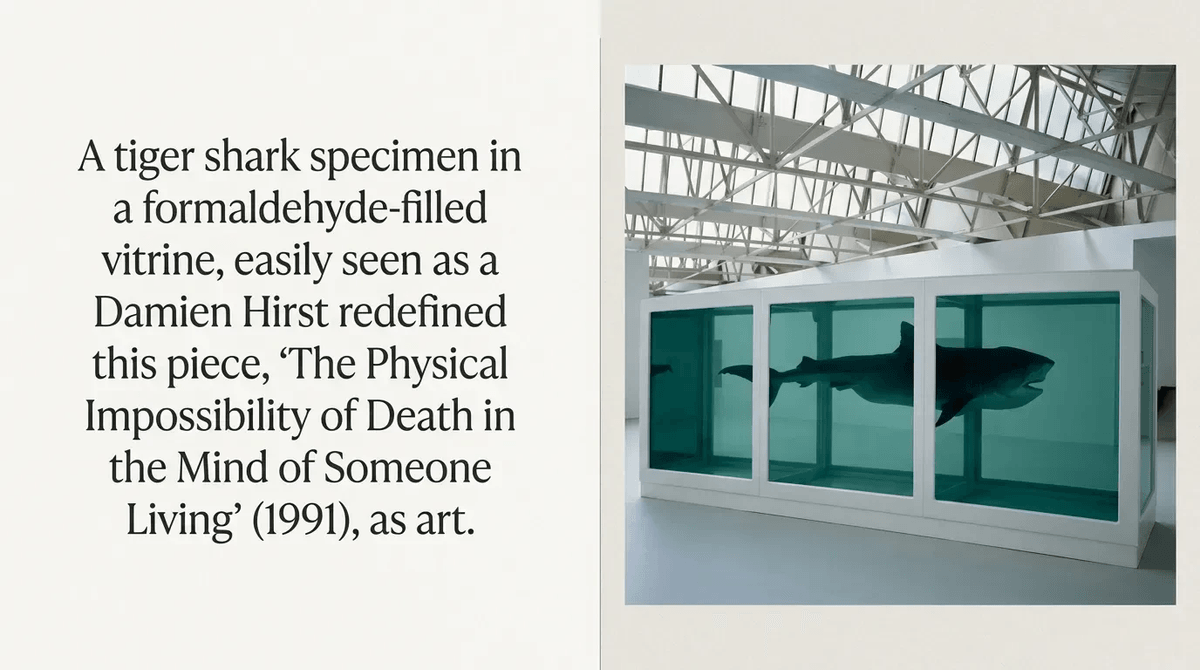
Today, titles are more than identifiers; they are an integral component of an artwork's identity and interpretation. They can be suggestive, enigmatic, or overtly political, adding layers of meaning that invite viewers to engage deeply with the artist's intent, context, and the broader social discourse. Artists continue to play with titles, using them to provide a framework for understanding, to challenge conventional interpretations, or to open up a "new game" of perception that transcends literal explanation.