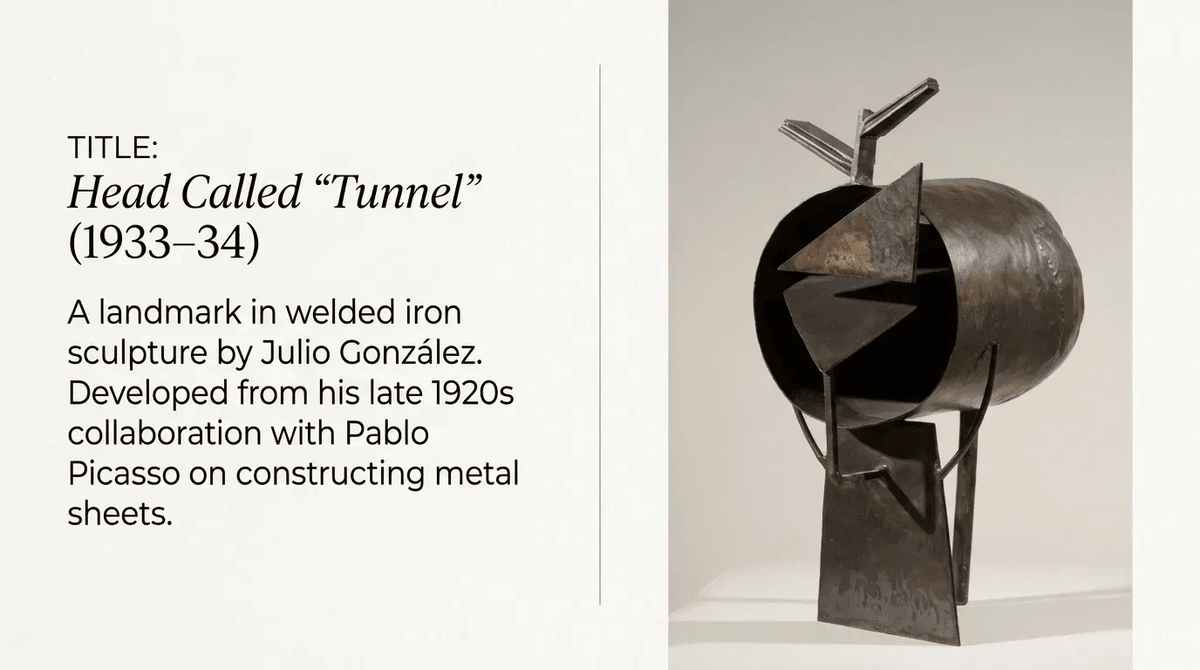
Welding, a technique for joining metal plates through intense heat, has long been employed in various metalworking trades. However, its significant impact on the creation of art truly emerged in the early twentieth century. This was driven by advancements in oxyacetylene welding technology, which by the late nineteenth century had achieved temperatures capable of joining large metal blocks, enabling large-scale metal sculpture—a notable departure from traditional casting methods perfected since antiquity. The striking visual spectacle of welding, with its dazzling sparks, became commonplace in industrial settings. Following World War I, increased demand for military equipment further spurred advancements in specialized welding techniques. Pioneering figures like Julio González and his protégé, Pablo Picasso, learned these industrial metalworking skills from González's father, integrating this craft into the European avant-garde and forging entirely new sculptural possibilities.
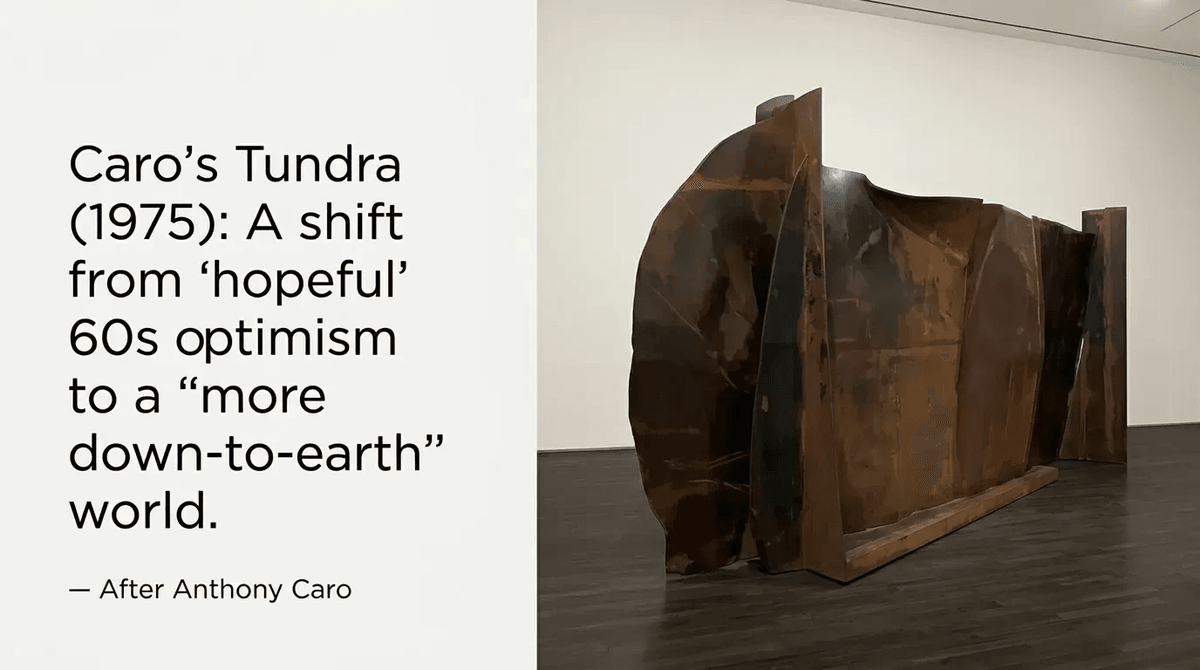
In the pioneering metal sculptures of Julio González and Picasso, the welded joints between metal sheets and rods mirrored the constructive principles of Cubist collages. González’s innovations in three-dimensional construction extended into works like Robert Rauschenberg’s Combines (from 1949), which incorporated diverse industrial materials and found objects to forge a new industrial aesthetic. From the mid-century onward, sculptors like Robert Smithson (active from the 1960s) explored the structural and aesthetic possibilities of raw industrial materials, often in relation to site-specific and conceptual practices. For contemporary British sculptor Anthony Caro, sculpture became a form of open, linear construction, drawing inspiration from the Cubist notion of 'taking these elements and then assembling them together.' Caro's use of standard-sized steel beams and girders, welded into abstract structures, eliminated the need for a traditional plinth and allowed his sculptures to interact directly with the viewer's space. His early works (from the early 1960s), with their minimal, open steel components and often vibrant colors, profoundly transformed how industrial materials were perceived in art, imbuing them with a captivating aesthetic and spatial dialogue.
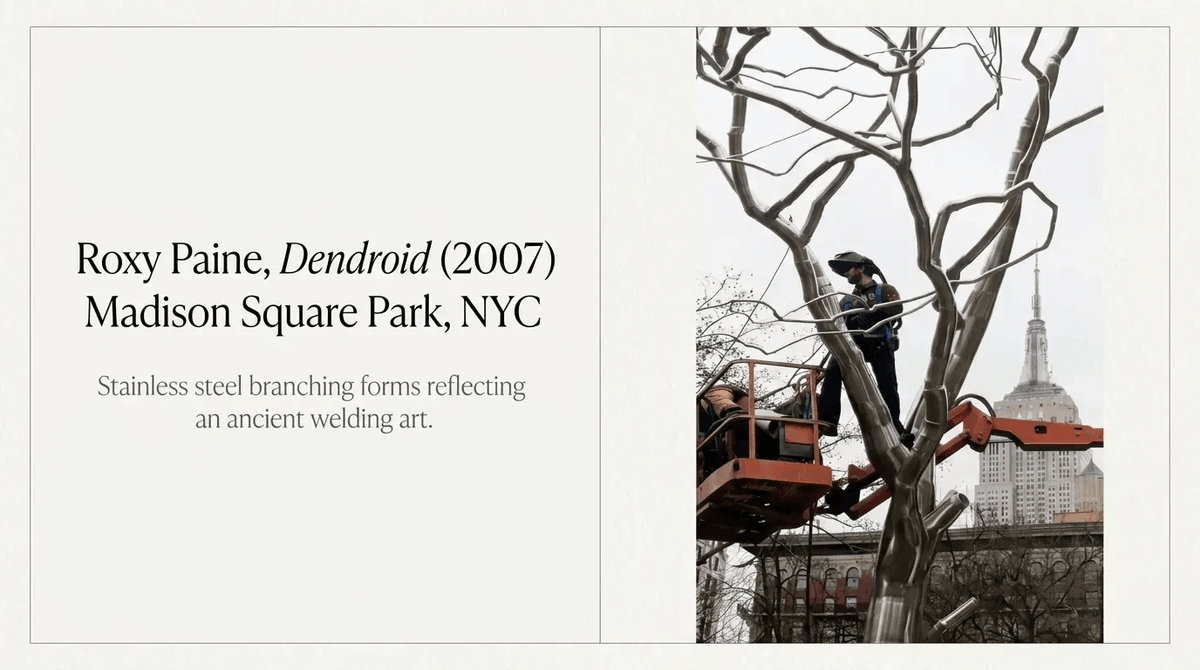
In sculpture, the emphasis on construction rather than traditional modeling or carving, enabled by welding techniques, has created entirely new art forms and provided a foundation for conceptual art. Welded art, sometimes aligning with aesthetic pursuits like Surrealism, has combined a desire for compelling vision with diverse artistic and social goals. Artists have sought to reflect contemporary life and mass culture through these methods. For instance, the monumental welded steel sculptures of Roxy Paine, which she describes using terms like 'cellular' and 'twigs,' reveal the intricate beauty and underlying systems of natural and industrial processes. Her aim has been to elevate this form of construction, transforming industrial materials into works of profound artistic and conceptual significance.