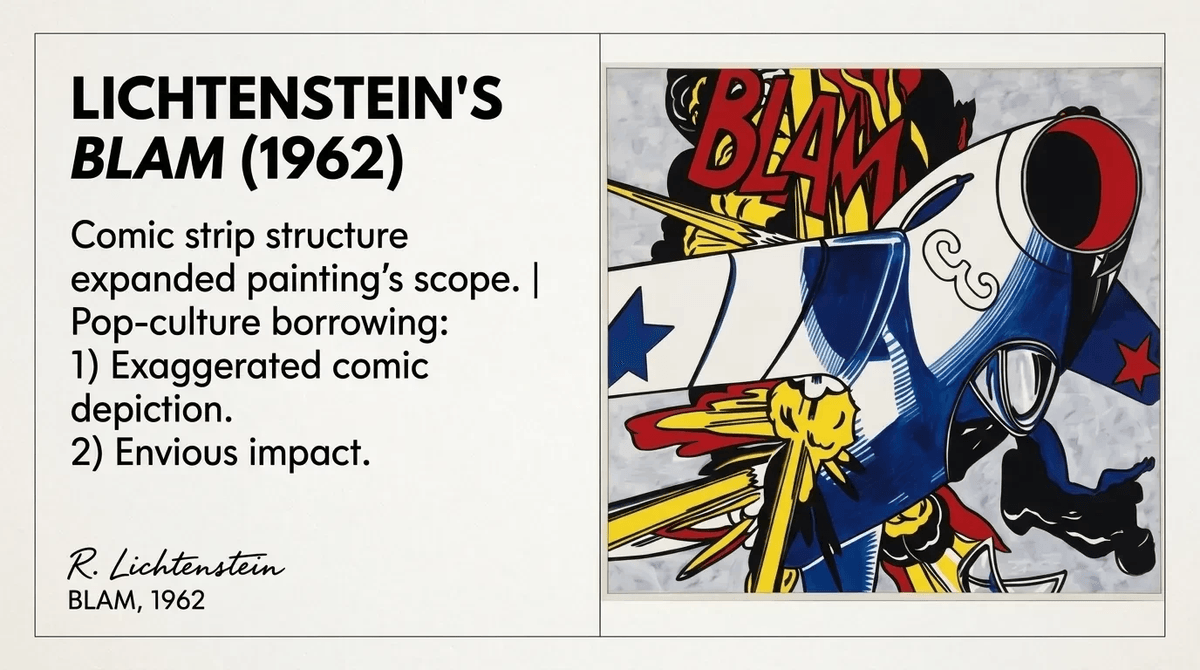
Pop Art emerged as a significant artistic movement in the mid-20th century, appropriating imagery from commercial design, advertising, and popular culture. While the term "Pop"—derived from "popular"—was initially a critical descriptor, artists quickly embraced its implications, challenging the traditional hierarchy between "high" and "low" culture. This redefined the visual landscape of the 1950s and 60s, profoundly altering Western art's trajectory.
The post-World War II era witnessed a profound transformation of Western visual culture, particularly with Europe's economic recovery and the rise of American consumerism. The ubiquity of vibrant consumer goods, advertising, and film, coupled with the emergence of new social classes, projected messages of confidence and pleasure. New York City solidified its role as an international art market, and Pop Art quickly gained widespread recognition, directly engaging with the values, mass production, and youthful sensuality inherent in consumer culture. Artists like Andy Warhol, Roy Lichtenstein, and Claes Oldenburg are widely considered pioneers of American Pop Art. British Pop Art, exemplified by Richard Hamilton—whose seminal 1956 collage Just what is it that makes today’s homes so different, so appealing? is often cited as a foundational work—preceded its American counterpart, fostering a dynamic transatlantic dialogue between art and popular culture. While Jasper Johns and Robert Rauschenberg were pivotal figures in the transition from Abstract Expressionism, their Neo-Dada work explored themes of signs and everyday objects, paving the way for Pop Art's distinct aesthetic.
Transitioning from Abstract Expressionism and other mid-20th-century movements, Pop Art became a significant force that brought art closer to everyday life. American Pop artists, such as Warhol, Lichtenstein, and Oldenburg, drew inspiration from the visual language of the "common man." This focus on the essential aspects of commodity culture was rigorously explored. In 1957, Richard Hamilton, a member of the Independent Group—whose theoretical discussions deeply analyzed popular culture—famously articulated this new visual culture's characteristics as "popular, transient, expendable, low cost, mass produced, young, witty, sexy, glamorous, and Big Business." Warhol's appropriation of photographic images, for instance, often served as an ambivalent reflection of American consumer culture, simultaneously celebrating and critically examining its pervasive influence. Similarly, British Pop Art, through artists like Hamilton, maintained a critical yet engaged relationship with advertising and popular culture.
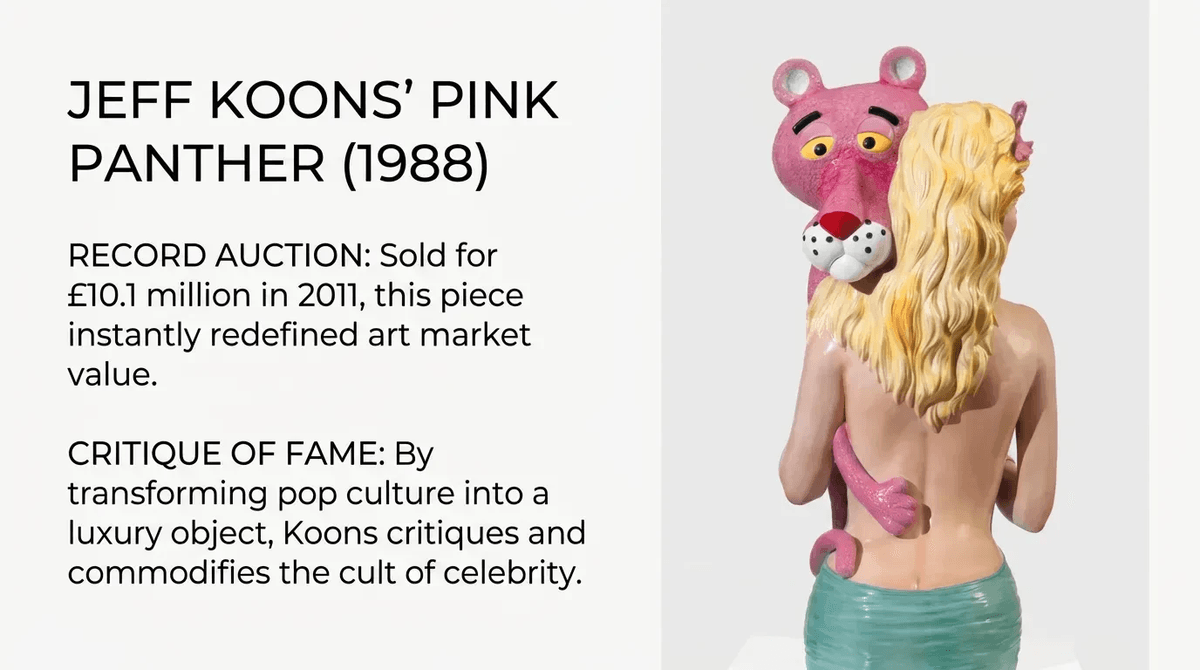
By the 1960s, while some Pop Art still utilized traditional art-making techniques, many artists embraced commercial processes like silk-screen printing to achieve its characteristic flattened aesthetic and mass-produced feel. This development, coupled with an increasing use of art in design and installation by the 1970s, fundamentally challenged the perceived "rupture" between "high" and "low" art. Rather than dissolving the debate, Pop Art reignited it, compelling critics and audiences to reconsider artistic value and definitions. Technological advancements throughout the late 20th century, notably embraced by artists like Jeff Koons and others, further reshaped the boundaries and definitions of the art world.