In the history of art, the element of "shock" has a complex lineage. While art throughout eras has inadvertently provoked strong reactions, the deliberate and central use of unsettling or provocative imagery to challenge established beliefs began to transform the role of the artist from the mid-nineteenth century. This approach was further amplified by avant-garde movements in the early twentieth century, positioning art as a powerful agent for social and aesthetic disruption.
Within the lexicon of "shock art," the term carries significant weight. Consider Édouard Manet’s Le Déjeuner sur l'herbe (1863), a painting that sparked profound outrage among its contemporary viewers. It features a nude woman unapologetically engaging with two fully clothed men in a modern outdoor setting, while another lightly clad figure bathes in the background. The shock was not merely due to nudity, but to the brazen juxtaposition of a contemporary nude—staring directly at the viewer—with dressed figures, defying academic conventions for depicting historical or mythological subjects, and challenging bourgeois morality. Manet’s work thus became a pivotal moment in the history of transgression in art.
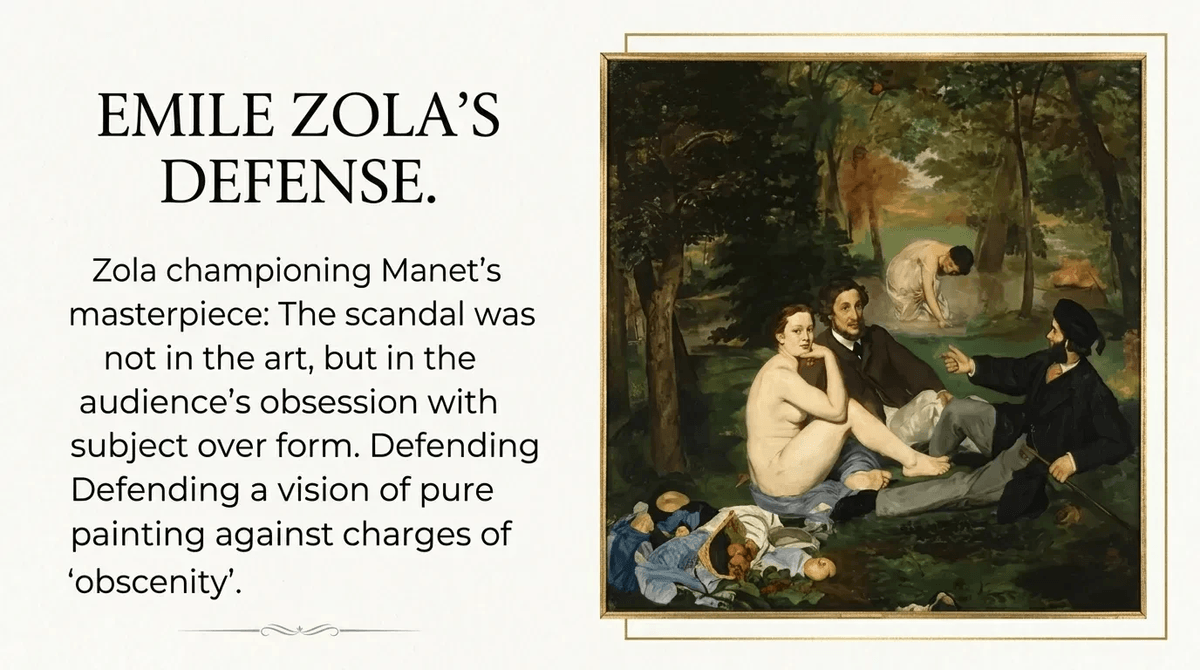
This transgressive spirit profoundly distinguishes modern art. The experience of "shock" is often multifaceted, stemming not only from the artwork itself but also from the artist's public persona and the evolving social dynamics of art. The early twentieth century saw a radical embrace of shock by avant-garde movements. For instance, Filippo Tommaso Marinetti, in his incendiary 1909 Futurist Manifesto, notoriously glorified war as "the world’s only hygiene," celebrated militarism and patriotism, and expressed "scorn for woman," aiming to shock the complacent bourgeois society into a new era of dynamism and aggression. Movements like Futurism, Dadaism, and Surrealism, alongside various political movements, leveraged the aesthetic of shock to provoke new perspectives and fundamentally shift public attitudes, challenging established artistic principles and societal values.
Throughout the late twentieth century and into the twenty-first, the use of shock in art has continued to evolve and diversify. However, with the proliferation of mass media, increasing visual cultural liberalization, and the constant exposure to shocking events from large-scale wars to daily tragedies, some critics argue that it has become increasingly challenging for art to genuinely shock or to distinguish its impact from the pervasive influence of propaganda. Nevertheless, specific works continue to exert a profound transgressive power. Marcus Harvey’s controversial portrait Myra (1995), for example, depicting the notorious child murderer using casts of children's handprints, ignited intense public debate and maintained its unsettling impact due to its provocative subject matter and unsettling technique. In this way, art continues to engage with and often shape public perception, offering a potent vehicle for transgression and critical commentary.