Wherever there is satire, or an unmasking of hidden realities (such as corruption and hypocrisy), protest art possesses an intrinsic capacity for subversion. Its aim is to challenge powerful adversaries to achieve genuine political influence, actively attacking state propaganda and overturning official imagery.
For protest art to be truly effective, the artist must often adopt a position in direct opposition to the powers that be, frequently at risk to their livelihood or freedom. This phenomenon implies that the artist functions as a free agent, independent of state or institutional control. While elements of social and political critique can be traced throughout art history, the conditions for modern protest art—characterized by its explicit challenge to authority and its public exhibition—began to coalesce during the European Renaissance and became more fully articulated from the late eighteenth century onwards, alongside evolving notions of artistic autonomy. Consequently, the public display of such art has a shorter history than that of state-sponsored propaganda, which has historically commanded vast resources and exerted significant control over interpretation.
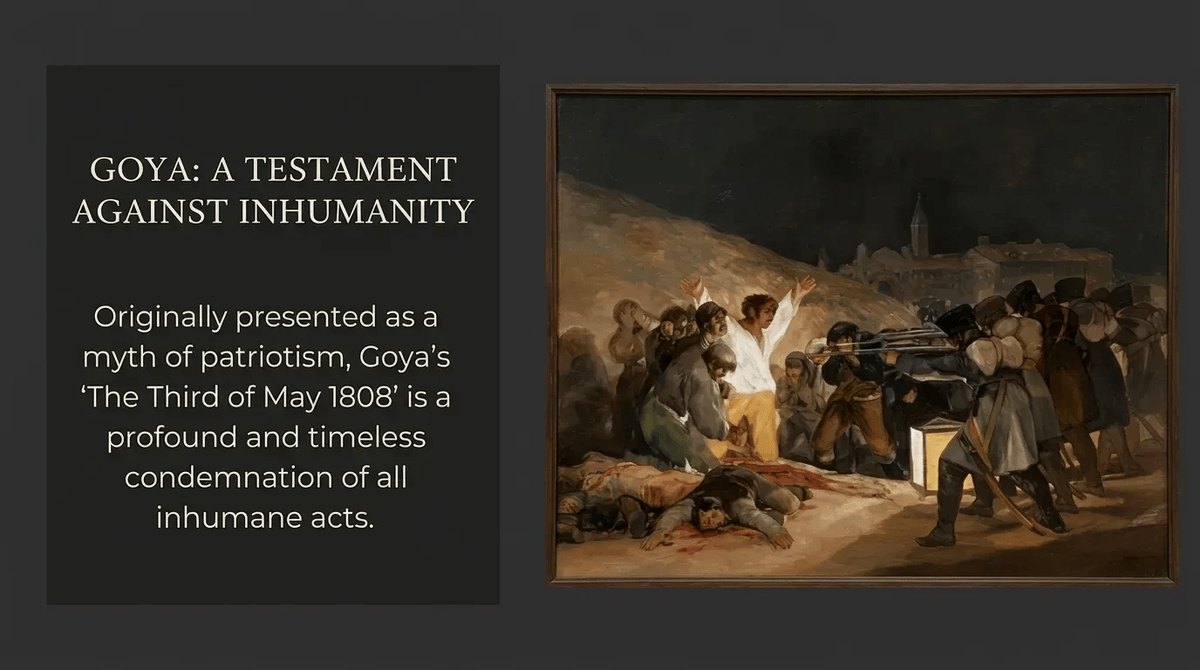
Francisco Goya stands as a prime example of an artist protesting against power from within the established order. His The Third of May 1808 (1814) powerfully depicts the horrifying massacre of Spanish resistance fighters by French troops in Madrid. The work masterfully merges historical events with the conventions of religious painting, transforming the scene into a profound anti-war statement. Goya portrays the Spanish populace as helpless victims, while the grimly advancing French firing squad represents the perpetrators of an unspeakable act, conveying a universal condemnation of brutality.
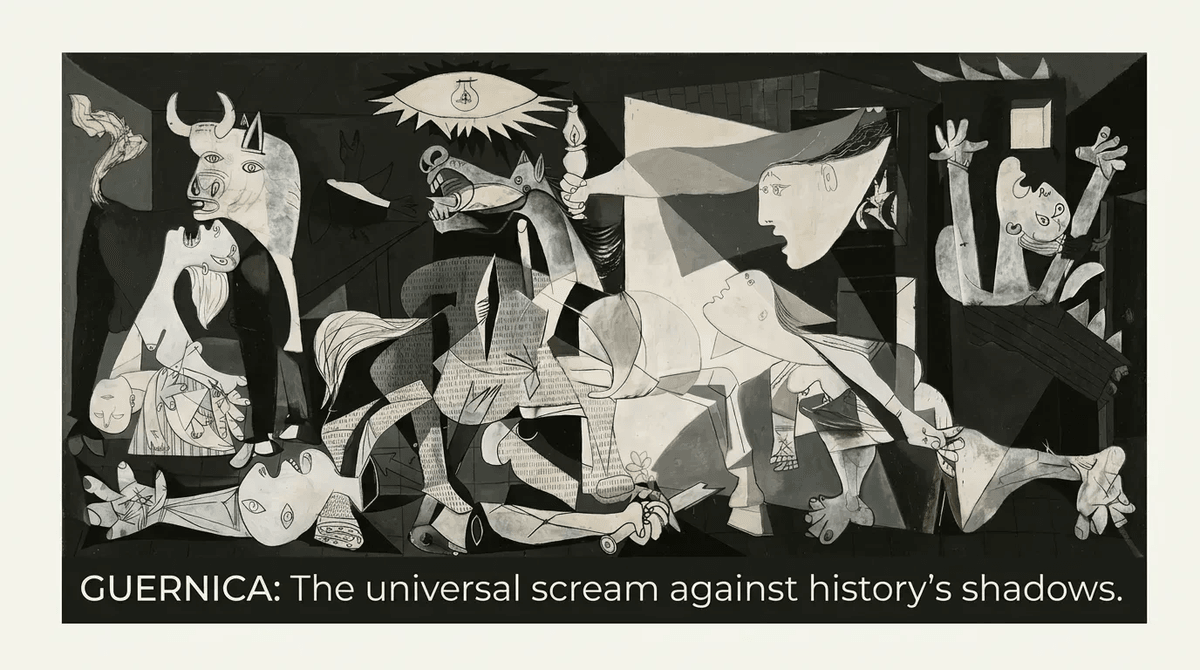
Pablo Picasso’s Guernica (1937) commemorates the devastating civilian casualties from the bombing of the Basque town of Guernica in April 1937 by Italian and German air forces. Commissioned by the Republican side in the Spanish Civil War for the Paris World's Fair, Guernica became a crucial landmark in the anti-fascist movement. Its explosive political protest resonated powerfully from 1937 onwards. The artwork’s enduring symbolism as an anti-war icon was dramatically underscored when a replica was famously displayed during a press conference at the UN in February 2003, amidst discussions surrounding the Iraq War.
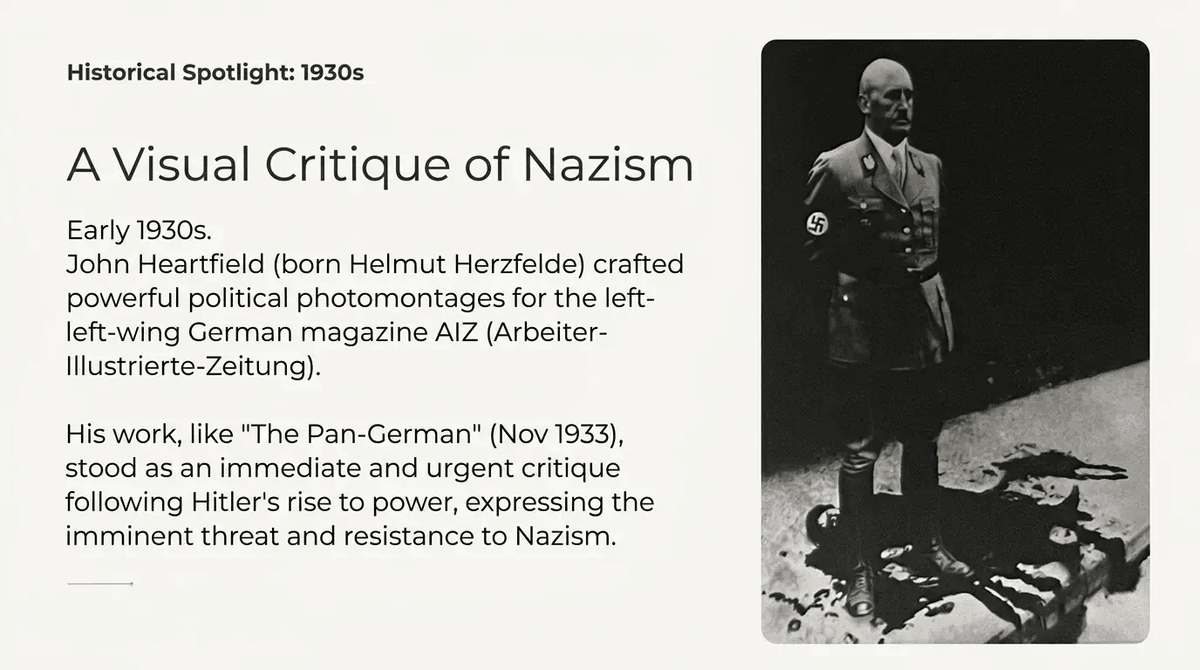
Amidst the polarized political landscape of 1930s Europe, many progressive artists and writers retained faith in their capacity to resist the rise of fascism. Artists, particularly within the Surrealist movement, were deeply engaged with anti-fascist and often left-leaning political ideologies, seeking to unite against the escalating threats. John Heartfield’s sharp political photomontages were not merely artistic declarations; they were direct, visceral expressions of a reality the artists were determined to oppose. His work notably protested against the "aestheticization of politics"—a concept acutely analyzed by the philosopher Walter Benjamin in the context of fascism. From the 1960s onward, the dynamic interplay between art and mass culture further shaped political protest works, encompassing posters, advertising, film, media, and literature. Iconic examples include the Guerrilla Girls’ 1989 campaign poster, which provocatively asked, "Do women have to be naked to get into the Met. Museum?" This broader understanding of "political art" also encompasses documentary or commemorative art, such as Doris Salcedo’s Atrabiliarios, recognized as a potent form of protest against violence and forgetting.