Plastics, as moldable polymers, were initially developed to replace or enhance natural materials across commercial and industrial sectors. Their versatility soon extended into the realm of art, finding diverse applications from Plexiglas sculpture to acrylic paints. The invention of the first synthetic polymer, celluloid, by Alexander Parkes in 1855, marked a significant turning point. By the 1890s, the Eastman Company harnessed celluloid to produce flexible photographic film, revolutionizing photography by replacing rigid plates in portable cameras. The subsequent emergence of photography and cinema, with their unique ways of capturing and manipulating time and sequence, fundamentally reshaped visual perception. While these new media profoundly influenced the visual culture of the early 20th century, inspiring artists to reconsider representation and spatial dynamics, their indirect impact on movements like Cubism was more about fostering a broader climate of experimentation rather than a direct, causal contribution to its foundational principles.
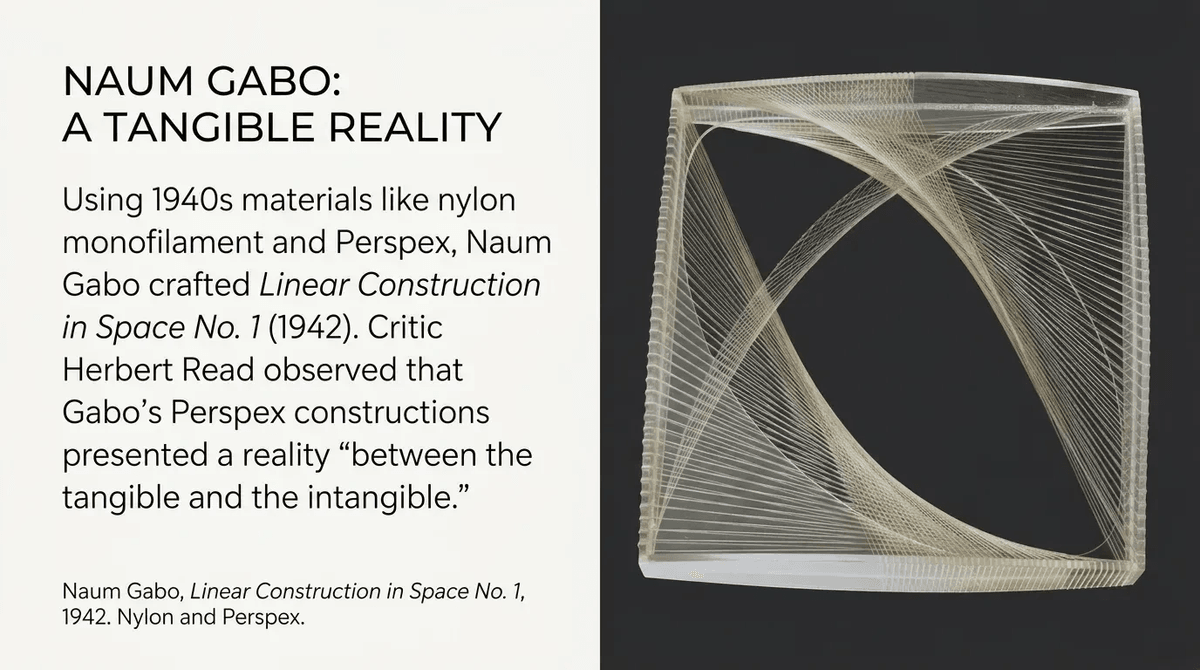
Despite their seemingly infinite potential, plastics were not immediately embraced as art materials. It was not until the 1920s that pioneers like Naum Gabo and his brother Antoine Pevsner began experimenting with them. Gabo, a key figure in Constructivism, articulated his vision in 1937, writing: "Our period needs new materials... there should be no aesthetic prohibition on sculptures made from any material." This manifesto championed an approach that considered the intrinsic qualities of sculptural forms and their dynamic relationship with surrounding space. Gabo extensively experimented with thermoplastic materials—plastics malleable by heat—such as cellulose acetate, Plexiglas, and nylon threads. Their inherent properties of lightness, transparency, and moldability were ideal for his Constructivist aesthetics, allowing him to create sculptural forms that were neither monumental nor rigid, but rather dynamic and spatial.
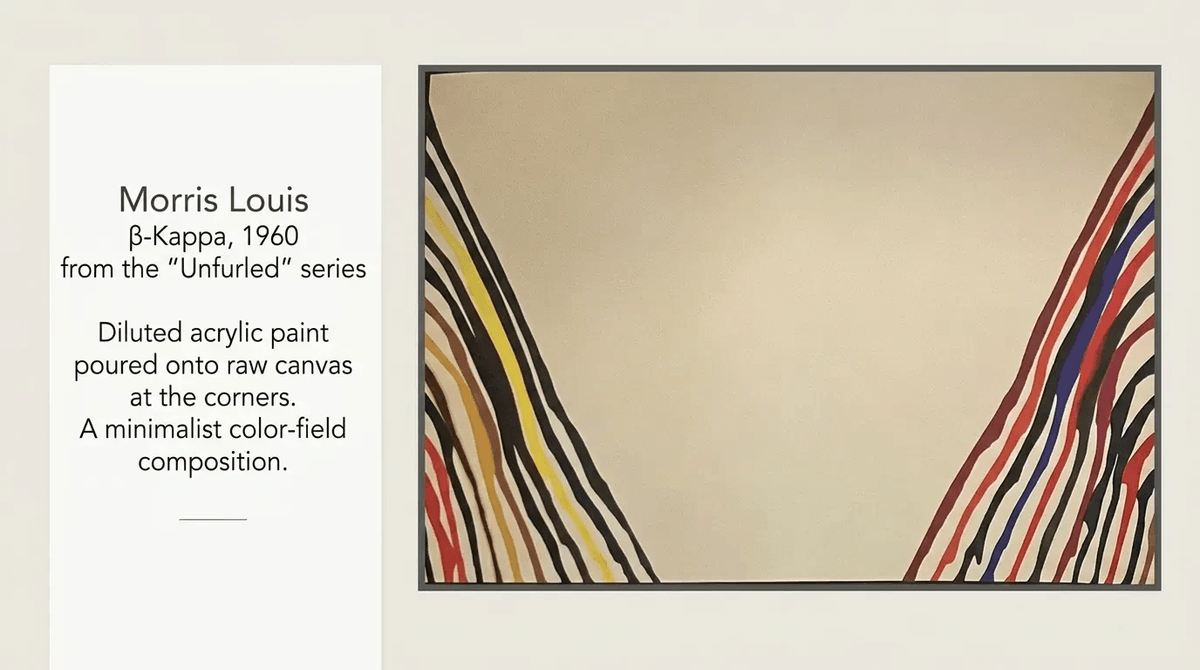
Beyond the structural applications championed by Gabo, plastics also revolutionized the use of color in art. Commercially produced plastics often came pre-pigmented with vibrant hues. From the mid-20th century, acrylic paints rapidly gained prominence over traditional oil and watercolor mediums, offering artists a versatile, fast-drying, and readily available option. Acrylics facilitated fluid, free-flowing compositions and bold color applications, drying quickly much like ink on paper. Pop artists, in particular, found acrylics ideally suited for their aesthetic, which often drew from and reinterpreted commercial imagery and popular culture. Artists like Roy Lichtenstein utilized the flat, intense colors of acrylics for his iconic cartoon-style paintings (1962), while Andy Warhol famously adapted silk-screen printing onto various plastic substrates, directly engaging with the mechanical reproduction characteristic of consumer goods.
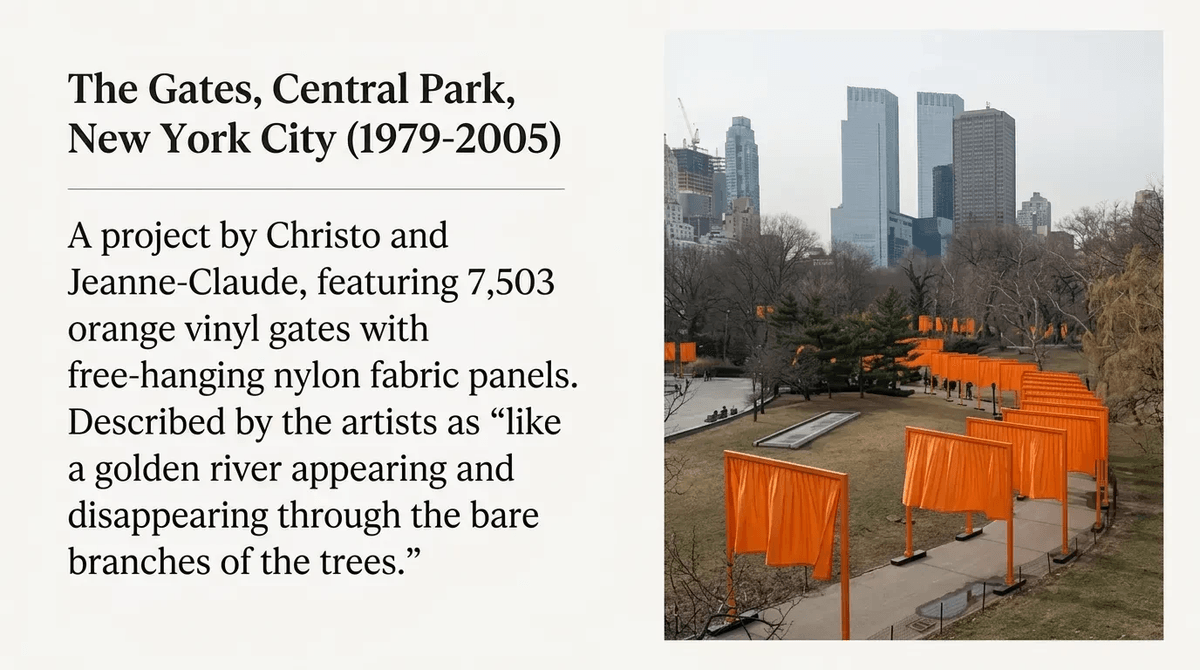
With acrylic paints widely accepted as a mainstream art material, artworks crafted from plastics, textiles, and other synthetic materials gained significant artistic recognition. Claes Oldenburg’s Pop Art interpretations, for instance, challenged the traditional hierarchy of art by monumentalizing everyday plastic goods, thus dismantling prejudices against them as legitimate artistic mediums. Similarly, Christo and Jeanne-Claude famously employed vast quantities of plastic materials to temporarily wrap public buildings and natural monuments, dramatically recontextualizing these structures and demonstrating that even monumental architecture could be 'packaged' or reimagined as ephemeral sculptures.