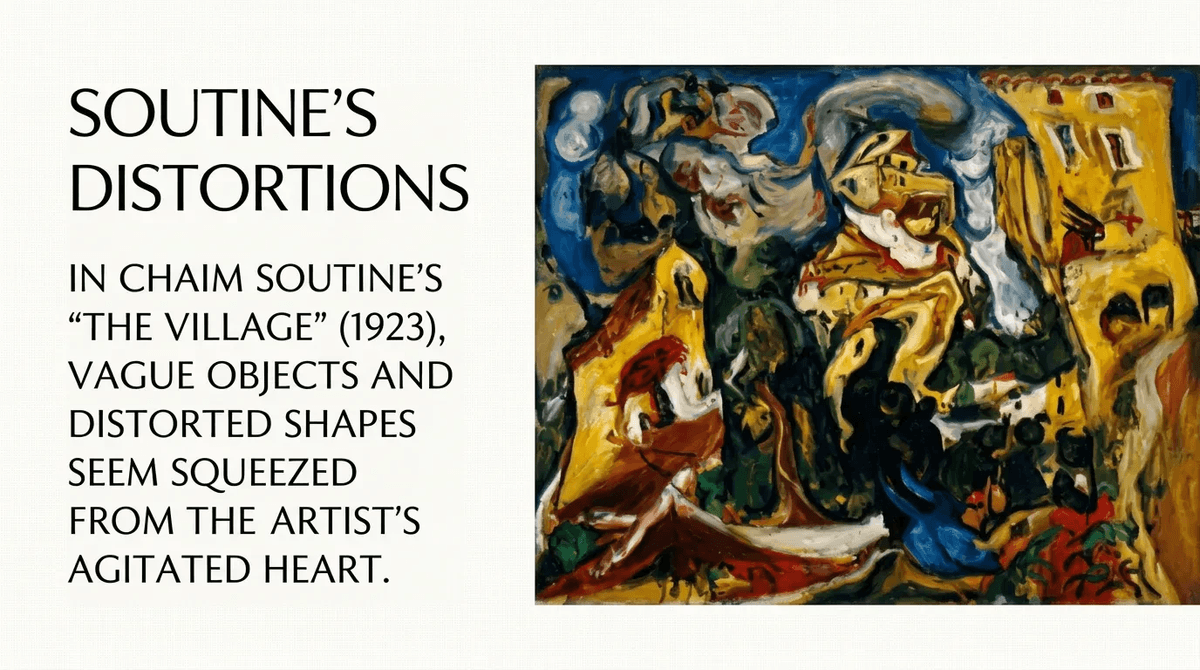
"Art does not reproduce the visible; rather, it makes visible," wrote Paul Klee in 1920. This profound assertion became central to the early twentieth-century movement widely termed "Expressionism." While art had long served as a means of rendering the unseen visible, particularly in religious contexts where the divine or spiritual was made manifest, Expressionism shifted this focus. By the late eighteenth century, with the rise of Romanticism and the increasing alienation of artists from conventional society, a growing conviction emerged that art's true role was to render visible the unseen inner world of the artist. Increasingly viewed as isolated geniuses, rebels, or visionaries, artists embraced a new social function: that of prophets, conveying profound inner truths that society, lacking concrete visual forms, had struggled to recognize.
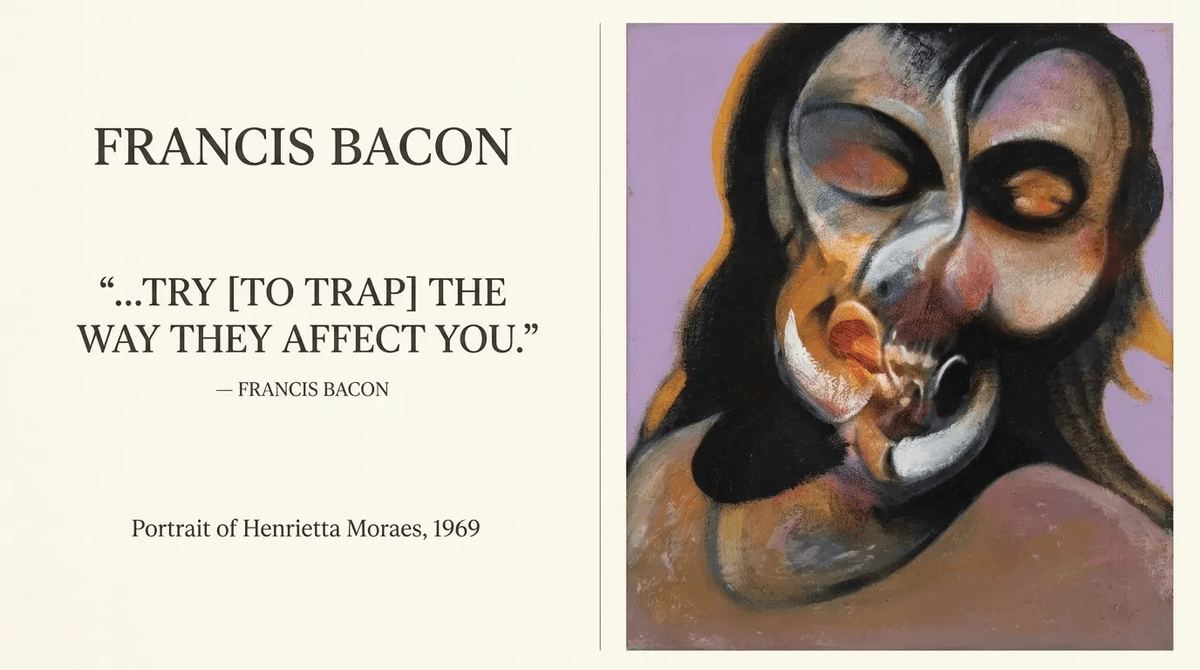
Progressive artists of the early twentieth century emphatically embraced this territory. Henri Matisse articulated, "Creation is the artist’s most profound expression, the translation of his feelings." Wassily Kandinsky similarly posited that "Form is the outward expression of inner meaning." German artist Max Beckmann declared his aim was "to find the bridge from the visible to the invisible," while his compatriot Emil Nolde asserted, "A work of art becomes a work of art when one revalues the values of nature and adds one’s own spirituality." If artistic expression is a public transaction—if the desire to "make visible" implies an offering to a viewer—then communication becomes paramount. Hence, Expressionist artists insisted on making colors and lines speak for themselves. For Klee, drawing a line was "an active measure," and for Kandinsky, "Harmony of color must be based solely on the principle of purposeful touching of the human soul." In confronting any particular work, our central question becomes: "What is the inner state that the artist seeks to express here?"
For Expressionists in northern Europe in the early twentieth century, particularly those associated with the Die Brücke (The Bridge) group in Dresden and Der Blaue Reiter (The Blue Rider) in Munich, the imperative to convey inner states was rooted in deep philosophical inquiry. For a subsequent generation of painters, including Chaim Soutine, Marc Chagall, and Max Beckmann, this expressive impulse continued to align with their profound sense of personal and social identity, though often within distinct artistic trajectories. Chagall’s dreamlike imagery and emotionally charged color palettes vividly evoke his socio-cultural background and heritage. Expressionism, with its rejection of academic norms and embrace of subjective truth, became an easy target for totalitarian regimes, culminating notoriously in the National Socialists' Entartete Kunst ("Degenerate Art") exhibition in 1937. As a powerful stance against artistic conformity, its enduring legacy was later reclaimed by Georg Baselitz and his younger contemporaries in German Neo-Expressionism of the 1970s and 80s, reasserting it as a highly self-conscious and politically charged act.