Installation art is an artistic practice that arranges elements within a specific space and time, often in an interior, but also site-specifically outdoors. In fundamental contrast to the traditional notion of art as a collection of discrete, self-contained objects, installation art invites the viewer to literally step inside the work, experiencing it as an environment—much like a theatrical stage designed for immersion, even when no performance is explicitly taking place.
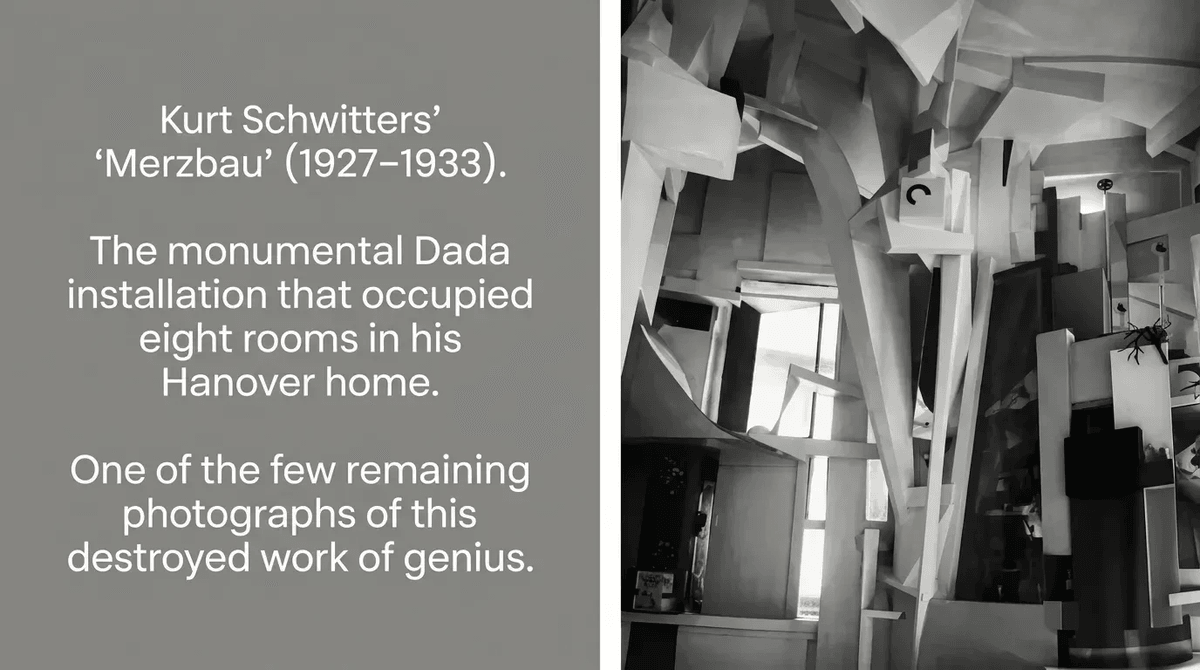
While the creation of immersive, designed environments has historical precedents—ranging from ancient cave art and Egyptian tombs to the elaborate Hall of Mirrors at Versailles—modern installation art, as it is commonly understood, emerged from a different set of conceptual concerns. Notably, early pioneers like Kurt Schwitters with his Merzbau (1927–1933) created monumental, all-encompassing environments. However, for 20th-century installation artists, the emphasis on environmental form was primarily a way of resisting the commodification of art as a saleable object and of fostering a direct, embodied experience for viewers. A key example is Hon (She) (1966), a groundbreaking collaborative installation by Niki de Saint Phalle, Jean Tinguely, and Per Olov Ultvedt, which invited visitors to walk through a colossal, reclining female figure.
Two distinct trajectories inform modern installations: an ambition for heightened sensory experience and a challenge to traditional artistic boundaries. In late nineteenth-century Europe, the idea that art could stimulate a "higher" experience by appealing to multiple senses simultaneously drove several experiments. Richard Wagner's concept of the Gesamtkunstwerk (total work of art) combined musical, visual, and theatrical elements to intensify aesthetic worship, finding an early expression in James McNeill Whistler's The Peacock Room (1876-77). This exquisite environment, designed to house a patron's collection of Chinese porcelain, echoed the frescoed chambers of Renaissance rulers, creating a meticulously controlled microcosm that excluded the ugly and the ordinary in favor of aesthetic perfection.
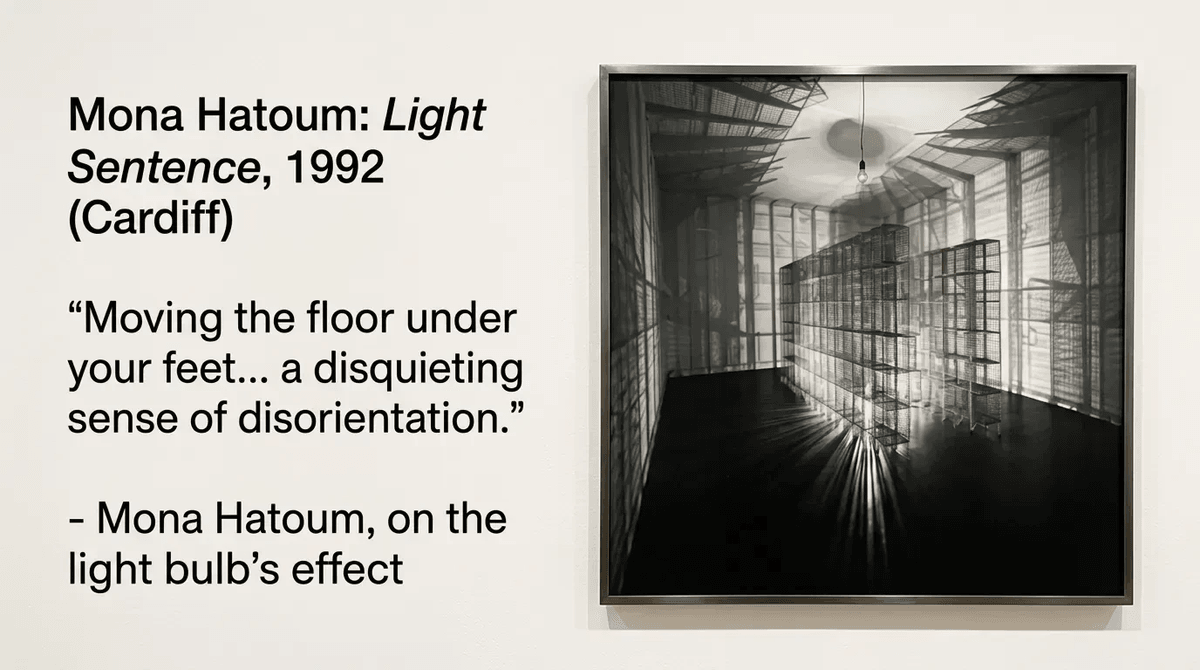
Twentieth-century installation art largely inverted this pattern. It brought ordinary, disturbing, or challenging materials and concepts into spaces traditionally dedicated to high art. During the 1960s and 70s, installation art often merged with performance, Land art, and other experimental practices, frequently bypassing the conventional dealer-and-gallery model. Walter De Maria's The New York Earth Room (1977), for example, filled a gallery with a vast expanse of dirt, which viewers could only perceive from a doorway barrier. Yet, the core principle of an artist-designed "being there"—an immersive, site-specific encounter—remained crucial. In subsequent decades, commercial and public galleries routinely allocated entire rooms for artists to create installations. While sharing with The Peacock Room the concept of a curated environment, modern installations often aim to stimulate radical unease or critical reflection rather than a mere "bath of aesthetic harmony." Like a stage set, the theatricality of installation is paramount, and its ephemeral or site-specific nature often makes it notoriously difficult to capture fully in conventional reproduction. Mona Hatoum's Light Sentence (1992) exemplifies this, featuring a grid of wire-mesh lockers illuminated by a single, moving light bulb, a setting that is simultaneously meditative, disorienting, and menacing.