In the 1840s, photography burst onto the public scene as a groundbreaking new technology. While it took nearly a century to be fully embraced as a fine art form, it profoundly challenged and transformed figurative painting. The advent of photography signaled a new era where mechanical image-making began to converge with the traditional handmade craft of art.
The term “photography”—literally meaning “drawing with light”—was coined by the British scientist Sir John Herschel in 1839. This revolutionary medium utilized the camera to capture images by exposing light-sensitive materials to reflected rays from objects. Photographic prints could be framed and displayed like paintings or compiled into albums, offering a new, portable visual record of observed reality. Crucially, photography achieved this not through the manual skill of the artist to render the image, but through an innovative mechanical and chemical process.
Photography and Painting: A Symbiotic Relationship
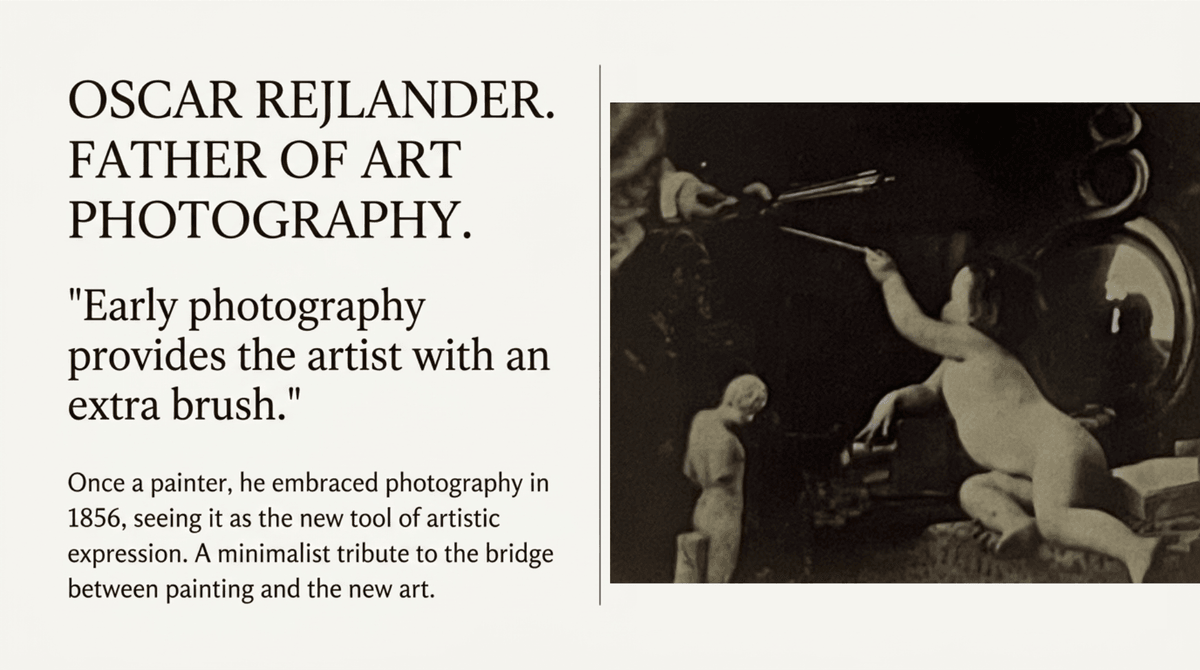
In its early stages, photography often adopted the subjects and compositional styles of painting. Whether portraying portraits, still lifes, landscapes, or street scenes, photographs served to reinforce and disseminate visual representations of the world that echoed artistic conventions. Many artists welcomed photography as an invaluable source of reference material. In the 1850s, Oscar Gustave Rejlander, a pioneer of art photography, eloquently suggested that early photography "provided an additional brush to the artist," a sentiment embraced by many painters. Photography became an indispensable tool for studying anatomy, drapery, and complex compositions, offering a new means of visual documentation and inspiration.
The impact of photography on painters was evident in their evolving fascination with phenomena like shimmering water, light dappled through foliage, and other transient effects. Impressionist painters, while often using suggestive color to capture fleeting moments beyond photography's early monochromatic capabilities, were simultaneously influenced by photographic practices, such as Edgar Degas's innovative use of radical cropping. This compositional approach gave his works a snapshot immediacy, akin to an unstaged glimpse, rather than a formal, traditional arrangement. Generally, painting and photography, despite their influences on each other, pursued distinct yet parallel artistic paths.
The early 20th century saw the avant-garde further redefine art's function, moving beyond mere reflection or interpretation of objective reality. Dadaist and Surrealist artists, for instance, utilized photomontage—a technique of cutting, rearranging, and combining disparate photographic fragments to construct new, often dreamlike or unsettling, images. This process actively deconstructed the camera's lifelike representation, blurring the traditional boundaries between art and photography.
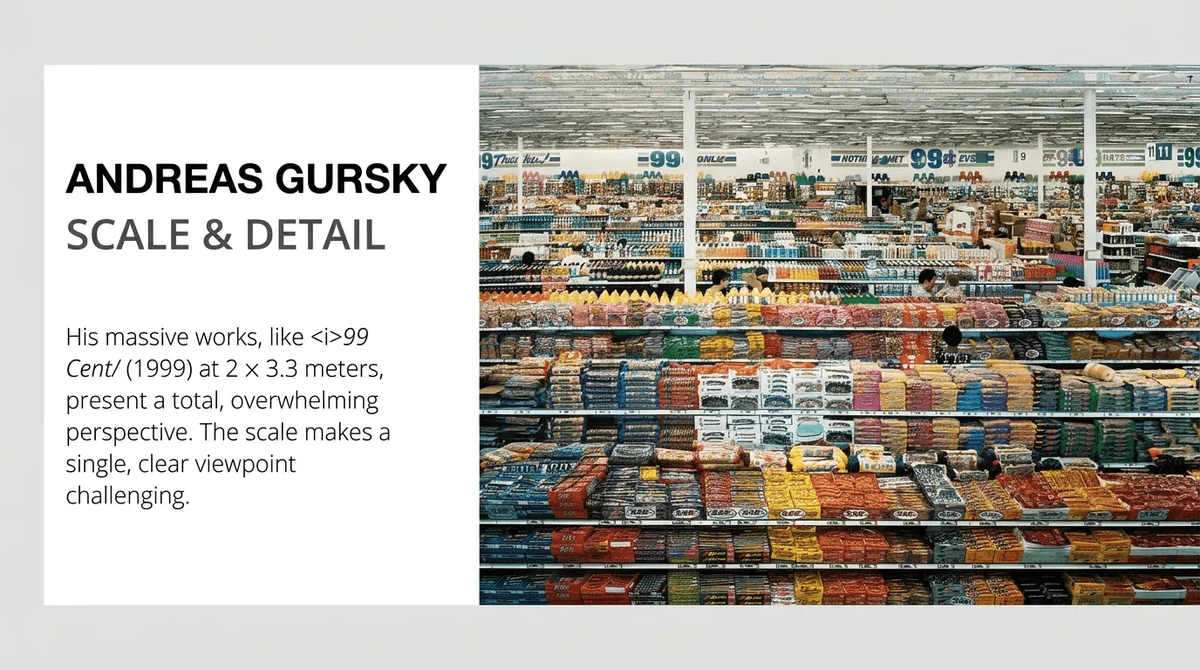
Artists continued to explore the relationship between the camera's mechanical output and handmade art in diverse ways. In the 1960s, Gerhard Richter famously remarked: "I use photographs to paint, just as others used drawings." For Richter, the distinction was not just about the medium but about the essence of representation; he noted, "A photograph is a depiction of real space, but has no space of its own." He also powerfully conveyed photography's unique power, observing: "A painting of a murder is never quite as compelling, but a photograph of the crime scene demands everyone’s attention." Andreas Gursky’s monumental inkjet prints, often vast in scale and rich in detail, continue to challenge the perception of photography as an easily digestible, page-sized medium, inviting viewers into an overwhelming and immersive perspective that defies a single, clear viewpoint.