Assemblage, the three-dimensional counterpart to collage, is an artistic technique that brings together disparate, often non-art fragments to form a unified sculptural work. While artists have long incorporated varied materials into their creations, the term "assemblage" gained prominence in the mid-20th century, notably popularized by William C. Seitz's 1961 MoMA exhibition, "The Art of Assemblage." This practice fundamentally challenged conventional distinctions between 'fine art' materials and everyday objects.
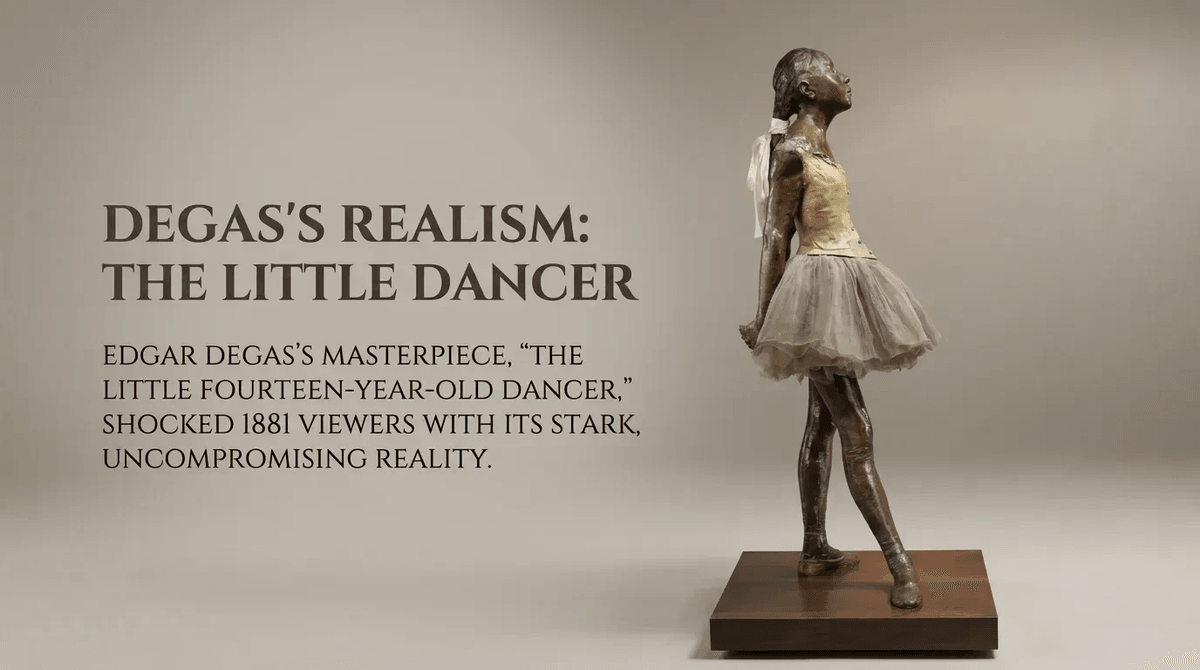
For centuries, Western art often imposed a rigid hierarchy on materials, separating 'fine art' mediums like oil paint and canvas from 'decorative arts' such as ceramics or jewelry, and even more so from common 'non-art' objects. However, the inclusion of non-traditional elements has a longer history. For example, religious sculptures from various periods, now preserved in museums, were historically adorned with real textiles, jewelry, or armor to enhance their lifelike presence. This practice subtly blurred the lines between sacred art and everyday reality. Edgar Degas radically challenged academic convention in 1881 when he integrated a horsehair wig, a muslin tutu, and a satin ribbon into his wax sculpture Little Dancer Aged Fourteen. To Parisian audiences, this striking blend of 'art' and 'everyday' materials was deeply unsettling, marking a significant early step towards assemblage.
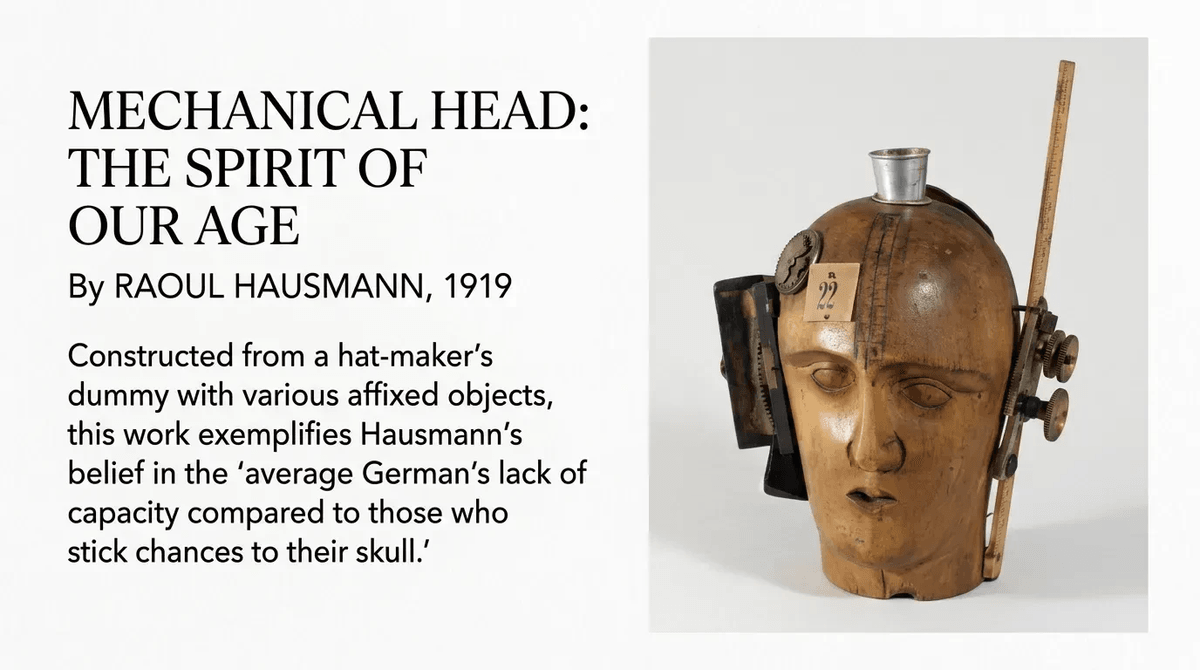
Degas's pioneering use of mixed media foreshadowed a broader movement to challenge the academic hierarchy that separated 'fine art' from 'everyday life.' The deliberate incorporation of ordinary materials—later codified as 'found objects'—directly questioned the established authority of traditional art institutions, which were often deeply intertwined with the political and aristocratic elite of the late 19th century. This subversive spirit found fertile ground in Surrealism, where artists embraced the 'poetic incongruity' of unexpected juxtapositions, famously articulated by Comte de Lautréamont's image of 'the chance meeting on a dissecting table of a sewing machine and an umbrella.' This fascination with incongruity extended to assemblage. Similarly, Dadaists like Raoul Hausmann and Hannah Höch utilized photomontage, a related medium, to deploy modern imagery for protest and satire. Pioneering his unique form of assemblage, Kurt Schwitters developed 'Merz,' a term derived from a fragment of a word that held no intrinsic meaning. For Schwitters, Merz represented the radical freedom to transform any conceivable discarded material—from tram tickets to wire netting, string, or cotton—into art, thus liberating it from academic constraints. His monumental 'Merzbau,' a walk-in architectural assemblage in his Hanover apartment, served as the ultimate physical manifestation of this philosophy, tragically destroyed during World War II.
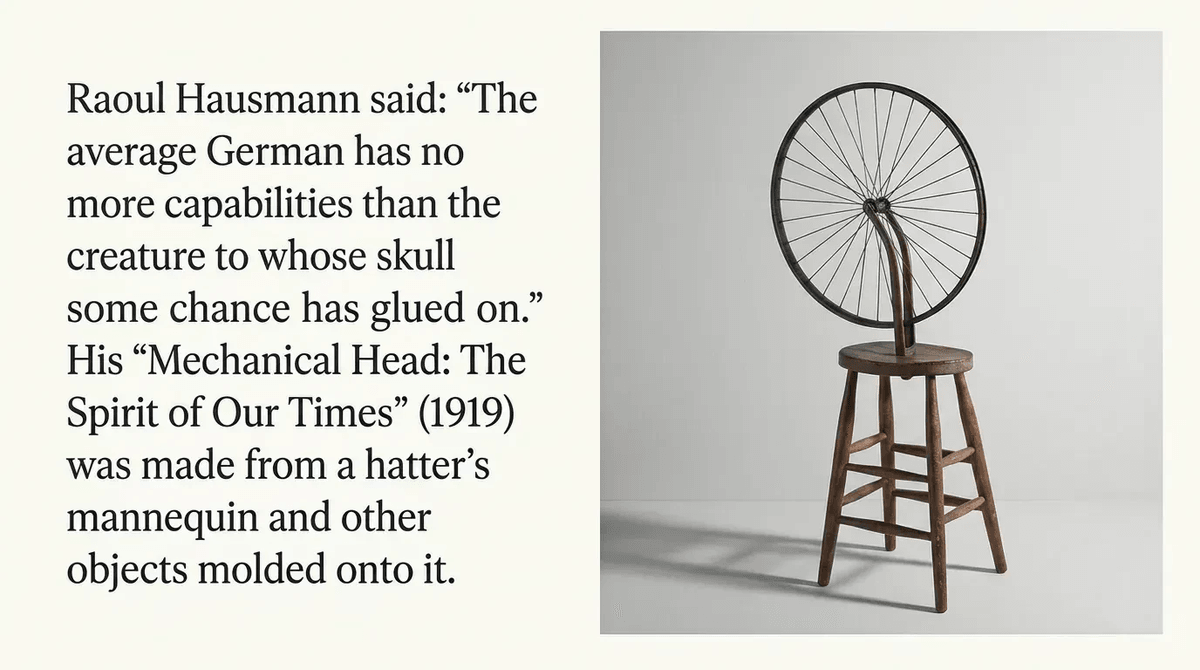
The legacy of assemblage, championed by figures like Marcel Duchamp and Kurt Schwitters, experienced a significant resurgence in late 20th and early 21st-century sculpture. It often manifests as an art of wit, playing on the inherent tension between the original identity of its materials and their transformed structural and conceptual role. Louise Nevelson's Sky Cathedral (1958), for instance, is a monumental wall-relief meticulously composed of wooden boxes and scraps of timber, unified by a uniform, solemn black paint. Similarly, Bill Woodrow, in works such as Car Door, Ironing Board and Twin-Tub with North American Indian Headdress (1981), scavenged the detritus of consumer society to create sculptures that, unlike earlier Surrealist objects, were deeply engaged with the socio-economic realities of contemporary waste and consumption.