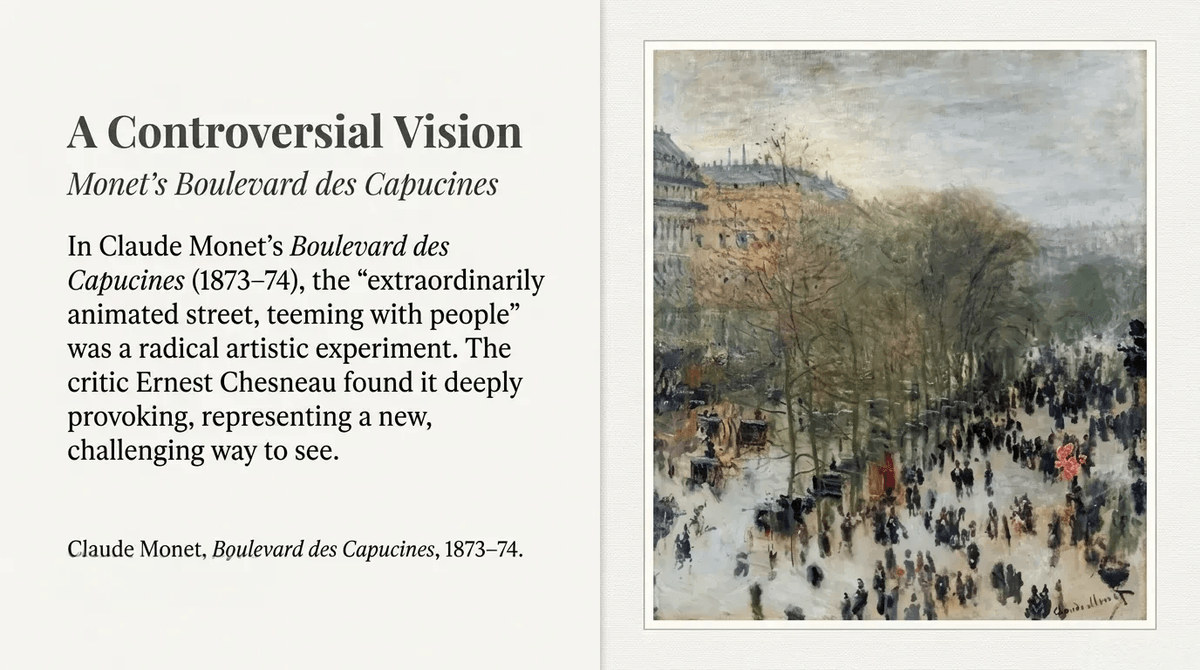
In 1874, the critic Ernest Chesneau lauded a painting by Claude Monet, observing that it evoked an unprecedented sensation: the capture of fleeting changes within a single moment. He posited that artworks capable of revealing such momentary transitions should become a central subject of painterly study. This revolutionary concept quickly took root, lending its name—Impressionism—from another of Monet’s seminal works, Impression, Sunrise.
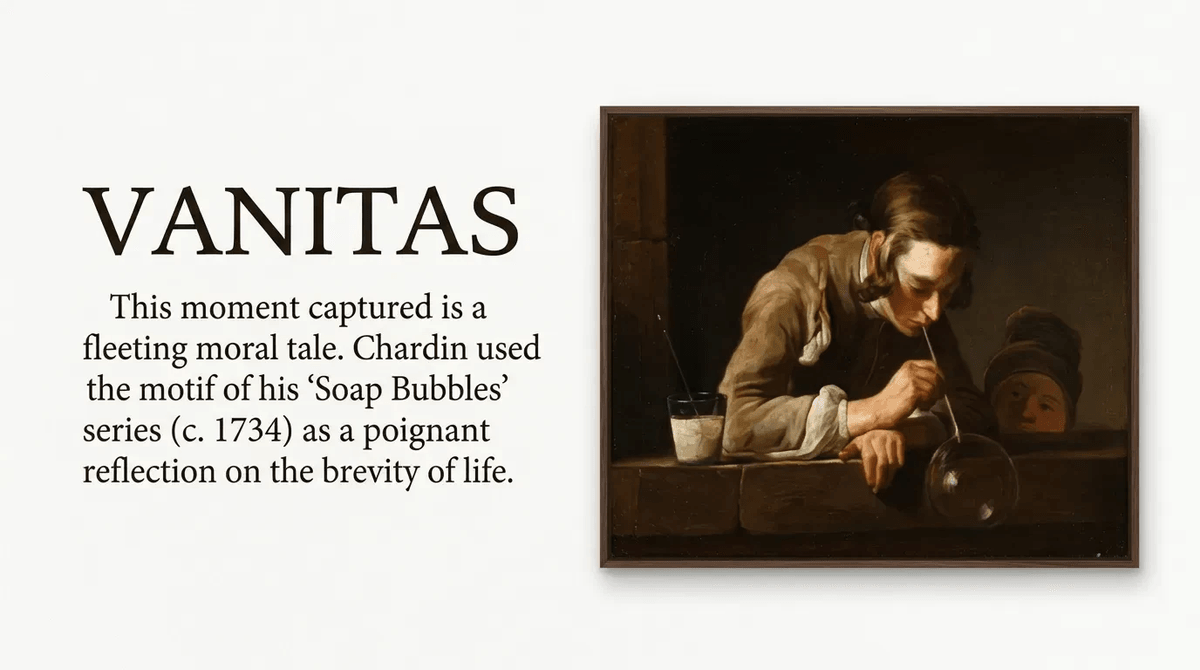
Even painters traditionally focused on still life began to recognize the ephemeral dynamics of change, understanding that a seemingly static arrangement constantly transformed under the shifting light of a single day. Artists knew that seizing these elusive moments demanded intense and prolonged effort, a fact often underestimated by viewers. For instance, Jean-Siméon Chardin’s 18th-century masterpiece Soap Bubbles (c. 1734), which poignantly reflects on the brevity of life, required hours of painstaking work to encapsulate the split-second sensation of a bubble being blown. This earlier exploration of the transient foreshadows later artistic concerns.
From Deliberation to Spontaneity
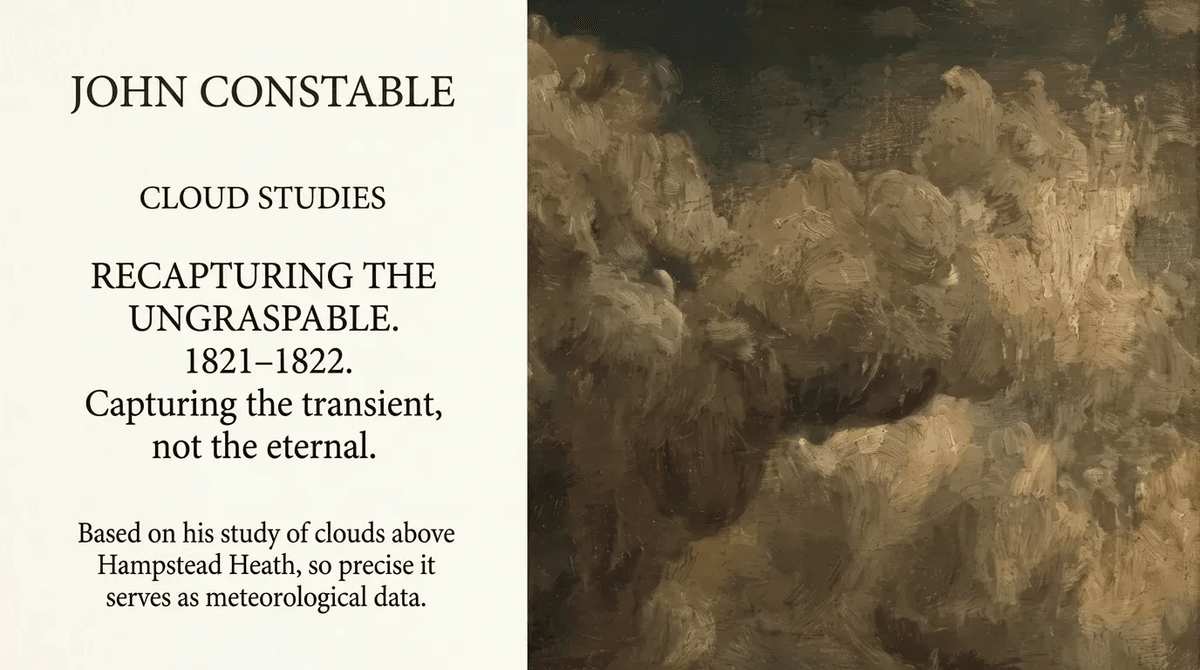
Before 1800, the prevailing idea of art as patient observation and careful deliberation meant that adapting to a changing world seemed incongruous. However, in the Romantic era, the concept of change became a key attribute of both nature and society. Human agency reshaped the environment, and a rapid sketch executed outdoors was often deemed to hold more truth than a meticulously refined studio piece.
Half a century later, Romanticism’s emphasis on individual feeling evolved, giving way to the direct observation championed by Realism. This shift formed the backdrop for Chesneau’s admiration of Monet’s Boulevard des Capucines, a work he likely encountered at the groundbreaking 1874 "Impressionists" exhibition in photographer Nadar's studio. This painting offered an elevated view of a bustling metropolis, captured not brick by brick, but through the dynamic interplay of light on foliage and the movement of the crowd. As Louis Leroy, a hostile critic, famously appropriated the title of Monet's Impression, Sunrise to coin "Impressionism," he inadvertently underscored the movement's essence: art not as a detailed description, but as a trigger for a shared experience of a visual moment.
Monet and his circle—including Camille Pissarro, Alfred Sisley, Pierre-Auguste Renoir, and Berthe Morisot—pioneered a method of painting the dynamic instant that directly paralleled the emerging technology of photography. The pursuit in art and literature converged on discovering the elusive point of contact between subjective feeling and objective sensation, eloquently described in Marcel Proust’s monumental novel In Search of Lost Time (1913–27), where the narrator's entire emotional landscape shifts with the sensations of recalled memories.
The Enduring Legacy of the Fleeting Moment
The concept of the captured moment proved to be far more enduring than Impressionism itself, continuously reinterpreted across diverse movements. Cubism, for instance, sought to capture the elusive experience of looking over time and from multiple perspectives, rather than a single, fixed instant. Futurism, in its embrace of speed and movement, further pushed these boundaries, a phenomenon Marcel Duchamp famously dismissed as "the Impressionism of the mechanical world." Ultimately, the desire to convey the ephemeral, the experiential, and the shifting nature of perception remains a fundamental driver in contemporary artistic practice.