In art history, "Realism" is a widely used but frequently nuanced term. It emerged in the mid-19th century as a bold new vision for the role of the French artist, encompassing a rejection of both idealization and academic conventions. It articulated a profound commitment to representing contemporary social reality with accuracy and resolve, emphasizing the dignity of everyday subjects.
While the "down-and-out" figures in Caravaggio’s taverns or Velázquez’s street scenes offered truthful reflections of their respective eras, these earlier artists would never have described their work in the programmatic terms used by Gustave Courbet in his 1855 "Realist Manifesto." Courbet’s monumental canvases of local events, such as A Burial at Ornans and The Peasants of Flagey Returning from the Fair, possessed the grandeur and solemnity traditionally reserved for history painting. Through these works, he asserted his artistic philosophy, declaring his aim was "to translate the customs, the ideas, the appearance of my epoch, according to my own estimation, to create living art."
Democracy in Art: Subject, Viewer, and Purpose
For Courbet, Realism was more than mere replication of appearances—an achievement already present in naturalistic Paleolithic cave art. By 1855, the writer Fernand Desnoyers asserted that to be a "sincere and perceptive artist," one had to oppose those who insisted on looking through "colored spectacles." This was what Courbet termed "democracy in art." For progressive social thinkers of his time, painters needed to abandon idealization and fantasy to confront contemporary life directly, positioning art as a leader or vanguard of progress. In the socialist society envisioned during the revolutionary era, "every worker must become an artist in his chosen specialty," as the philosopher Pierre-Joseph Proudhon wrote in 1846. This vision extended the democratic principle to the very act of art-making and appreciation.
The belief that art has the capacity to drive social progress persisted long after the debates over Realism were superseded by those of the avant-garde. In the early 20th century, "New Objectivity" (Neue Sachlichkeit) became the label for German painters who satirized the grim disillusions and exposed the political fragility of 1920s society, led by artists such as George Grosz, Max Beckmann, and Otto Dix. Their contemporary, August Sander, in his monumental documentary photography, found a powerful parallel to Courbet’s conception of Realism—"the representation of my own epoch." Sander set out to photograph Germans of every type, age, and profession; his vast archive of diverse faces directly clashed with Nazi racial propaganda, embodying a different form of visual democracy. While photographers like Dorothea Lange, who captured the plight of rural laborers during the 1930s Great Depression, took a leading role in documenting raw reality, many painters continued to engage with social and political realities through diverse aesthetic approaches.
The Contested Nature of Reality
The very nature of the "reality" that art confronts or depicts remains inherently contested—an ambiguity native to the medium itself. For instance, Chuck Close’s monumental portraits meticulously render every skin blemish and wrinkle on his subjects’ faces, recalling Proudhon’s famous dictum: "Any individual, whether beautiful or ugly, can serve as a subject for art." This challenges conventional notions of beauty and elevates the ordinary to the realm of high art.
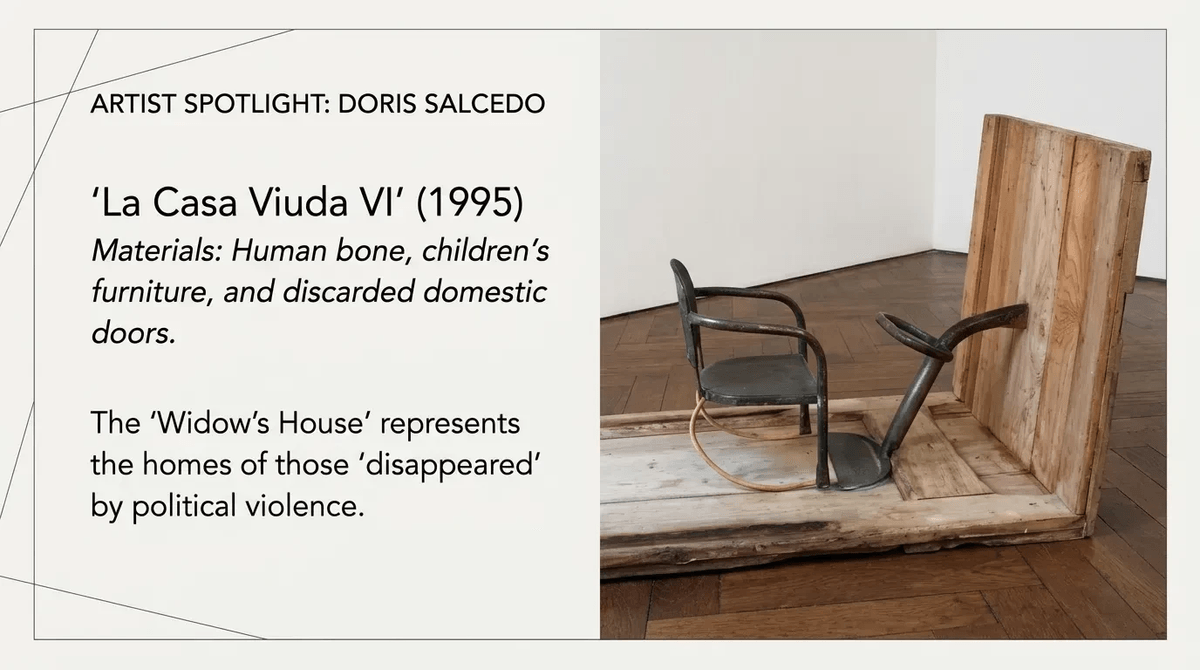
Contemporary artists continue to grapple with the complexities of representing reality, often focusing on historical trauma and social injustice.