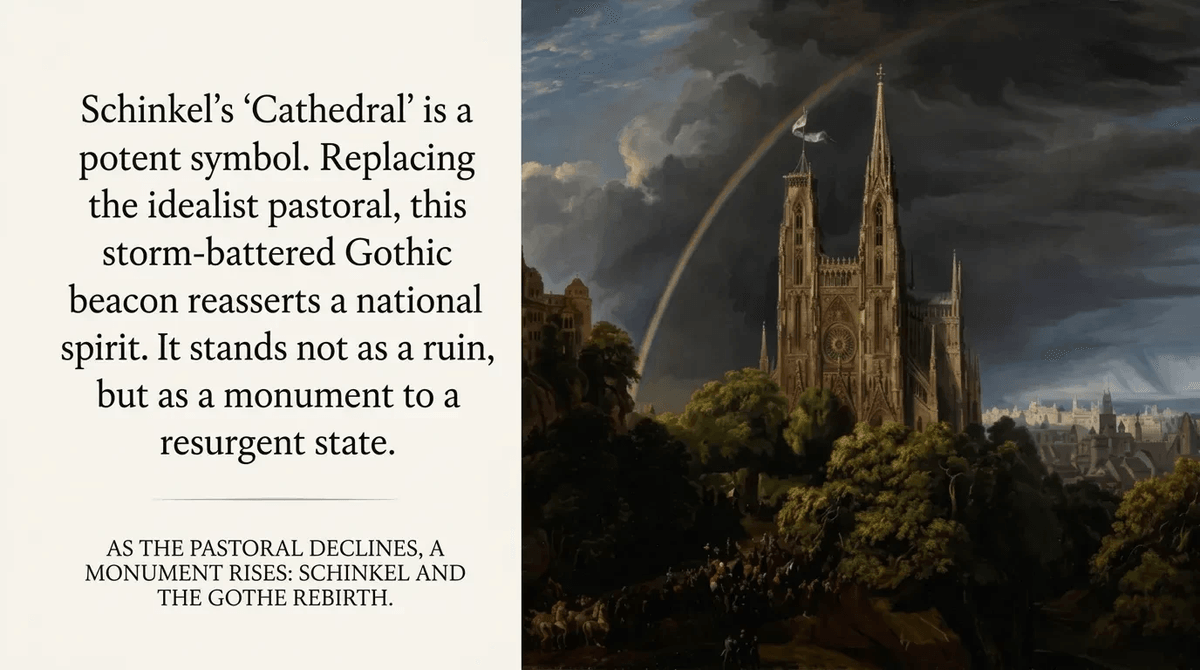
Emerging in the late 18th century, medievalism infused European art with a new sensibility, as artists turned to the forms and subjects of Gothic architecture and medieval art. This movement conjured a romanticized vision of a pure, pre-industrial Christian world, remaining a ubiquitous presence in Western visual culture for over a century. From around 1780, the revival and reinterpretation of medieval art aligned closely with Romanticism’s emphasis on emotion and imagination, in direct contrast to prevailing Classical, rationalist ideals. As industrialization gained momentum, the Middle Ages were increasingly idealized as a lost era of stability, shared values, and profound faith, epitomized by the anonymous craftsmanship embodied in Gothic cathedrals.
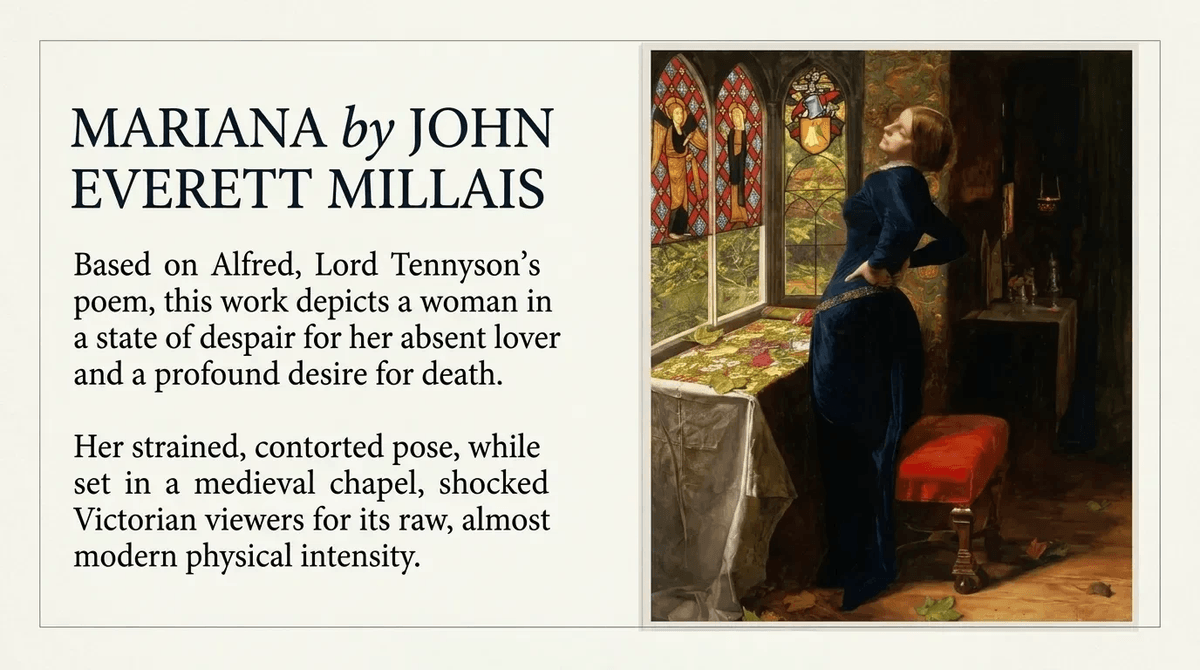
In response to the perceived dehumanizing aspects of industrial modernity, medievalism often romanticized a bygone pastoral life, populated by figures like priests, knights, and maidens. In 1848, the Pre-Raphaelite Brotherhood, a group of young British painters, formed with the explicit aim of returning to "nature" by rejecting what they viewed as the moribund academic classical tradition inherited from Raphael and the High Renaissance. Works like John Everett Millais’s Mariana, with its meticulous rendering of details such as stained glass and velvet, vividly conveys her profound longing. Rather than merely reflecting neoclassical sculpture's idealized forms, Victorian medievalism, particularly in its Pre-Raphaelite manifestations, often channeled intense human emotions and desires through historical or literary subjects, allowing for a depth of expression that skirted, or at times deliberately challenged, prevailing moral proprieties.
Politically, medievalism frequently aligned with burgeoning Northern European nationalism and cultural pride. For instance, Karl Friedrich Schinkel’s A Medieval City on a River (1815), painted in the aftermath of the Battle of Waterloo, features a fantastical cathedral whose unfinished spires symbolically express a widespread longing for a unified Germany. This work functions as a potent, coded political statement, reflecting the era's fervent nationalistic sentiments.
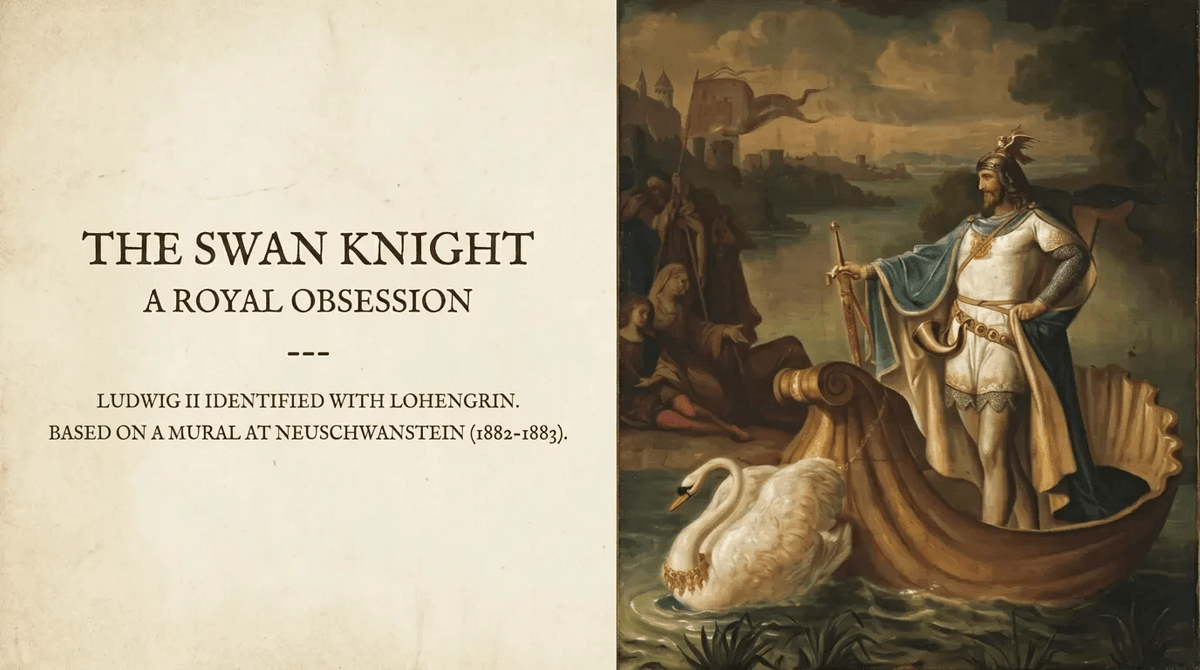
For over a century, medievalism offered a compelling visual and thematic escape for artists, novelists, and photographers seeking to reconcile with or critique industrial capitalism. Beyond aesthetic appeal, medievalizing forms could also serve political agendas. Examples include the Houses of Parliament in London, designed by the architect A.W.N. Pugin, which evoked a romanticized British past, and King Ludwig II’s fantastical Neuschwanstein Castle in Bavaria, a highly personal architectural fantasy steeped in medieval lore.
By the early 20th century, however, medieval themes—pervasive in everything from grand public buildings like the Houses of Parliament to stained-glass windows in schools, chapels, libraries, and suburban homes across Europe, North America, and their global colonies—had become associated with perceived privilege, pretension, and conservative values. Following the devastations of the First World War, this aesthetic was largely supplanted by the geometric, clean-lined principles of modernism in architecture and art.