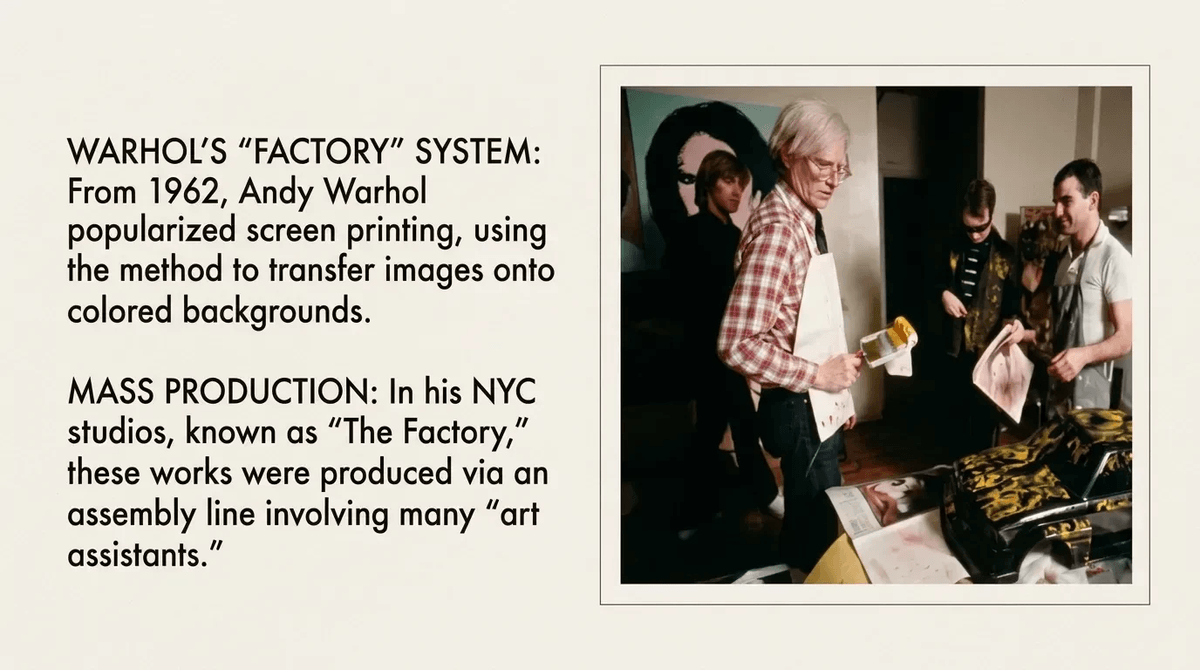
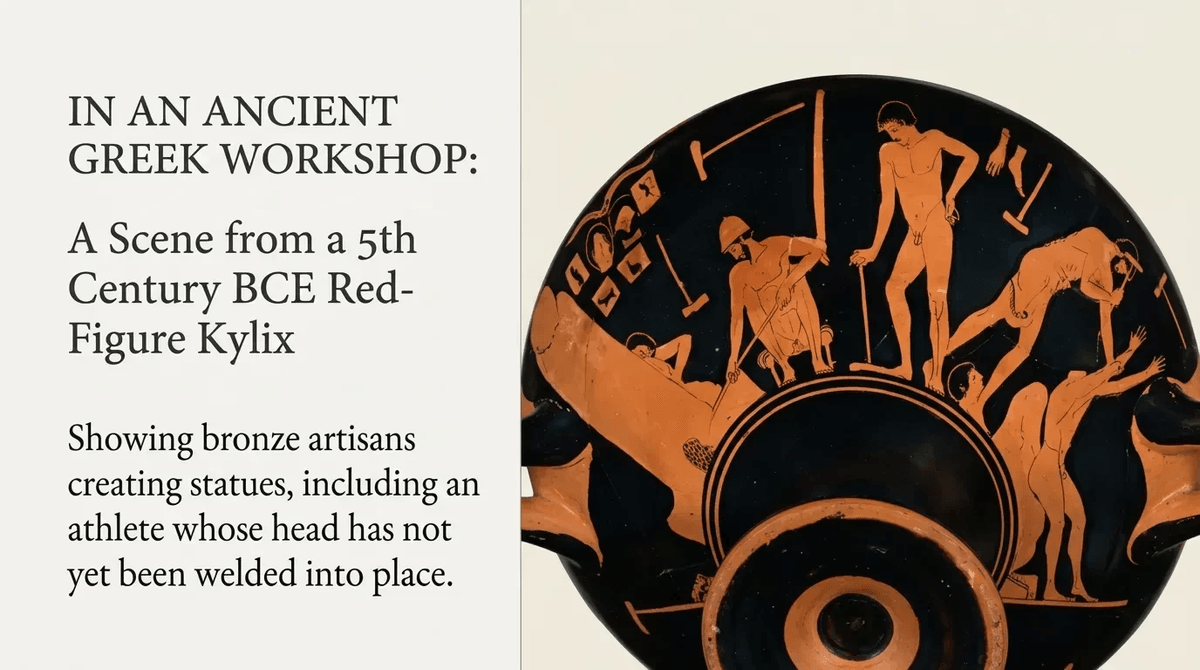
The term "artist" originally denoted a skilled practitioner in various fields, encompassing both arts and sciences. In contemporary usage, however, it implies a creator's innate talent, imagination, and capacity to translate concepts into material forms or images—frequently, though not exclusively, for aesthetic contemplation or conceptual engagement, often transcending purely utilitarian functions.
From Craft to Intellectual Pursuit
Our understanding of the artist marries a lingering sense of mystique with perpetual evolution. Superficially, the Latin ars (akin to the Greek techne), meaning "craft" or "skill," might suggest a straightforward trade. Indeed, for centuries, sculptors, painters, and architects were often seen as plying a manual craft, not dissimilar to that of goldsmiths or potters. Yet, classical Greek sculptors like Phidias and Polykleitos achieved renown precisely by transcending the boundaries of mere craftsmanship, translating abstract ideals into tangible, idealized forms. As visionaries, artists do not merely replicate; they observe, interpret, and visually reconstruct the world.
Historically, despite their technical prowess, artists were long considered manual laborers. This divide between physical toil and intellectual endeavor was radically challenged in 15th-century Italy. Artists and theorists such as Leon Battista Alberti and Leonardo da Vinci argued that a painter's education must encompass mathematics, literature, and optics. By the early 16th century, Giorgione’s enigmatic landscapes and Titian’s mythological allegories signaled a profound metamorphosis in the artist’s self-conception: they had transitioned from manual artisans into philosopher-poets.
From the 16th century onward, the academic training embraced by Renaissance masters systematically elevated the artist's professional status. Within the academic framework, however, experimental curiosity was frequently subordinated to the imitation of approved classical models. This deference to antiquity aligned seamlessly with the role of 18th-century European artists, who, while creating diverse works from portraits to history paintings, often reflected and affirmed the values of an intellectual and social elite.
The Romantic Genius and Modern Transformation
By the late 18th century, the Romantic movement redefined the artist from a socially integrated craftsman into a visionary poet driven by the wild forces of nature—a figure embodying a different, often more individualistic and emotionally charged, form of genius than the Renaissance ideal. Genius was no longer measured solely by rational control, but by an intuitive grasp of truth and beauty. While artists explored awe-inspiring natural phenomena like towering peaks and tempestuous seas, philosophers simultaneously engaged in the theoretical codification of this "sublime" experience.
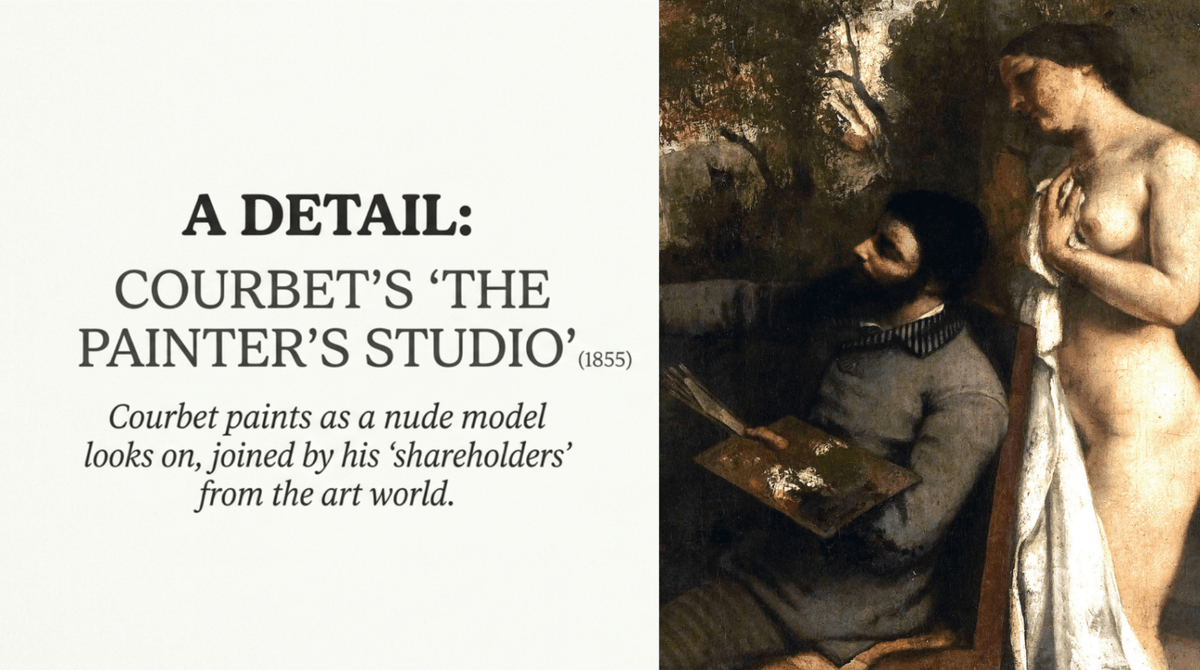
By the mid-19th century, European artists cast themselves as social commentators and political activists, thereby claiming a new intellectual authority. Courbet’s monumental canvas, The Painter’s Studio, described by him as "A real allegory summing up seven years of my artistic and moral life... It’s society in its own way... painted in my studio," boldly positioned his own creative ego at the absolute center of the social world. In the 20th century, this posture evolved further as the artist adopted the mantle of the social critic, the iconoclast, or the political dissident—the ultimate radical figure. Today, "the artist" remains a fluid, open-ended category. Whether acting as a teacher (Joseph Beuys) or a conceptual provocateur (Damien Hirst), the artist’s constructed persona has itself become an integral component of the artwork, further blurring the lines between creator and creation.