Landscape painting, a genre dedicated to depicting natural scenery, has transcended cultural boundaries and millennia. While ancient Chinese shan shui (山水, "mountains and waters") established a profound tradition centuries before, Western art saw its independent emergence as a significant genre from the 17th century onwards. Whether idealized, meticulously observed, or dramatically reinterpreted, landscape art invites us to reflect on nature's beauty, our place within it, and the elusive concept of the sublime.
Chinese Tradition: The Poetic Resonance of Shan Shui
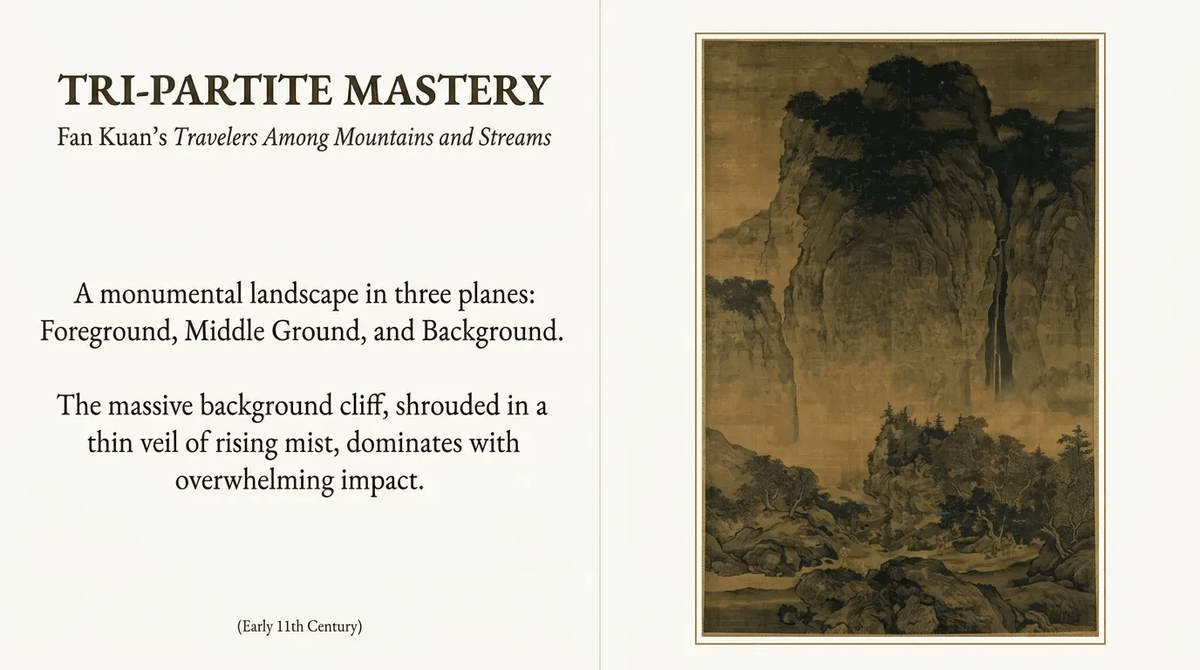
Chinese traditional landscape painting boasts a venerable history, deeply rooted in philosophical and spiritual thought. Shan shui literally translates to "mountains and rivers," often depicting vast, serene sceneries. Mountains, revered in Buddhism and Taoism as sites of meditation and spiritual retreat, are rendered with vivid brushwork and profound emotional depth. In masterpieces like Fan Kuan’s renowned 11th-century work, Travelers Among Mountains and Streams, human figures are often mere embellishments, deliberately minimized to emphasize the grandeur of nature. Fan Kuan’s "raindrop texture" brushstroke (yudian cun) conveys the majestic scale of the towering mountains shrouded in mist, an effect born from keen observation and spiritual immersion. This artistic approach allows viewers to engage with nature's immense power, offering a meditative escape from the bustling human world.
European Evolution: From Background to Independent Genre
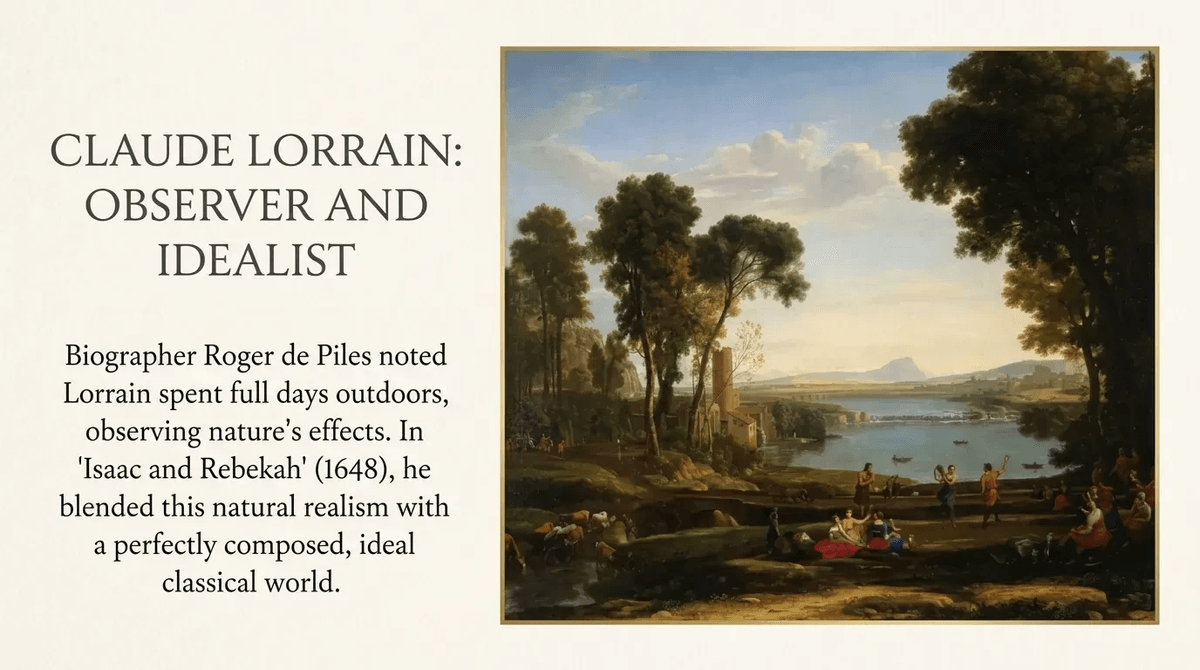
In Europe, landscape initially served as a background for religious or mythological narratives. Its slow evolution into an independent genre began in the 17th century. Artists like Claude Lorrain synthesized detailed natural observations with classical compositions, creating serene, idealized vistas often populated by mythological figures. His works, such as Landscape with the Marriage of Isaac and Rebecca (c. 1648), evoke a sense of poetic distance and a perfectly composed, classical world, contrasting with the more earthly and immediate landscapes of Dutch Golden Age painters like Aelbert Cuyp, whose depictions of cows grazing in muddy fields under vast, cloudy skies invited contemplation of local life.
Romanticism and the Sublime
The 18th and 19th centuries witnessed landscape painting’s ascendance to a premier genre, despite an early dismissal by publications like the 1771 Encyclopaedia Britannica. The rise of Romanticism propelled landscape into a powerful medium for expressing profound, ineffable emotions and the concept of the Sublime—an aesthetic quality evoking awe, terror, and boundlessness, often through dramatic natural scenes. Artists like J.M.W. Turner and John Constable captured the raw power and atmospheric effects of nature, moving beyond mere depiction to convey spiritual and emotional resonance.
Modern and Contemporary Landscapes
Throughout the 20th and 21st centuries, the concept of landscape has been continuously redefined. Impressionists captured fleeting moments of light and atmosphere, while Post-Impressionists infused landscapes with emotional and symbolic meaning. Later, technological advancements, particularly photography, transformed how landscapes were perceived and created. Artists began to explore human impact on nature, the artificiality of constructed environments, and conceptual representations of space and place.
Contemporary artists, utilizing various media from film to digital manipulation, continue to challenge traditional landscape conventions. Works like Andreas Gursky’s monumental photographs, such as Rhine II (1999), often depict seemingly ordinary landscapes with overwhelming scale and meticulous detail, subtly altered to remove human elements. These powerful images evoke a modern sublime, highlighting humanity's often invisible hand in shaping the environment and prompting contemplation on the relationship between nature, culture, and perception in the globalized world.