Greek art, particularly its classical sculpture, has served as an unparalleled touchstone for artistic ideals across millennia. While the ancient Greeks did not formulate explicit "art theories" in the modern sense, their sophisticated understanding of proportion, harmony, and the human form established enduring aesthetic principles that resonated profoundly with successive cultures, shaping how beauty, heroism, and the sacred were conceived and represented.
The Enduring Legacy: From Classical Ideals to Imperial Adaptations
During its Classical period (5th to 4th centuries BCE), Greek art found its most profound expression in human sculpture. These works achieved a delicate balance between meticulous observation of life and an idealized aesthetic, demonstrating remarkable technical mastery. This artistic philosophy was deeply intertwined with the rich religious and cultural heritage of ancient Greece, encompassing philosophy, mathematics, and a vast tapestry of myths.
The influence of Greek art extended far beyond its geographical boundaries. Alexander the Great's eastward expansion in the 4th century BCE led to a dynamic cultural exchange and the development of Hellenistic art, characterized by greater drama, realism, and emotional intensity. In regions like Gandhara (present-day Afghanistan and Pakistan), Greek artistic forms were adapted to Buddhist subjects, influencing the depiction of religious figures and the development of classical Indian sculpture. Similarly, Roman artists extensively admired and reproduced Greek sculptures, often infusing these works with their own imperial and propagandistic elements. Iconic sculptures of emperors like Augustus, for instance, drew heavily on the idealized and heroic spirit of Greek prototypes. Early Christian art also borrowed Greco-Roman conventions for visual narratives, as seen in sarcophagi depicting biblical figures like Jonah in postures reminiscent of sleeping Greek youths. This pervasive adaptability ensured that the forms and expressive power of Greek art remained a potent source of inspiration for centuries.
Renaissance Revival and Neoclassical Reaffirmation
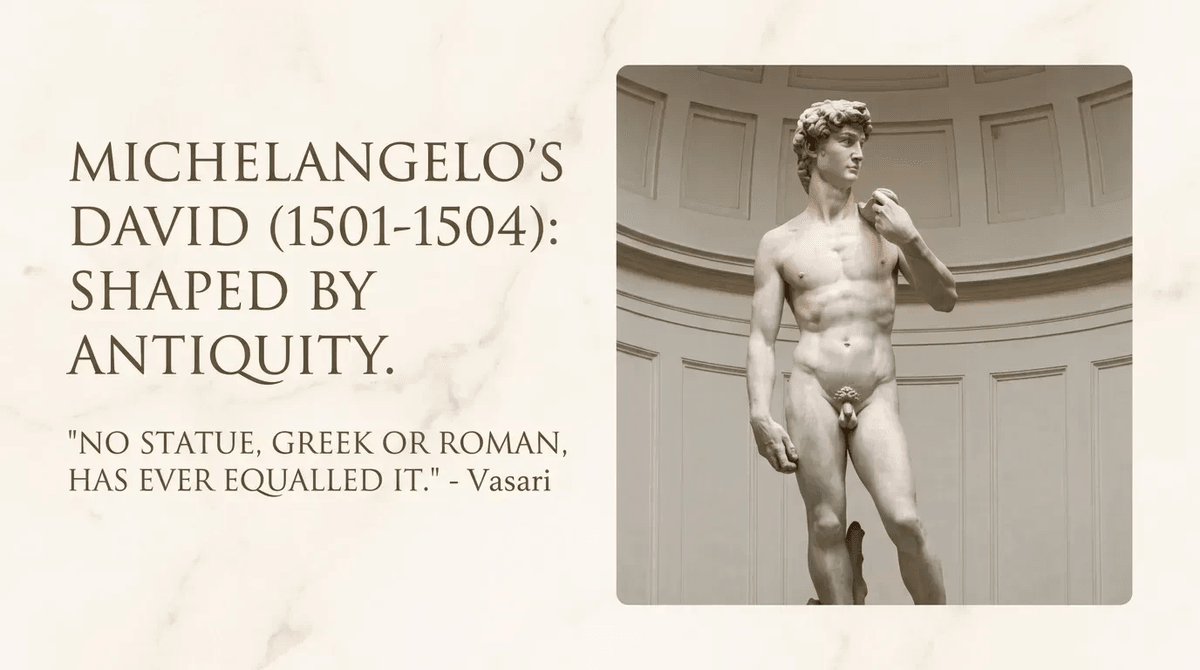
The Renaissance witnessed a fervent revival of classical antiquity. Artists like Michelangelo meticulously studied ancient Roman sculptures, which were often copies of Greek originals, absorbing their anatomical precision and idealized forms. Giorgio Vasari, the famed Renaissance biographer, noted that for artists of his era, the "ancients" provided the very standard against which artistic achievement was measured. Michelangelo's monumental David (1501-1504) exemplifies this synthesis, combining Renaissance humanism with a profound debt to classical ideals of the heroic male nude.
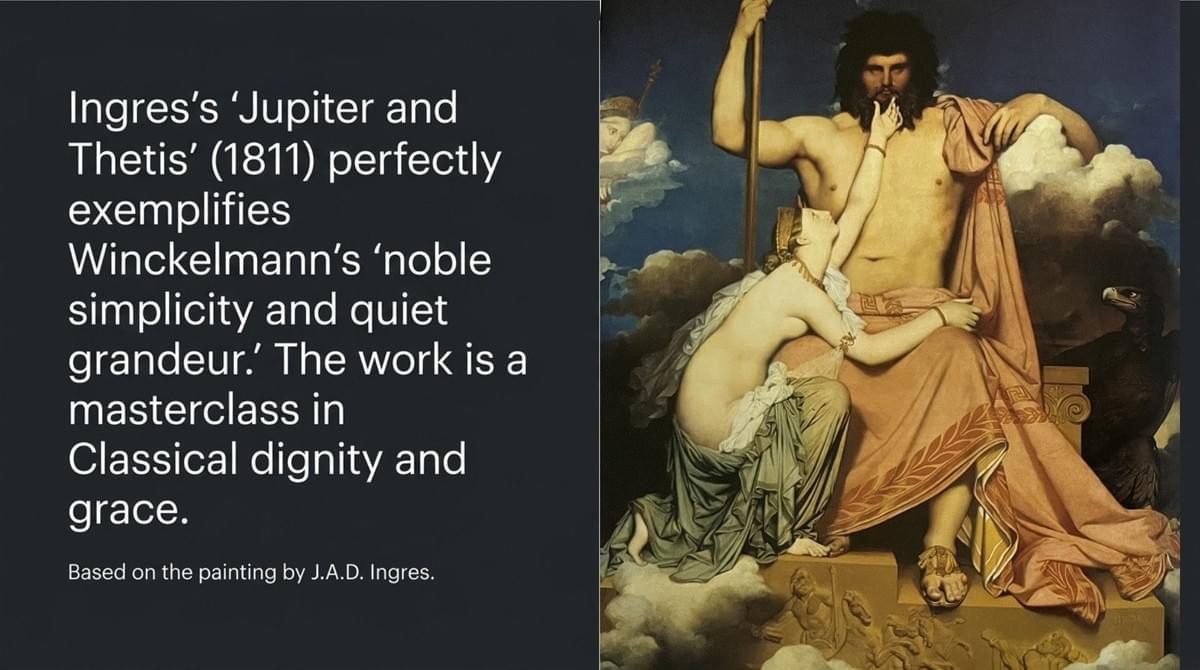
In the 18th century, a new wave of classical appreciation swept across Europe, largely catalyzed by the German art historian Johann Joachim Winckelmann. He championed the "noble simplicity and quiet grandeur" of Greek art, advocating for its imitation as the path to artistic greatness. Winckelmann's theories profoundly influenced Neoclassical artists like Jean-Auguste-Dominique Ingres, who studied classical sculpture in Rome and translated its formal purity into his paintings. Academic art institutions, established throughout Europe, systematically incorporated Greek models as foundational for artistic training.
Modern Reimagining and Contemporary Discourse
Greek themes and forms continue to resonate in 20th and 21st-century art, often reinterpreted through contemporary lenses. Modern sculptors, for instance, might appropriate classical figural elements while abstracting or fragmenting them to explore new aesthetic and conceptual territories. Movements like Cubism and De Stijl consciously engaged with classical notions of order and geometry, re-imagining them for a new era.
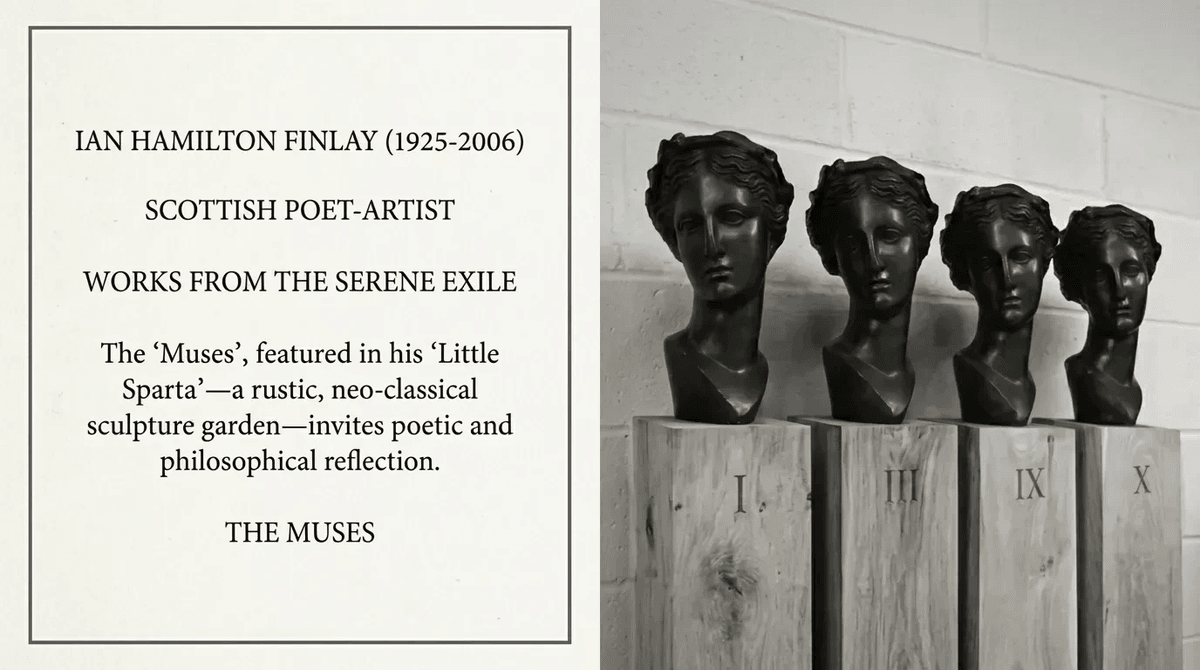
Artists like Ian Hamilton Finlay critically engaged with classical traditions. His "Little Sparta," a neo-classical sculpture garden in Scotland, features works like "The Muses" which playfully and philosophically reinterpret classical motifs within a modern context, inviting viewers to reflect on art, nature, and political thought. These contemporary adaptations demonstrate that Greek art remains a vibrant, evolving source of inspiration, capable of profound and diverse interpretations that transcend time and cultural shifts.