An individual artwork, when part of a series, possesses its own distinct meaning, yet its full significance often emerges from the dynamic interplay between the part and the whole. Whether conceived as a continuous narrative, a thematic exploration, or a sequential study, art series invite viewers to consider how individual elements contribute to a broader conceptual framework, enriching the overall experience.
From Narrative Cycles to Thematic Explorations
The concept of art in series has a rich history, serving diverse purposes across different eras. In some instances, individual components are designed to form an indivisible, coherent whole. For example, Piero della Francesca’s monumental fresco cycle, The Legend of the True Cross (1447–1465), in the Basilica of San Francesco, functions as a single, sweeping narrative, despite its various segments being appreciated individually.
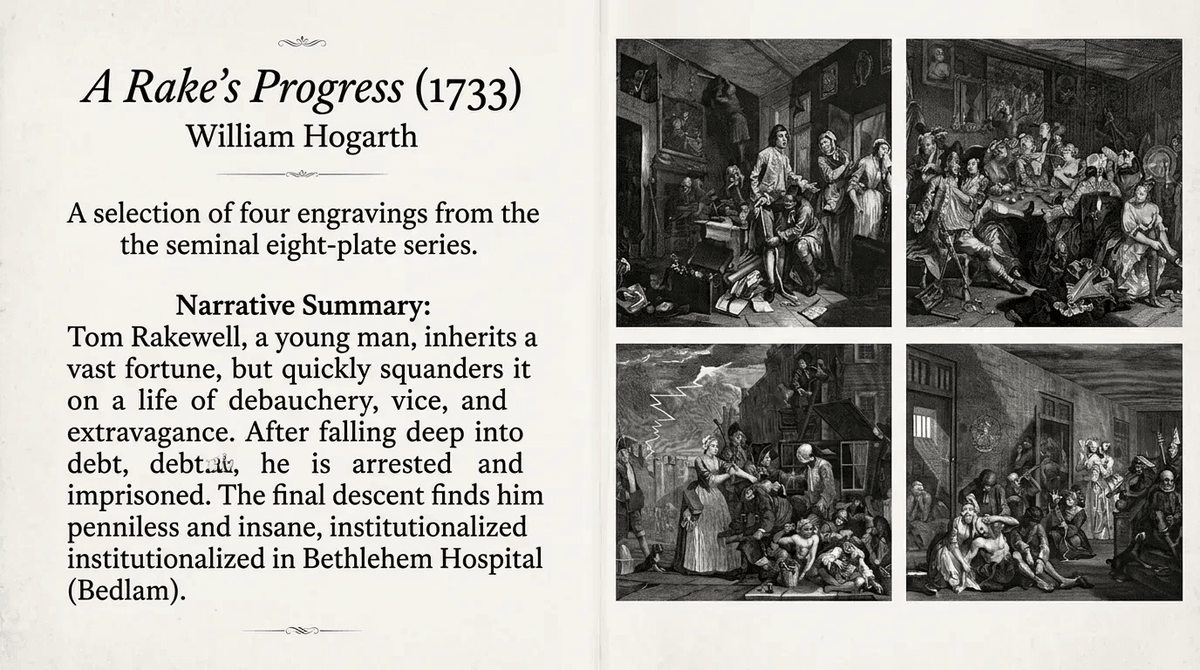
In contrast, other series are composed of self-contained yet interconnected episodes. William Hogarth’s satirical narrative series, A Rake’s Progress (1733), for instance, presents a young man’s moral decline through a sequence of eight distinct, moralizing tableaux. Each print offers a complete scene, but together, they construct a larger, powerful narrative that critiques societal vice and shapes the viewer’s understanding of the story’s dramatic progression. This serialized format inherently structures and dramatizes the unfolding narrative.
Printmaking’s Impact and Conceptual Depth
The advent of printmaking in the 15th century greatly catalyzed the conceptualization and dissemination of art series. The possibility of mass reproduction fostered a tighter link between visual images and textual narratives, expanding the art market beyond aristocratic patrons. During this transformative era, Albrecht Dürer’s monumental woodcut series, The Apocalypse (1498), offered complex theological and philosophical reflections across fifteen prints. While each print can be appreciated individually, their thematic interconnection invites deeper inquiry into Dürer’s profound artistic vision.
By the 20th century, the serialized format continued to evolve, often becoming a vehicle for minimalist and abstract expressions. Barnett Newman’s monumental series, The Stations of the Cross (1958–1966), comprising fourteen minimalist abstract canvases, delves into the profound weight of Christian iconography and sacred narrative. Newman’s own words on his lithographic series, 18 Cantos (1963–1964), aptly summarize the power of series: “Each print is a separate thing… yet to me, only when they are seen together as a whole is their complete meaning revealed.” These works, born perhaps from Newman’s personal brush with mortality or a collective mourning for World War II victims, assert a collective power far exceeding the sum of their individual parts.
Sculptural Series and Contemporary Resonance
The concept of the series extends beyond two-dimensional media into sculpture and installation art. Sculptural series often explore variations on a theme, offering multiple perspectives or a temporal progression of forms.
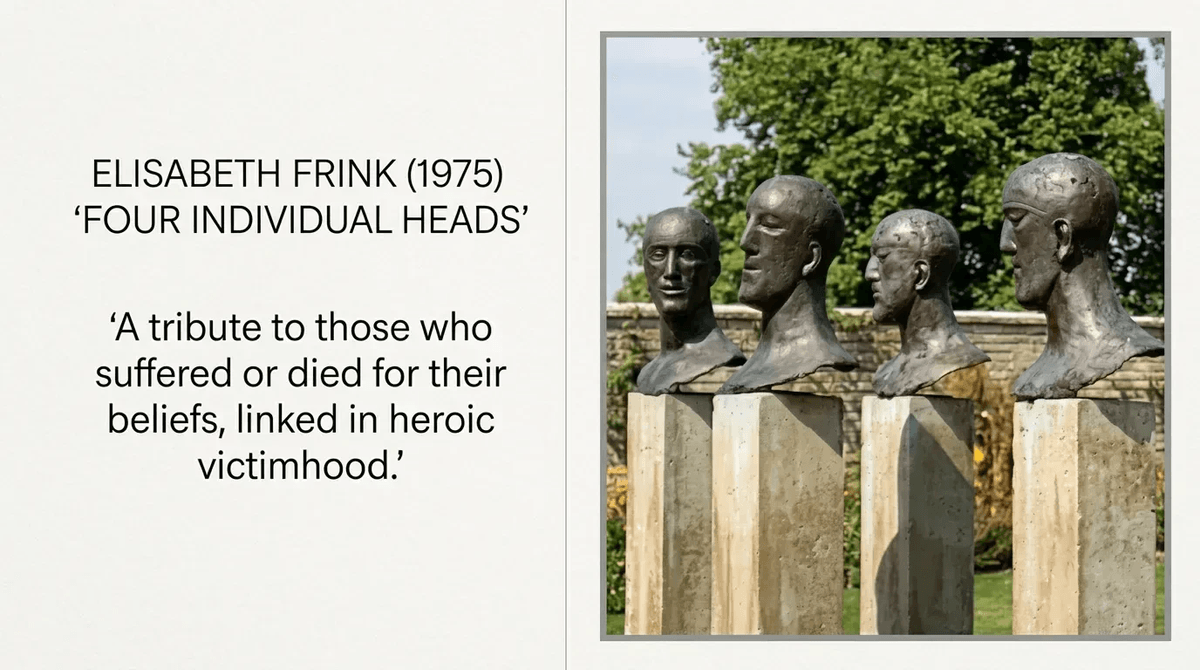
British sculptor Elisabeth Frink frequently created series of heads, bodies, and animals, often exploring themes of aggression, vulnerability, and heroism. Her bronze heads, such as those from the 1970s, assert a powerful presence both individually and collectively. Their rugged, expressive forms often serve as a tribute to those who suffered or died for their beliefs, linked in a narrative of heroic struggle and victimhood. These series demonstrate how repeated forms can amplify an artist’s message, creating a resonant dialogue with viewers about shared human experiences.
Contemporary artists continue to utilize the series format to explore complex ideas, from social commentary to personal narratives, demonstrating its enduring capacity to organize and amplify artistic meaning.