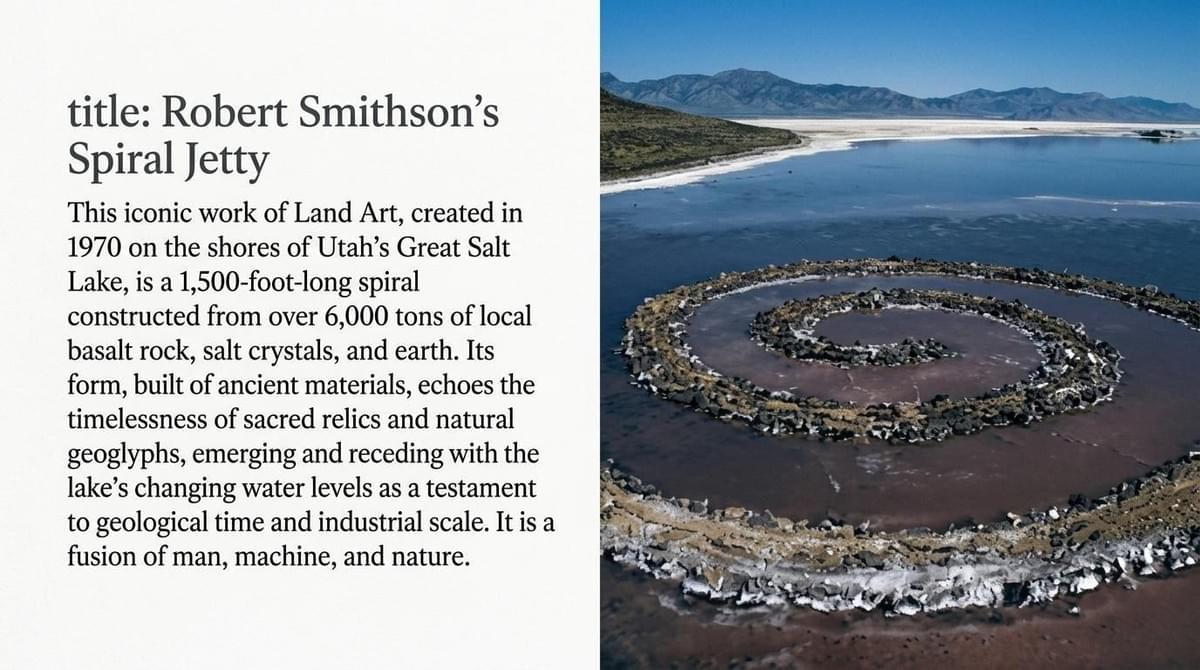
For thousands of years, humans have moved vast amounts of earth and stone to leave symbolic marks on the planet. While ancient earthworks often reflected an ambition to map the cosmos and assert human presence over the wild, contemporary Land Art takes a humbler approach—highlighting nature’s raw power, scale, and fragility.
Ancient Megaliths and Geoglyphs
Armed with rudimentary tools, prehistoric communities hauled massive stones and carved directly into the earth’s surface. In Carnac, Brittany, more than 3,000 standing stones (megaliths) were erected over 5,000 years ago. Built neither for shelter nor defense, these vast stone alignments likely tracked solar and seasonal rhythms like giant sundials, or served as coastal landmarks.
Elsewhere, ancient makers etched giant designs—known as geoglyphs—straight into the ground. In southern Peru, the Nazca Lines span ratusan of square kilometers of arid plains, featuring geometric patterns and animal figures created around 1,500 to 2,000 years ago. Rediscovered from the air in the 1930s, their full scale can only be grasped from high altitude.
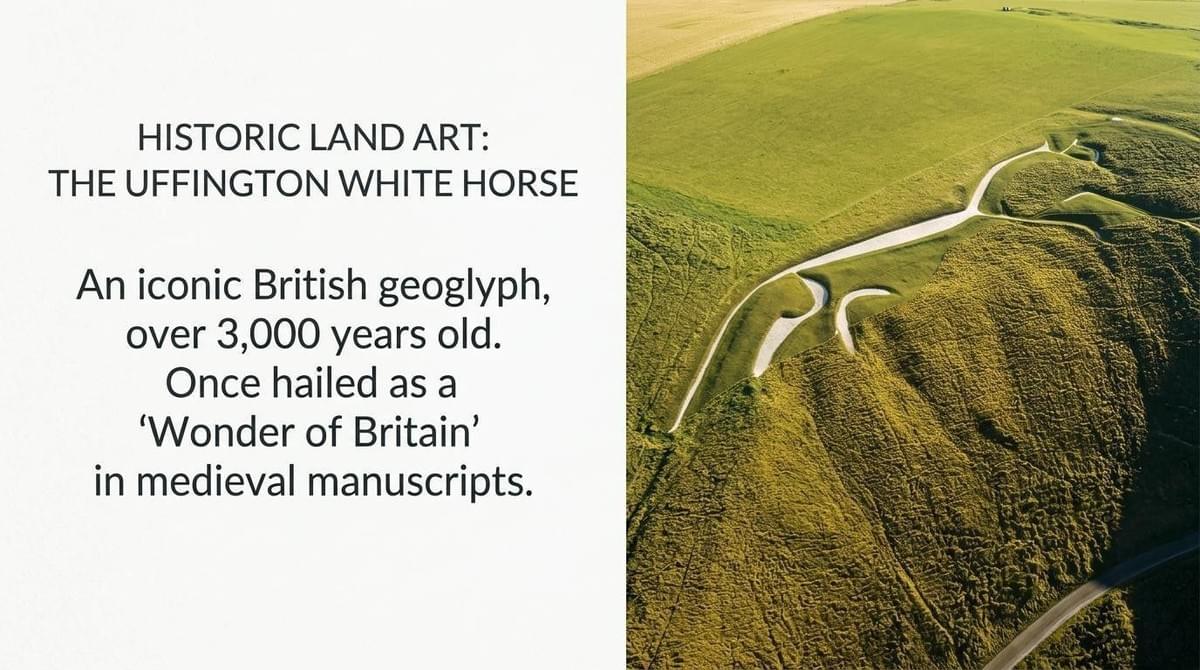
Similarly, in Oxfordshire, England, prehistoric artisans created the 114-meter-long Uffington White Horse by stripping away topsoil to expose the bright white chalk beneath. Because builders working on the ground could never see the entire image at once, these expansive figures required remarkable planning and geometric precision. Meanwhile, Indigenous cultures in North America shaped the land by mounding soil; Ohio’s Great Serpent Mound remains the world’s largest surviving prehistoric effigy mound, winding 430 meters across the ridge.
The 1960s Land Art Movement
By the late 1960s, artists in Europe and North America revived these ancient forms through the Land Art movement, shifting the focus toward our modern relationship with the environment. Instead of trying to conquer nature, contemporary artists allowed the landscape itself to shape the art.
In the vast expanses of the American West, artists like Robert Smithson and James Turrell used desert, rock, and sky as their primary mediums. In Britain, artists often took a quieter, more intimate path—most notably Andy Goldsworthy, who weaves fallen leaves, branches, and icicles into fleeting sculptures that celebrate the delicate, passing beauty of the natural world.