Humans have worked with clay for at least 30,000 years. Long before it was shaped into everyday water jars or cooking pots—a practical shift that happened around 14,000 years ago—clay served a spiritual purpose. Pliable and deeply tactile, wet earth allowed early humans to mold small human and animal figures by hand for rituals and ceremonies.
The Oldest Fired Clay in Europe
One of Europe’s earliest known ceramic artworks is the Venus of Dolní Věstonice, unearthed at a Stone Age hunter-gatherer site in the Czech Republic. Found alongside carved animals and other female statuettes that likely served as amulets or toys, this curvaceous figure holds a remarkably intimate detail: a child’s fingerprint pressed into the wet clay before it was fired nearly 29,000 years ago.
Earth, Water, Air, and Fire: Rituals in Clay
Across traditional cultures, firing clay is more than a craft—it is a symbolic act that unites the four classical elements: earth, water, air, and fire. Because clay comes directly from the ground, it is closely tied to fertility and agricultural rites. Some Indigenous communities still bury clay figurines in freshly tilled soil to invite a generous harvest.
In present-day Jordan, archaeologists discovered an 8,000-year-old clay figure of a woman crowned with an intricate hairstyle—part of a regional sculpting tradition that continues today. In many creation myths, cutting and molding clay mirrors the birth of the cosmos itself, linking human makers directly to Mother Earth.
From Monumental Terracotta to Modern Installations
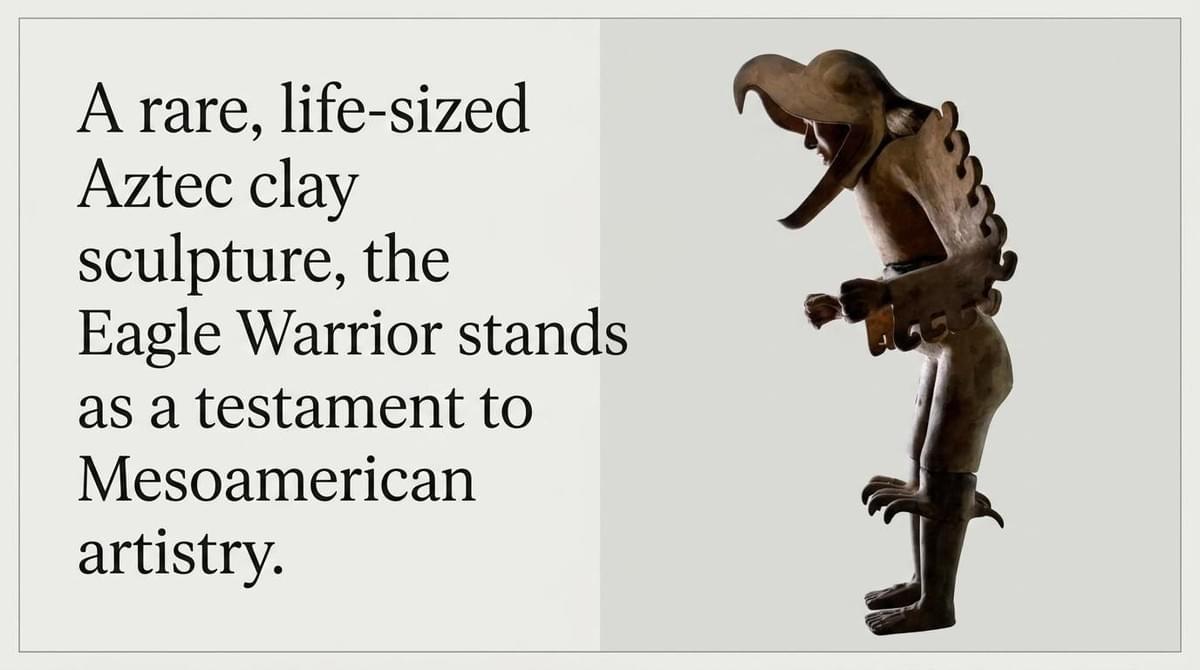
Scaling clay up requires serious engineering. Monumental works like the 15th-century Aztec Eagle Warrior from Tenochtitlan (modern-day Mexico City) were hollowed out and fired in separate sections so the heavy clay wouldn’t crack in the kiln, then assembled over an internal support structure.
Although clay is far more common and affordable than stone or bronze, it held high status during the European Renaissance. Masters like Donatello used terracotta for expressive sculptures, as well as to cast bronze molds and shape preliminary models (bozzetti) when developing masterpieces like St. George (1415–1418).
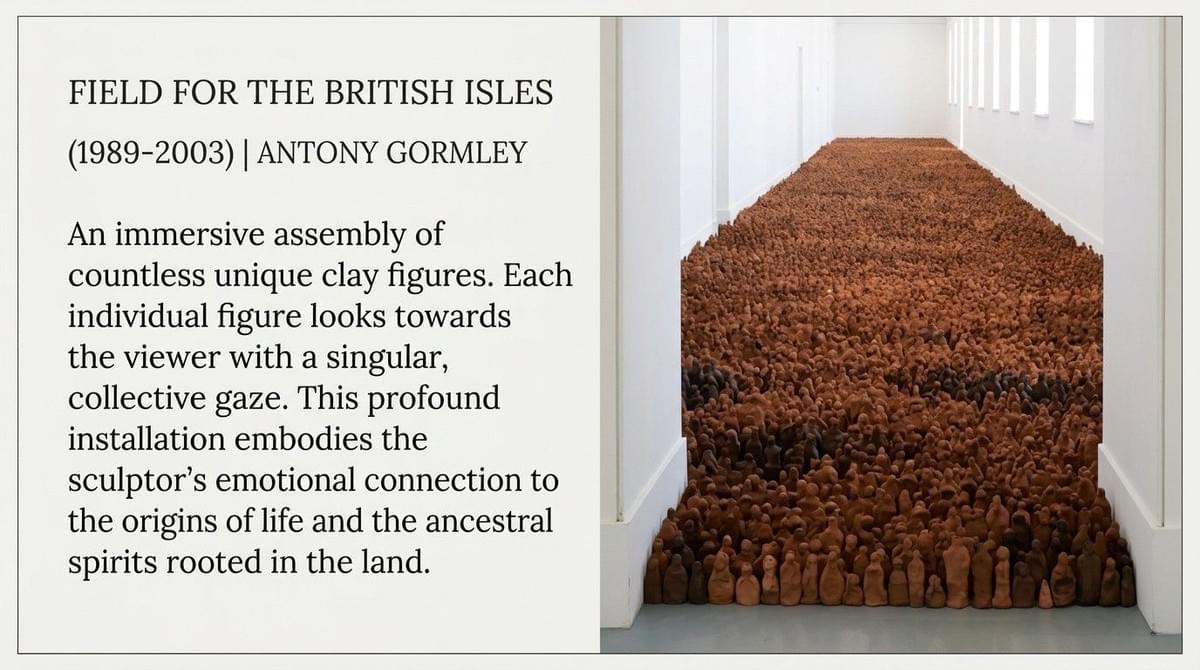
In contemporary art, clay often returns to its communal, earthly roots. For Antony Gormley’s traveling installation Field (1989–2003), teams of local volunteers hand-shaped tens of thousands of rough clay figures—shifting the focus from individual artistic virtuosity back to humanity’s shared connection with the land.