Written language first emerged in Mesopotamia around 5,000 years ago at the very moment pictures began evolving into script. Early scribes distilled simple drawings of everyday objects into abstract wedge-shaped signs, giving birth to cuneiform writing. Ever since, visual artists have traveled in the opposite direction—drawing inspiration from the written word and turning letters, calligrams, and scripts back into expressive visual art.
Where Picture Meets Script: Cuneiform and Maya Glyphs
The boundary between reading text and looking at an image is far more fluid than modern Western habits suggest. Because both rely on shared cultural codes, deciphering an image often works much like reading a page. To an untrained eye, the early Mesopotamian cuneiform sign for "ox"—a minimalist triangle of pressed wedges evolved from an earlier drawing of a horned bull’s head—looks like pure geometric abstraction.
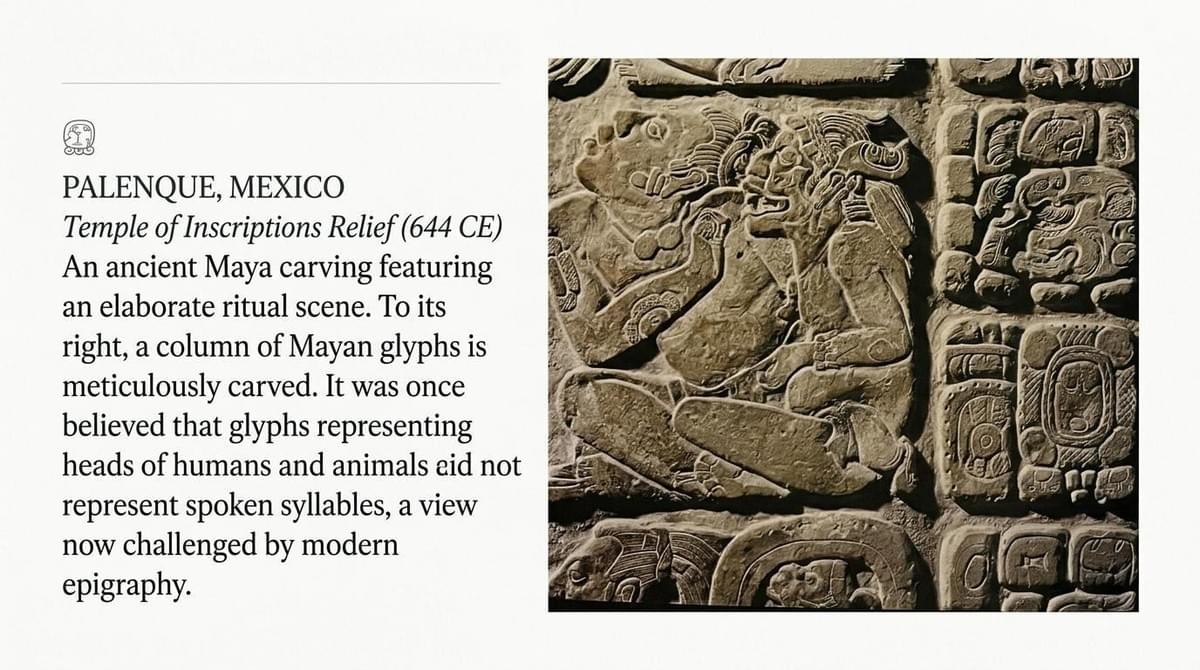
Conversely, the hieroglyphic script of the ancient Maya retained its vivid pictorial character for over a millennium, even after evolving into a complex phonetic and logographic system. On monuments like the Temple of the Inscriptions at Palenque, Mexico (late 7th century CE), Maya sculptors paired royal ritual portraits with grids of intricately carved glyph blocks, where full human and animal figures double as living phonetic syllables and calendar signs.
Sacred Word and Sacred Image: From the Book of Kells to Islamic Calligraphy
In religious art, the relationship between word and image has sparked both breathtaking synthesis and fierce debate. In ancient Greek, the single verb graphein meant both "to write" and "to draw." During the Byzantine Iconoclastic Controversy of the 8th and 9th centuries, theologians clashed bitterly over whether sacred truth could be conveyed through painted icons or solely through scripture—prompting Patriarch Nikephoros I of Constantinople to argue that sacred images and written gospels were parallel visual vessels of the same divine message.
Nowhere did word and image fuse more dazzlingly than in early medieval Insular manuscripts like the Book of Kells (c. 800 CE). On its famous Chi-Rho page, monastic illuminators transformed the two Greek letters abbreviating the name of Jesus Christ (ΧΡ) into a sprawling cosmic labyrinth of spirals, angels, and interlacing beasts—elevating a written monogram into an inexhaustible spiritual vision.
Similarly, in Islamic art and architecture—where figurative imagery is traditionally eschewed in religious spaces—calligraphy became the supreme visual art. Flowing bands of Quranic verse frame the grand entrance portals (pishtaqs) and domes of mosques with the same theological authority as the sculpted figures adorning the Royal Portals of French Gothic cathedrals.
Modern Paradox and Contemporary Calligraphic Sculpture
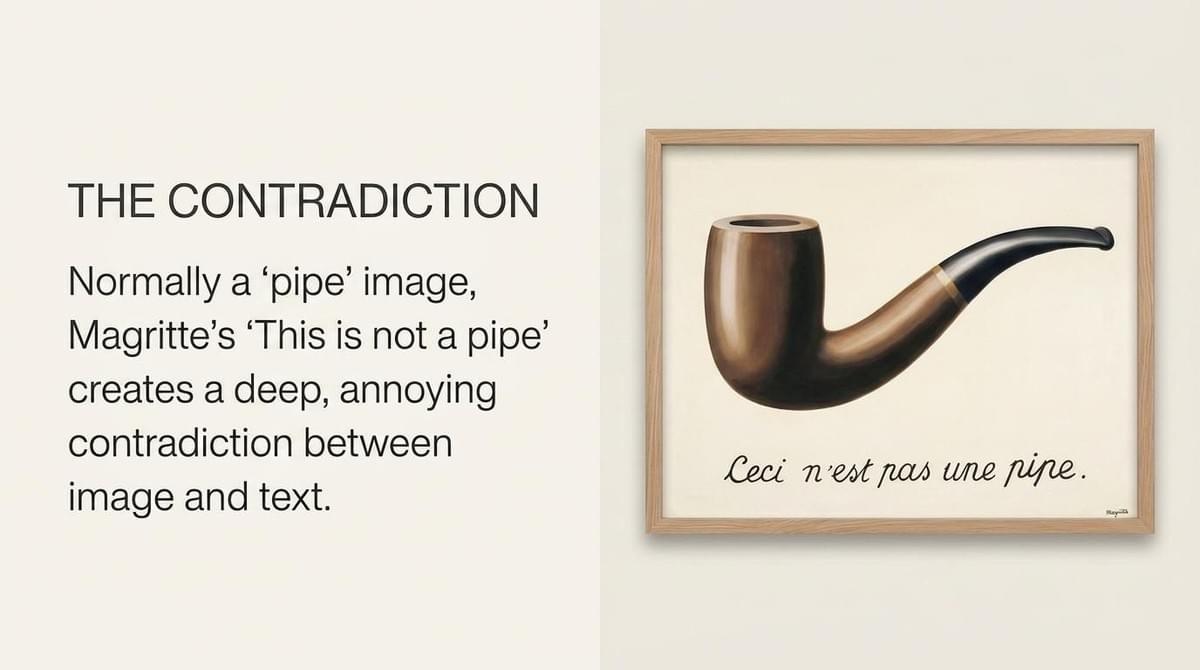
In the 20th century, Western avant-garde artists began questioning whether words and images can ever truly match. Influenced by Freudian psychology and linguistic theory, Surrealist painter René Magritte painted a meticulously realistic pipe above the French caption "Ceci n'est pas une pipe" ("This is not a pipe") in The Treachery of Images (1929). By forcing viewers to choose between trusting the label or the picture, Magritte stated a deceptively simple truth: you cannot stuff or smoke a painted canvas.
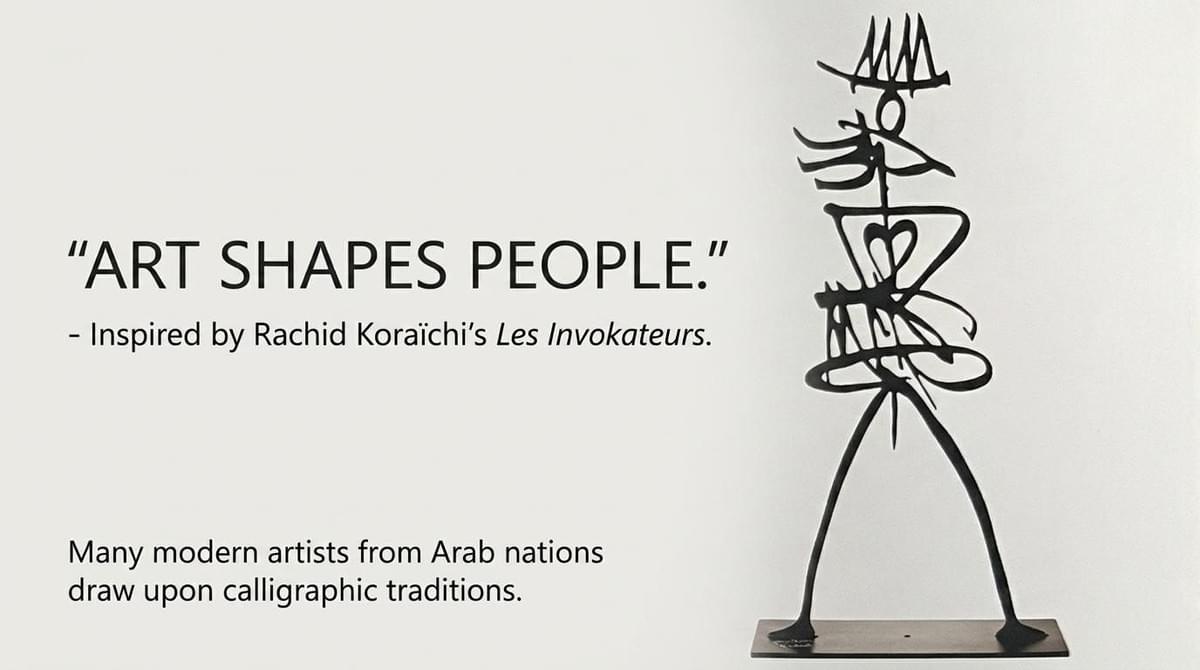
In the contemporary Arab world, artists of the Hurufiyya and post-calligraphic movements have carried the sacred geometry of script into three-dimensional space. Algerian artist Rachid Koraïchi (b. 1947) fuses Arabic calligraphy, Amazigh (Berber) symbols, and Sufi mysticism into slender bronze and corten-steel figures—such as his series Les Orants (The Invokers / The Praying Figures)—turning written signs into talismanic human presences that bridge Eastern and Western spiritual traditions.