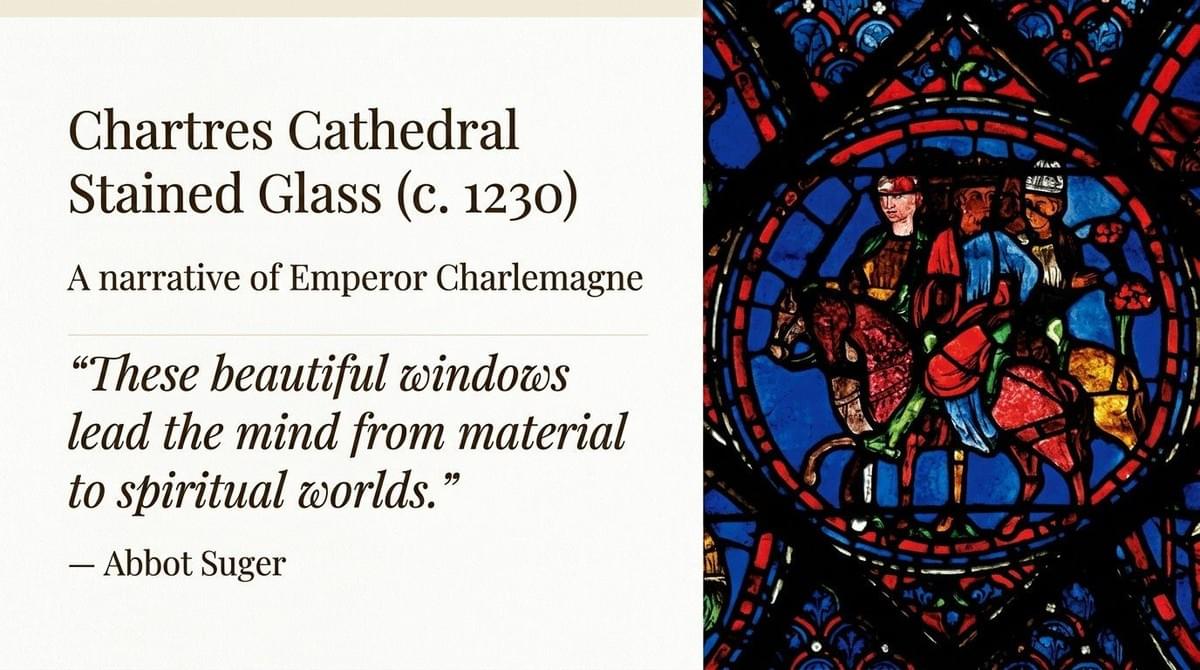
Unlike paintings or frescoes, which rely on light reflecting off an opaque surface, stained glass comes alive only when light passes straight through it. Set into the walls of a building, translucent colored glass turns raw daylight into a living architectural medium—flooding interior stone spaces with shifting, jewel-like color.
Gothic Architecture and the Theology of Light
Ancient glassmakers discovered early on that adding metallic oxides to molten glass yielded brilliant hues—cobalt for deep blue, copper for ruby red, and gold or silver compounds for luminous yellows. Yet it was in medieval Europe that stained glass blossomed into a monumental art form, driven by two forces: Christian light mysticism and the structural revolution of Gothic architecture. By replacing thick Romanesque load-bearing walls with pointed arches, ribbed vaults, and flying buttresses, Gothic master builders freed cathedral walls to open up into soaring curtains of glass.
In the early 12th century, the Benedictine monk and metallurgist Theophilus Presbyter recorded the intricate craft of cutting, painting, and leading glass windows in his treatise De diversis artibus (On Divers Arts). Around the same time, Abbot Suger rebuilt the royal Abbey Church of Saint-Denis near Paris (1140–1144), replacing dark masonry with radiant windows to create what he called lux nova ("new light"). Grounded in Scripture—from Genesis ("Let there be light") to the Gospel of John ("I am the light of the world")—Suger believed that glowing glass could lift the human mind from the material realm to the immaterial divine.
Jewels of the Middle Ages
Like wall paintings and Byzantine gold mosaics, medieval stained-glass windows served as visual scriptures, narrating the lives of Christ, the Virgin, and patron saints. Although countless windows were shattered during later wars, iconoclasm, and revolutions, the great surviving ensembles—at Chartres Cathedral, Sainte-Chapelle in Paris, Canterbury Cathedral, and York Minster—achieve a sensory intensity no brush on canvas can match. As sunlight streams through leaded glass, it casts moving pools of ruby, sapphire, and gold across carved stone piers and the faces of worshippers—spiritualizing physical matter into a threshold of heaven on earth.
From Gothic Revival to Modernist Masterworks
In the 19th century, rapid industrialization sparked a passionate longing for the spiritual wholeness of the Middle Ages. Champions of the Gothic Revival and the Arts and Crafts movement—led by Augustus Pugin, William Morris, and their 19th-century contemporaries—revived stained glass for churches, civic halls, and domestic interiors alike. While basic glassmaking techniques had changed remarkably little since Theophilus’s 12th-century treatise, a sharper division emerged between the visionary artist-designer and the master glazier who executed the window.
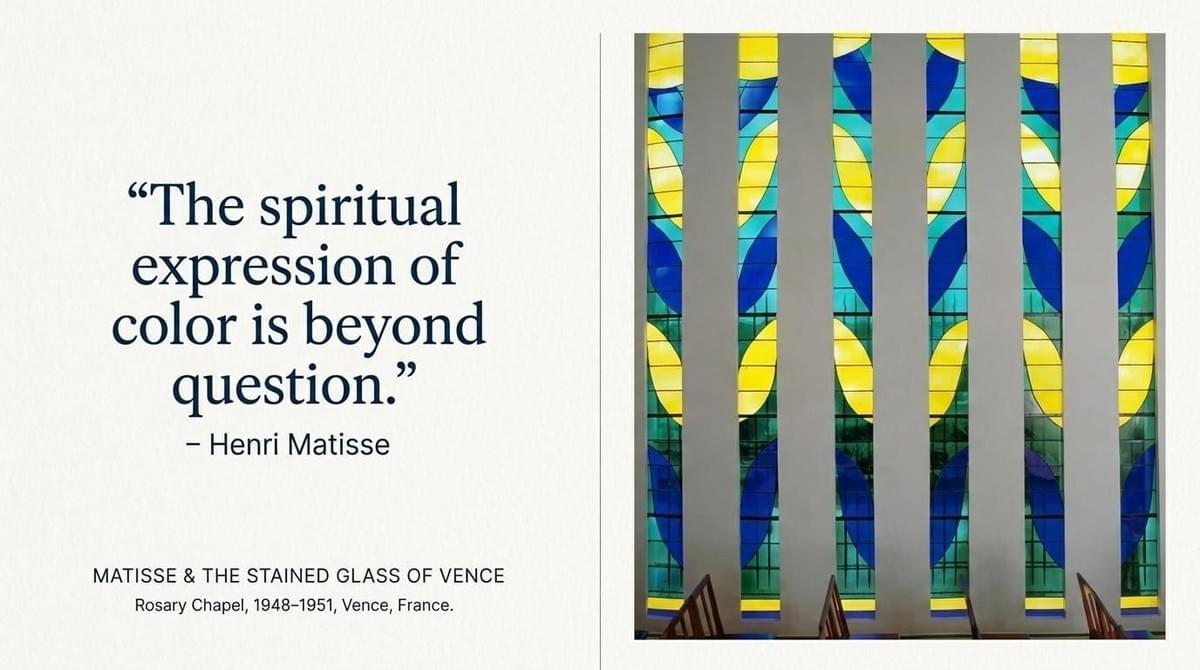
In the 20th century, that partnership between modern painters and traditional glass studios sparked a bold renaissance. Vanguard artists including Georges Rouault, Georges Braque, and Marc Chagall brought modernist abstraction and expressionism to sacred glass. Perhaps the crowning achievement of this modern revival is the Chapelle du Rosaire in Vence (1948–1951), where Henri Matisse translated his vibrant paper cut-outs into monumental stained-glass windows crafted by master artisan Paul Bony.