When sculpture is woven directly into architecture, the two arts transform each other: the quiet permanence of stone walls and columns gains human drama, while figurative sculpture takes on monumental structure. Yet across history, architects and sculptors have continually debated a central question: is sculpture merely an ornament applied to a building, or its very essence?
Classical Greece: Metopes, Pediments, and Caryatids
In ancient Greece, temple facades drove the invention of distinct sculptural formats. Along the upper entablature of Doric temples, sculptors divided the frieze into rectangular relief panels called metopes, capturing mythic episodes in tight, dramatic frames—such as the 6th-century BCE limestone metopes of Heracles and the Cercopes and Perseus Slaying Medusa on Temple C at Selinus (Selinunte) in Sicily.
Even more demanding were the pediments—the wide, low triangles beneath each end of the pitched roof. Designing the East Pediment of the Parthenon (447–432 BCE) to depict the birth of Athena, Phidias turned these awkward, tapering corners into a triumph of cosmic storytelling: at the far left angle, the horses of the sun god Helios rear up from the sea at dawn, while in the narrowing right tip, the exhausted horses of the moon goddess Selene sink beneath the horizon.
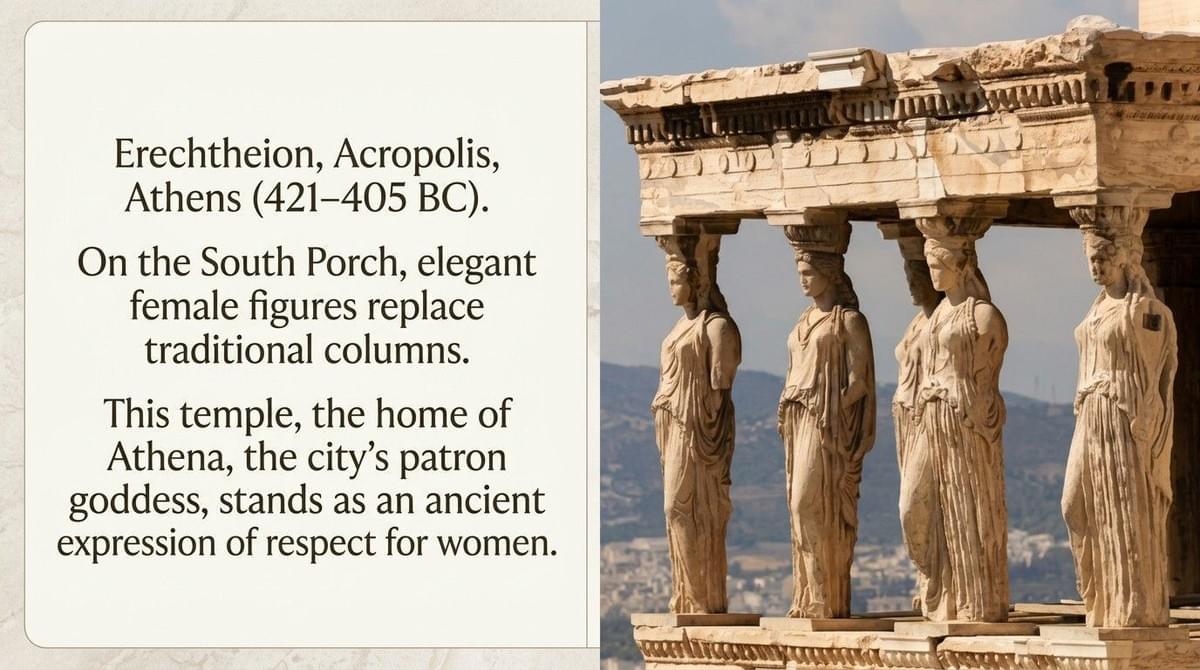
On the neighboring Erechtheion, Greek sculptors took integration a step further by replacing stone columns with six draped female figures known as caryatids. Unlike rigid, fluted shafts, these human figures subtly acknowledge the weight above them: their necks and vertical drapery pleats project sturdy structural support, even as one knee bends softly beneath their robes.
Medieval Portals: Sermons in Stone
Long before a medieval pilgrim stepped inside a church, its sculpted exterior set a powerful spiritual stage. Romanesque and Gothic portals were conceived as thresholds between the earthly city and the heavenly Jerusalem, frequently crowned by dramatic visions of the Last Judgment.
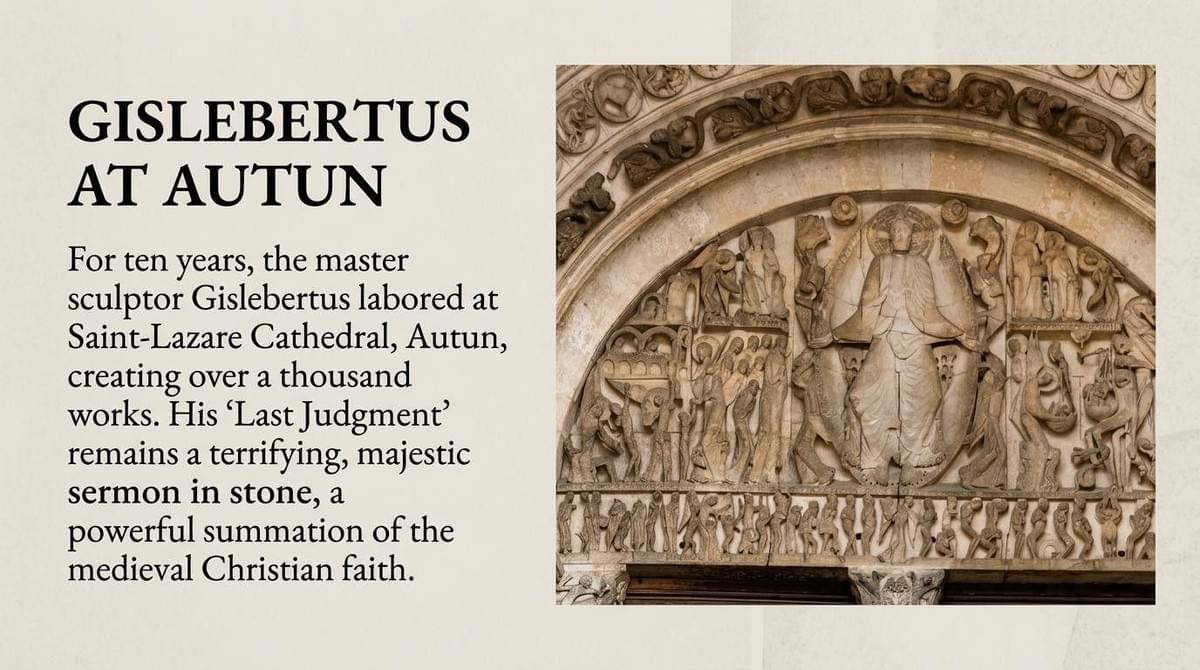
At the 12th-century Romanesque Cathedral of Saint-Lazare in Autun, France, the master sculptor Gislebertus carved a haunting Last Judgment across the semicircular tympanum above the west doors. Surrounding an imposing, tranquil Christ, elongated angels and grinning demons weigh souls on the scales—turning the church entrance into an unforgettable theater of awe, dread, and salvation.
From Modernist Austerity to the Building as Sculpture
With the rise of cast iron in the 19th century and steel, glass, and reinforced concrete in the 20th, Modernist architects largely banished sculptural ornament in favor of pure function. Where architectural sculpture did appear—such as Eric Gill’s 1932 relief of Prospero and Ariel above the entrance to London’s Art Deco BBC Broadcasting House—it stood as a deliberate nod to classical tradition, urging visitors to enter this "cathedral of modern communication" with clear minds.
By the late 20th century, however, Postmodernist and Deconstructivist architects dissolved the boundary between building and sculpture altogether:
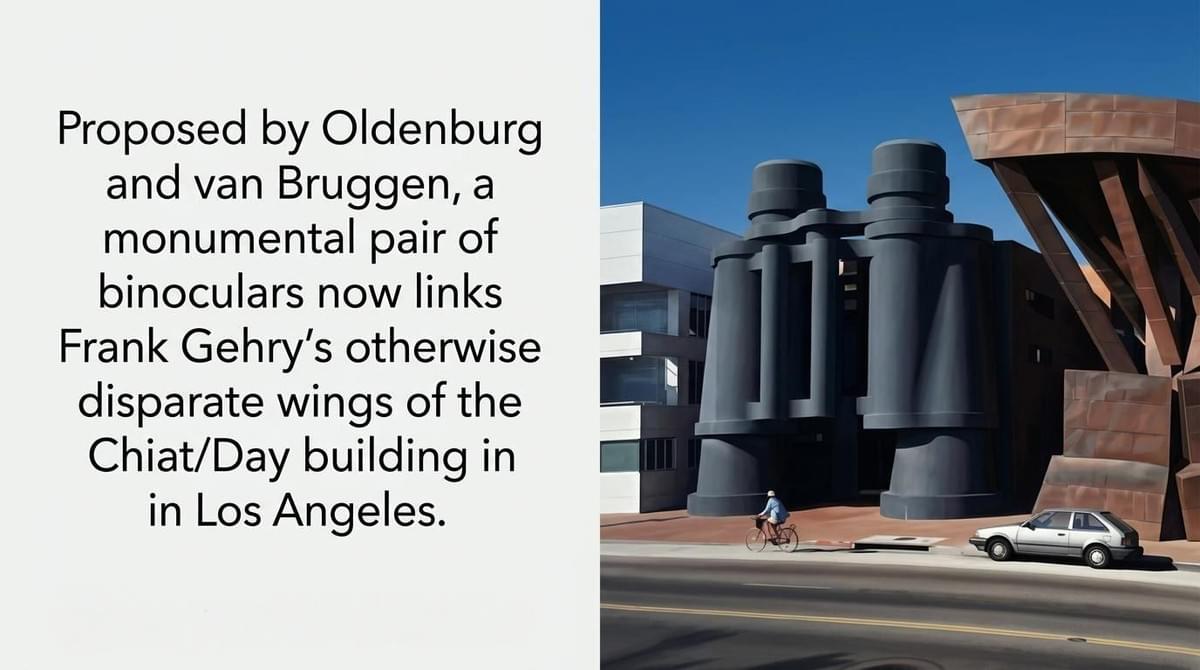
- Pop Art Architecture: For the Chiat/Day Building in Venice, Los Angeles (1985–1991), architect Frank Gehry teamed up with artists Claes Oldenburg and Coosje van Bruggen to anchor the facade with a three-story pair of Giant Binoculars—functioning as both public sculpture and walk-through office rooms.
- The Sculptural Landmark: With Gehry’s titanium-clad Guggenheim Museum Bilbao (1997), sculpture was no longer an accessory attached to a wall; the entire building had become a habitable sculpture.