Across cultures and centuries, art has served as a tangible bridge between the living and the dead. More than a passive record of those who came before us, commemorative art creates a sense of shared presence—inviting the living and the departed to inhabit the same emotional space.
Cities of the Dead: Etruscan Joy and Classical Immortality
The ancient Roman poet Horace famously boasted that his verse had raised "a monument more lasting than bronze," a theme echoed centuries later by Renaissance theorist Leon Battista Alberti, who marveled at art’s power to "make the dead seem almost alive."
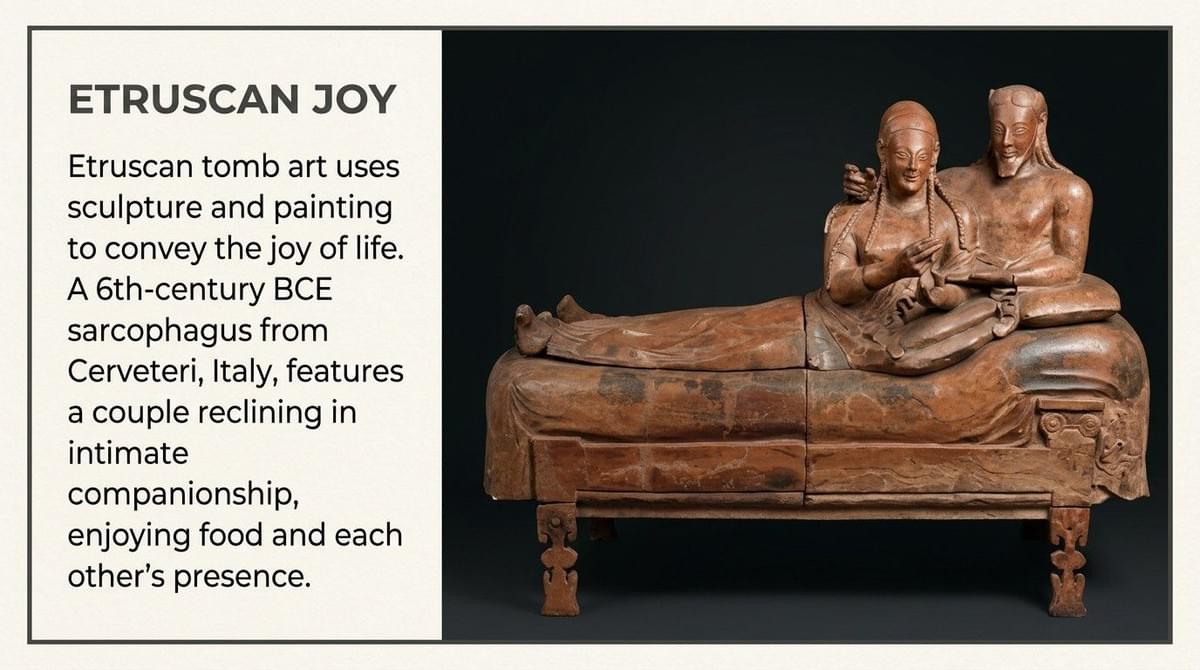
Long before Rome’s rise, the Etruscans of central Italy took this dialogue between worlds literally. Their sprawling necropolises—such as Banditaccia at Cerveteri—were laid out like vibrant "cities of the dead," complete with street-like rows of rock-cut domestic tombs. Inside, life-sized terracotta sarcophagi, most famously the 6th-century BCE Sarcophagus of the Spouses, depict husbands and wives reclining together on banquet couches. Warm, animated, and mid-conversation, these figures share food and wine with their living descendants—celebrating companionship that death itself cannot sever.
Ephemeral Memory: Asmat Bis Poles
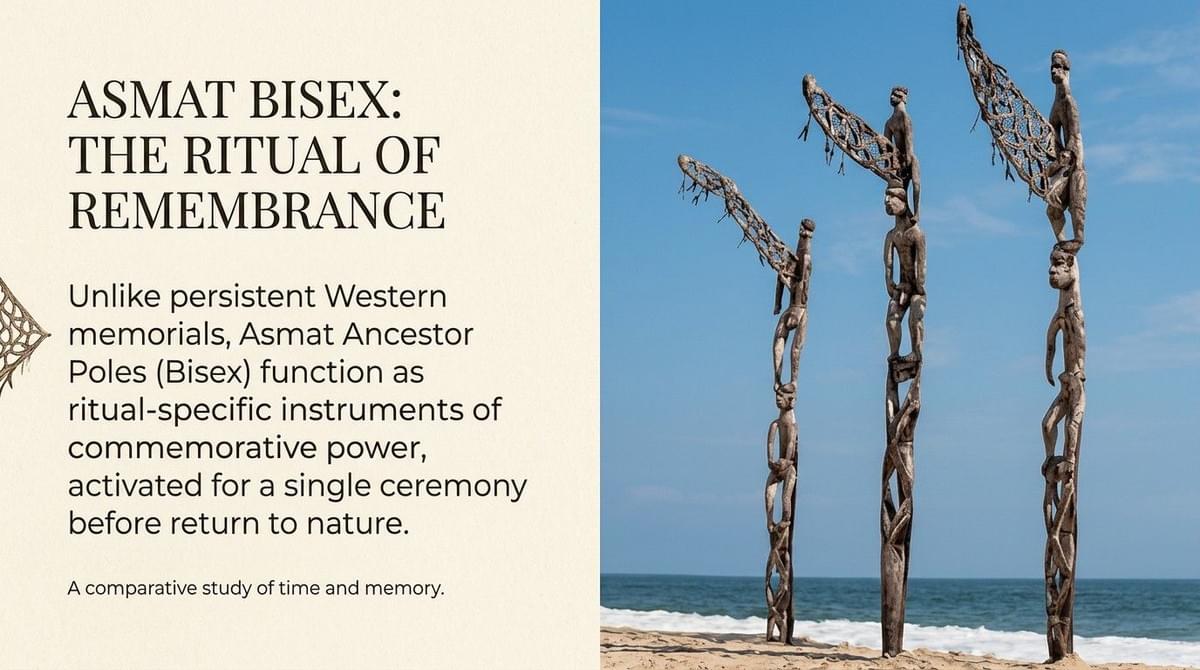
Not every culture equates commemoration with permanent stone. For the Asmat people of southwestern New Guinea (Papua, Indonesia), memorial art is a living conduit that transfers spiritual vitality from one generation to the next.
Carved from a single inverted mangrove tree—its flared plank root forming a dramatic wing-like projection at the top—towering ancestor poles known as bis poles (or bisj poles) depict stacked figures of recently deceased villagers. Once activated during sacred bis ceremonies to honor the dead and restore communal balance, the poles are not preserved as monuments. Instead, they are carried into the sago palm swamps and left to decay—returning the ancestors' spiritual strength directly to the earth to nourish the staple crop that sustains the living village.
From Royal Mausoleums to Modern Counter-Monuments
Before the 20th century, permanent monuments were largely a privilege of the ruling elite—from the pyramids of Egypt and the imperial mausoleums of China to the lavish marble tombs of Renaissance popes and 19th-century civic statuary. The idea that a nation owes a permanent memorial to ordinary citizens and common soldiers emerged only in the wake of the industrial slaughter of World War I.
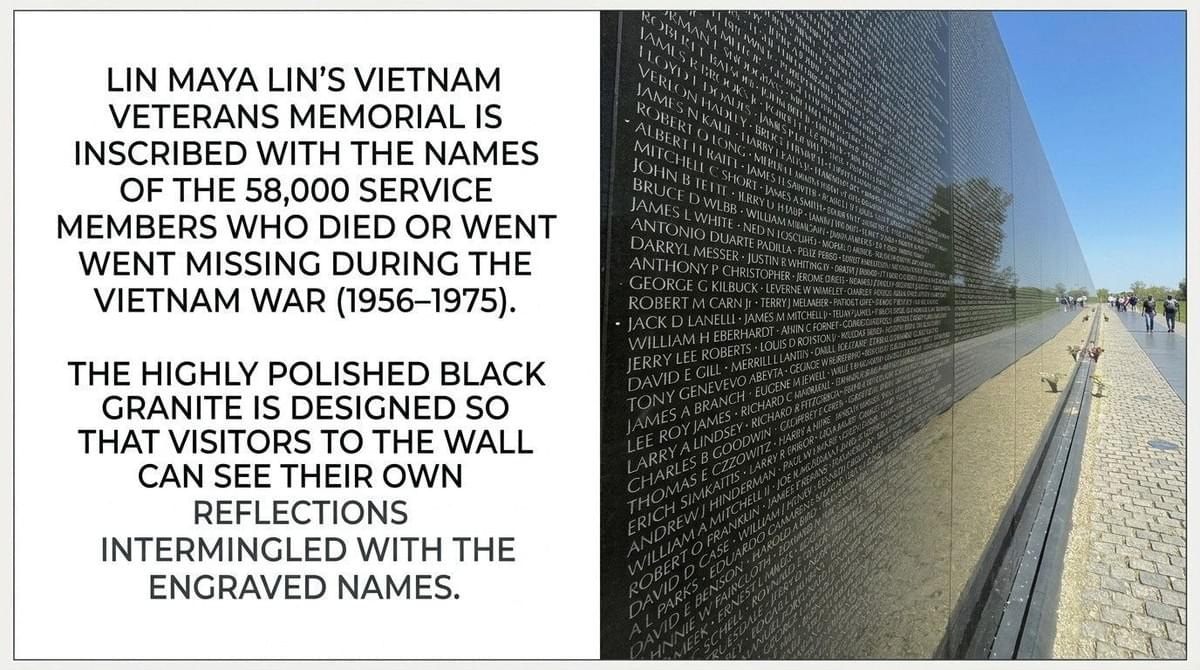
In the late 20th century, public memorials shifted once again—away from triumphant bronze generals toward quiet spaces of grief, reflection, and collective reckoning. Landmark contemporary works such as Maya Lin’s Vietnam Veterans Memorial (1982) in Washington, D.C., and Rachel Whiteread’s Judenplatz Holocaust Memorial (Nameless Library, 2000) in Vienna—an inverted concrete cast of a library whose books face inward, forever unread—eschew heroic bombast. Stepping back from aggressive spectacle, these understated monuments invite each passerby into a quiet, deeply personal reckoning with loss.