While early metalworkers first cast simple tools and weapons by pouring molten bronze into open stone, sand, or piece molds, figurative sculpture demanded a far subtler invention. Known as lost-wax casting (or by the French term cire perdue), this ancient technique allowed sculptors to translate the finest nuances of modeling into enduring bronze.
How Lost-Wax Casting Works: From Solid to Hollow
Pioneered around 4000–3500 BCE across the Near East, the Indus Valley, and Chalcolithic Europe, lost-wax casting began with the direct method: an artist sculpted a solid model in beeswax and encased it in clay pierced with small vents. When the clay mold was baked in a kiln, the wax melted and drained away—leaving an empty cavity in the exact shape of the original model, ready to receive molten metal.
By the 6th century BCE, Greek foundry masters had perfected indirect hollow lost-wax casting for large-scale statues:
- Sculptors first built a rough clay core, coated it with a thin skin of wax for fine detailing, and encased the whole assembly in an outer investment of fine clay held in place by metal pins.
- Once heated, the thin wax layer melted out, and molten bronze was poured into the narrow gap between the inner core and outer mold.
- Monumental statues were cast in separate hollow sections—head, torso, and limbs—and seamlessly welded and hammered together, saving precious metal while drastically reducing weight.
Remarkably, contemporary fine-art foundries still rely on these same core principles today.
Defying Gravity: Classical Greek Bronze
Lost-wax casting revolutionized sculptural composition. Unlike marble—which is heavy, brittle, and prone to snapping without tree-trunk struts—hollow bronze possesses extraordinary tensile strength. Statues could suddenly stand unsupported in mid-stride or fling their arms wide into space.
The 5th-century BCE Artemision Bronze, recovered from a shipwreck in the Aegean Sea, captures Zeus (or Poseidon) with arms flung wide, poised to hurl a thunderbolt or trident—a feat of open balance impossible in stone. Although most ancient bronzes were melted down over the centuries for weapons or coinage, rare survivors like the Riace Bronzes—two life-sized Greek warriors attributed to the circle of Phidias, contrasting a mature veteran with a younger fighter—reveal astonishing anatomical realism. Writing in the 1st century BCE, the Roman poet Virgil famously praised Greek sculptors for casting spirantia aera—"bronzes that seem to breathe."
Sacred Royalty in West Africa and Modernist Form
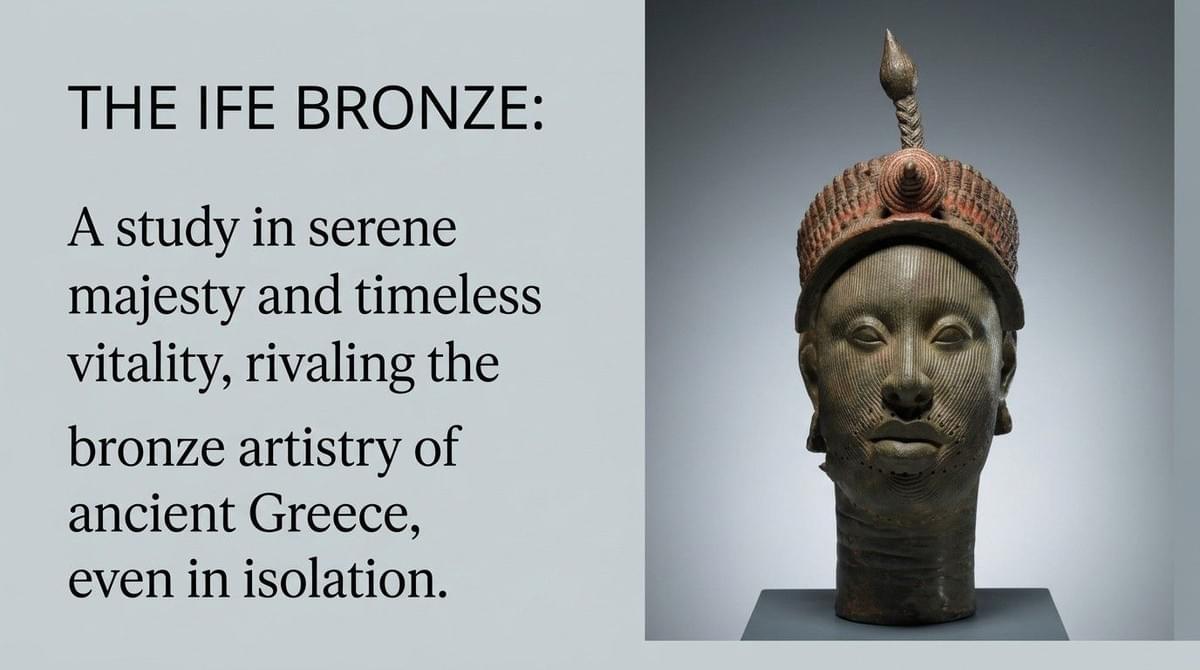
In West Africa, lost-wax casting was deeply intertwined with sacred kingship and spiritual ritual. Between the 12th and 15th centuries, Yoruba master casters in the holy city of Ife (modern-day Nigeria) created life-sized royal portrait heads whose quiet naturalism and technical perfection matched or surpassed anything made in Europe before Donatello (1386–1466).
In the 20th and 21st centuries, modern sculptors continued to push bronze to opposite extremes of weight and grace:
- Weightless Flight: In Bird in Space (1923–1940), Constantin Brâncuși polished lost-wax bronze to a mirror sheen, turning heavy metal into a streamlined flash of upward motion.
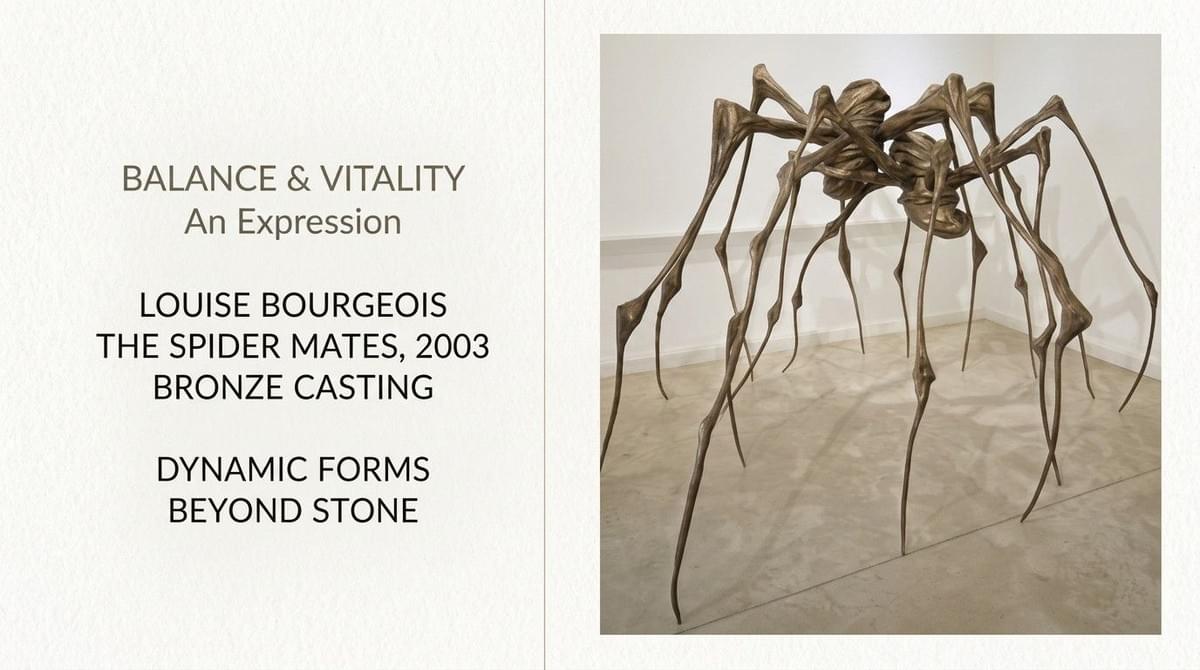
- Biological Tension: In works like Maman (1999) and Spider Couple (2003), Louise Bourgeois cast towering arachnids balanced precariously on needle-thin bronze legs—cleverly disguising immense weight to project a haunting, protective vigilance.