The word propaganda traces back to 1622, when Pope Gregory XV established the Congregatio de Propaganda Fide (Congregation for the Propagation of the Faith)—a Vatican committee charged with spreading Catholic doctrine abroad. From those Counter-Reformation roots, the term gradually expanded to describe any state or institution’s systematic use of visual culture to shape belief and sway public opinion.
Projecting Power: From Ancient Egypt to Baroque Courts
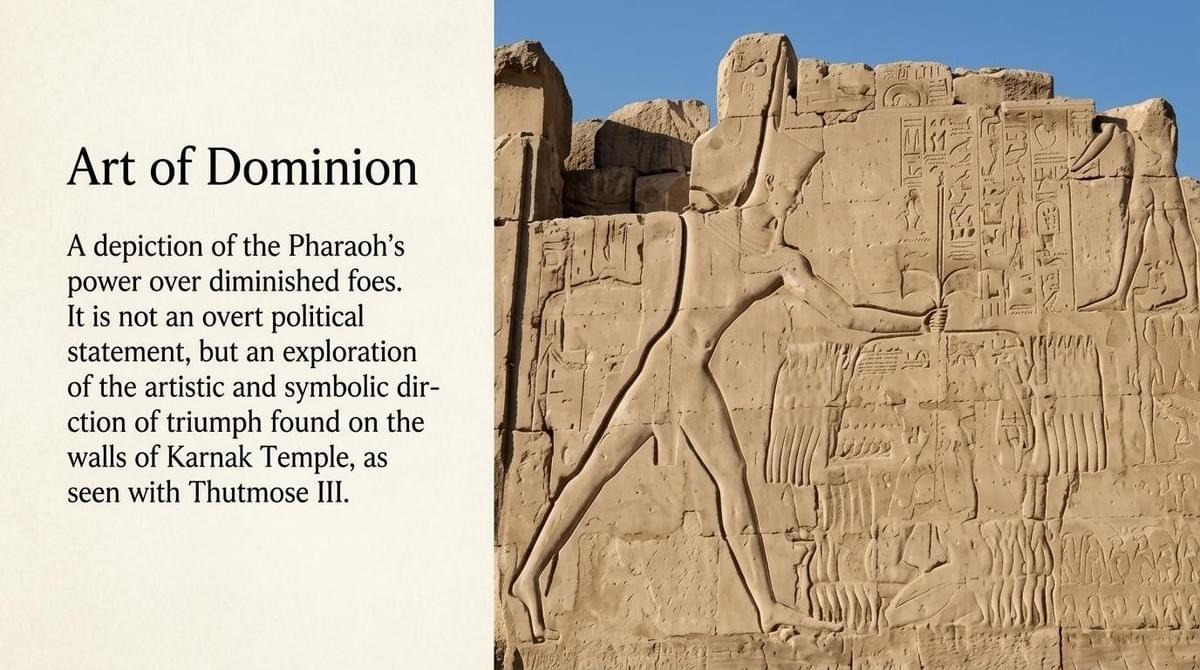
Throughout history, rulers have relied on artists to project authority, legitimize fragile dynasties, and write official history. Because monarchs and priesthoods controlled the wealth and materials required for monumental art, political agendas have shaped the course of art history since antiquity. On the towering walls of Karnak Temple in Egypt, for instance, Pharaoh Thutmose III is carved at colossal scale, grasping dozens of miniature foreign captives by the hair as he prepares to strike them down—turning military dominion into an eternal symbol of cosmic order.
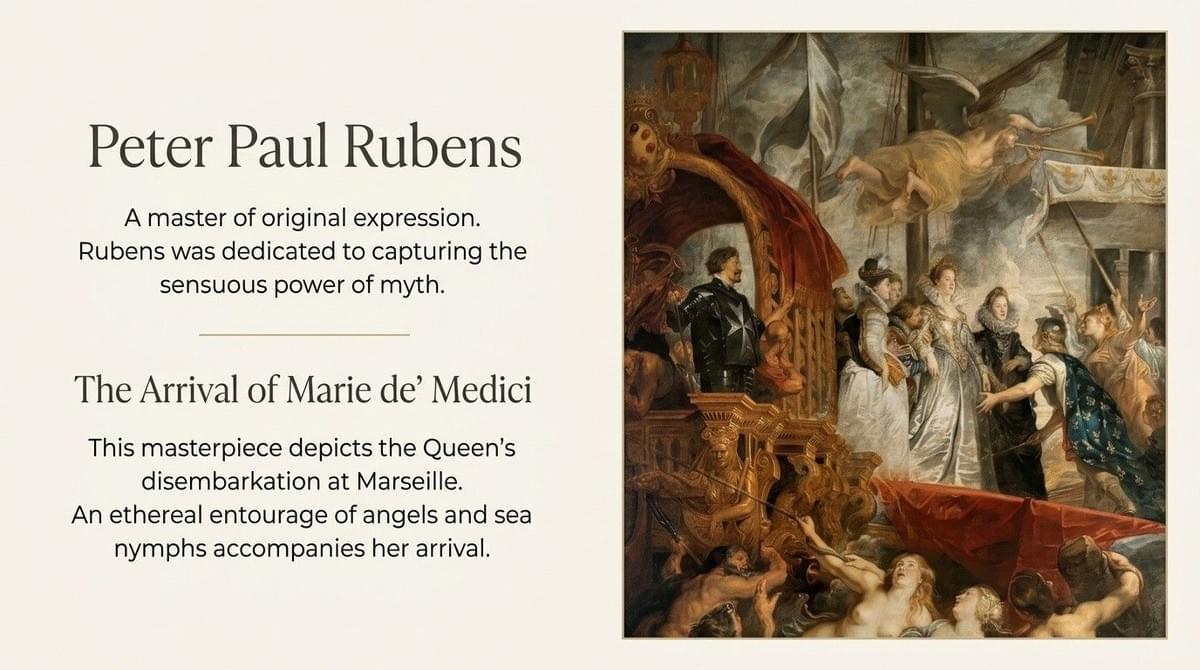
Remarkably, strict ideological briefs did not always stifle creativity; often, they pushed ambitious artists to invent bold new visual languages. In 1622, when the exiled and politically embattled Queen Mother of France, Marie de' Medici, needed to rehabilitate her public image, she commissioned Flemish master Peter Paul Rubens to paint 24 monumental canvases chronicling her life. Lacking actual heroic deeds to paint, Rubens wrapped her biography in dazzling Baroque allegory—showing Roman sea gods, Tritons, and winged Fame welcoming her ship to France as if her reign were ordained by heaven itself.
Revolution and Empire: Jacques-Louis David
Between the 17th and 19th centuries, European statecraft and public art grew ever more intertwined. Installed in palaces, cathedrals, and civic squares for maximum visibility, grand historical paintings and public monuments turned state ideology into high culture.
Nowhere was this clearer than during the French Revolution and the Napoleonic era. Jacques-Louis David—whose austere Neoclassical masterpiece Oath of the Horatii (1784) had already electrified Paris with its call to civic virtue and patriotic sacrifice—became the chief visual architect of the Revolution, immortalizing its martyrs in works like The Death of Marat (1793). Just a few years later, as First Painter to Napoleon, David pivoted seamlessly from republican austerity to imperial grandeur, transforming political ambition into heroic myth.
Totalitarian Control and Modern Media
In the 20th century, totalitarian regimes in Soviet Russia, Fascist Italy, and Nazi Germany turned visual persuasion into a ruthless state apparatus:
- Soviet Union: Socialist Realism became the sole official style, enlisting painters and sculptors to celebrate tireless factory workers, collective farms, and revolutionary leaders.
- Nazi Germany: State-sanctioned art hijacked Greco-Roman classical forms to fabricate an idealized racial mythology while banning modernist art as "degenerate."
These regimes understood a timeless truth about visual imagery: it bypasses rational debate and strikes straight at human emotion. Today, propaganda rarely looks like a marble statue or a palace fresco. Often disguised as blockbuster entertainment, lifestyle advertising, or algorithmic social feeds, visual media continues to mold our desires and political loyalties—making visual literacy more urgent than ever.