With the advent of cinema in the early 20th century, artists began to intensely experiment with this new temporal dimension, integrating film into a broader art historical discourse. From the 1960s onwards, the evolving social functions and rapid technological advancements of film and video propelled the moving image into a prominent position, establishing it as a versatile and potent medium of choice for many artists.
Before cinema's widespread adoption, the creation of an illusion of movement through various optical phenomena was a long-standing fascination. Perhaps Paleolithic cave painters intentionally exploited the flickering effects of firelight to animate animal figures on uneven rock surfaces, creating a primordial sense of motion. By the late 19th century, European artists, influenced by movements like Impressionism, Cubism, and Futurism, were actively exploring how to represent the dynamism and rhythm of modern life. Early photographic experimentation further developed unique visual idioms to capture and convey time. Kinetic art, with its emphasis on actual or implied movement, emerged from this conceptual lineage. Cinema, as a technologically advanced medium, offered an even more compelling avenue, providing a structured yet fluid framework for artists to engage with visual effects, often transcending the static canvas and resonating deeply with the changing social spirit of the era.
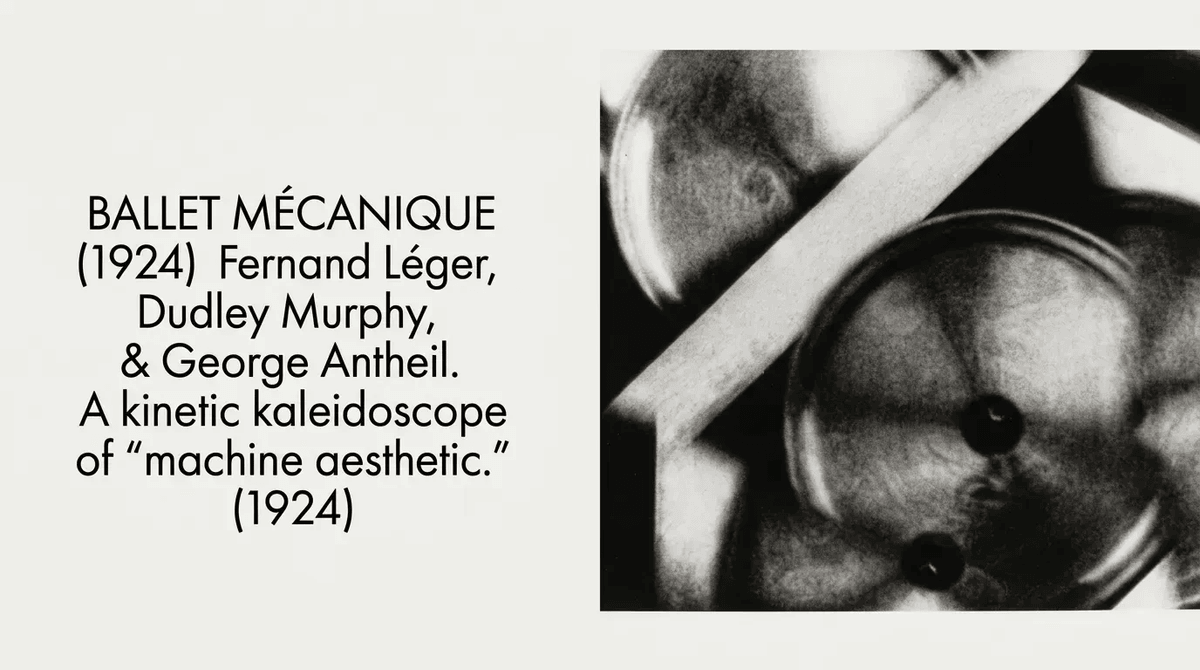
Unlike traditional painting and sculpture, the moving image was intrinsically a product of modern sensibilities and technology, readily capturing the rapidly changing zeitgeist. Its early development often stemmed from serendipitous visual discoveries, yielding a range of remarkably experimental results that challenged conventional artistic forms. Fernand Léger’s Ballet Mécanique (1924), co-directed with Dudley Murphy, was a seminal experimental film, described as "the first film without a plot," establishing a crucial paradigm for artist films focused on abstract form and rhythmic montage, distinct from mainstream narrative cinema. Marcel Duchamp’s Anémic Cinéma (1926) further combined linguistic and visual concepts, featuring rotating discs with poetic phrases and abstract designs, characteristic of Dadaist aesthetics. Salvador Dalí and Luis Buñuel’s collaborative film Un Chien Andalou (1929) exemplified Surrealism, presenting a meticulously crafted and unsettling vision of the subconscious. In 1935, the British Post Office commissioned Len Lye’s Colour Box, an animated film created by directly painting on film stock, which aimed to liberate animation from traditional narrative constraints and forge closer ties between experimental cinema and a broader audience. Later, Andy Warhol’s Sleep (1963) pushed boundaries with a nearly five-and-a-half-hour single-shot film depicting a friend sleeping, challenging notions of narrative and duration in cinema.
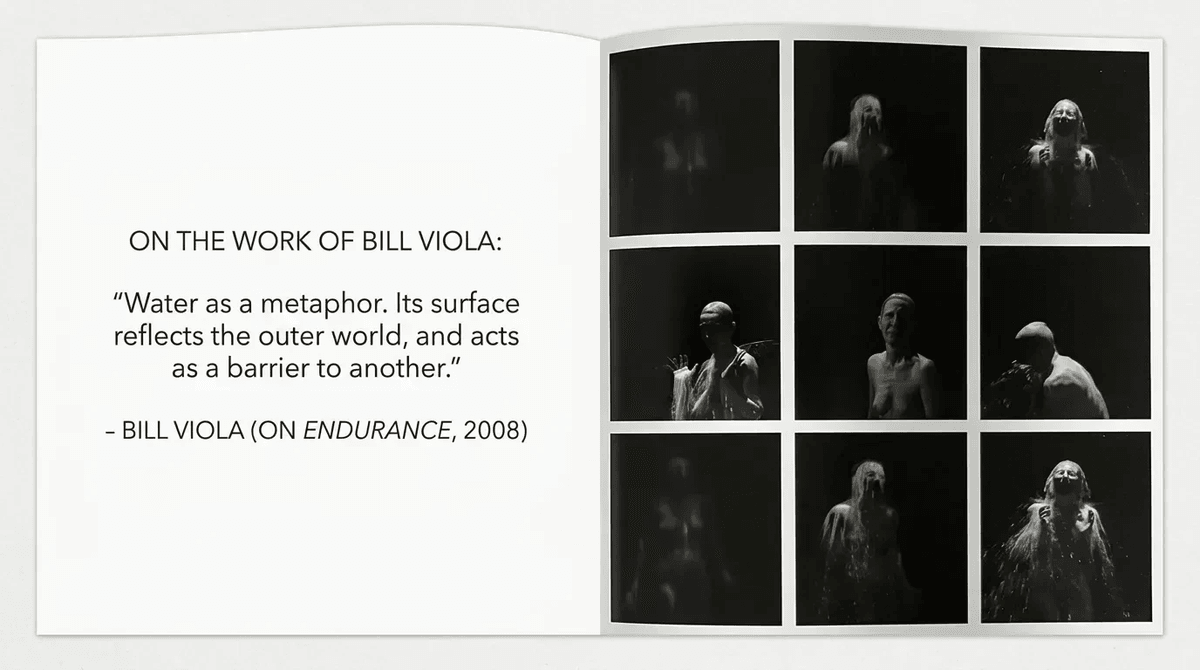
By the mid-20th century, artists began to intentionally manipulate and edit versions of reality, not necessarily to "avoid artificiality," but to construct specific realities or explore the medium's inherent properties. This approach differentiated art films from both commercial productions and conventional documentaries. The introduction of portable video recording devices into domestic life revolutionized moving image art. Although broadcast television often differed significantly from artists’ electronic media works, both shared the common viewing platform of the television set. From the mid-1960s, Korean-American video art pioneer Nam June Paik experimented extensively with video recordings and television sets, notably in works like TV Cello (1969) and TV Garden (1974–1978). By the 1970s, video became a primary medium for Conceptual Art, frequently employed to record performance works, exemplified by Bruce Nauman’s Walk with Contrapposto (1968), a performance recorded on video, or Bill Viola’s ritualistic and slow-motion studies of flowing and changing states. The ubiquity of video technology transformed the landscape of artistic expression. From the 1990s onwards, digital technology made moving images as accessible as still photography. Contemporaneously, many artists’ moving images revisited earlier film projection technologies, where the audible “whirring” sound of the projector deliberately emphasized the mechanical, ballet-like nature of the moving image itself, connecting directly to early avant-garde experiments like Ballet Mécanique.