The term relief comes from the Italian verb rilevare ("to raise"). Unlike freestanding statues, relief sculptures remain attached to a solid background plane, with figures projecting outward in either shallow low relief (bas-relief) or dramatic high relief (alto-rilievo).
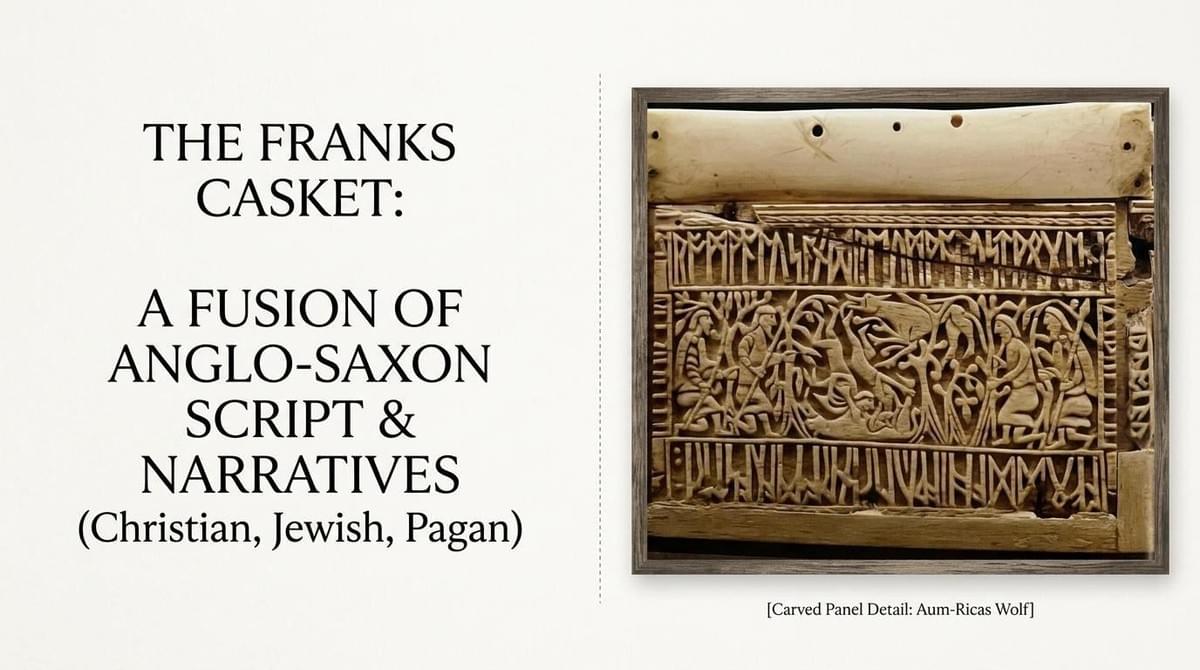
Across ancient Mesopotamia, Egypt, Greece, Rome, India, and Mesoamerica, artisans turned relief carving into a remarkably versatile medium. Carved across temple facades and stone sarcophagi, reliefs offered far greater durability than wall paintings—while on a miniature scale, painted ivory and bone reliefs turned everyday jewelry boxes and caskets into intimate storytelling canvases.
Freedom from Gravity: Classical High Relief
Because every figure remains anchored to a backing slab, relief sculpture enjoys a compositional freedom that freestanding statues—always limited by gravity and structural balance—cannot easily match.
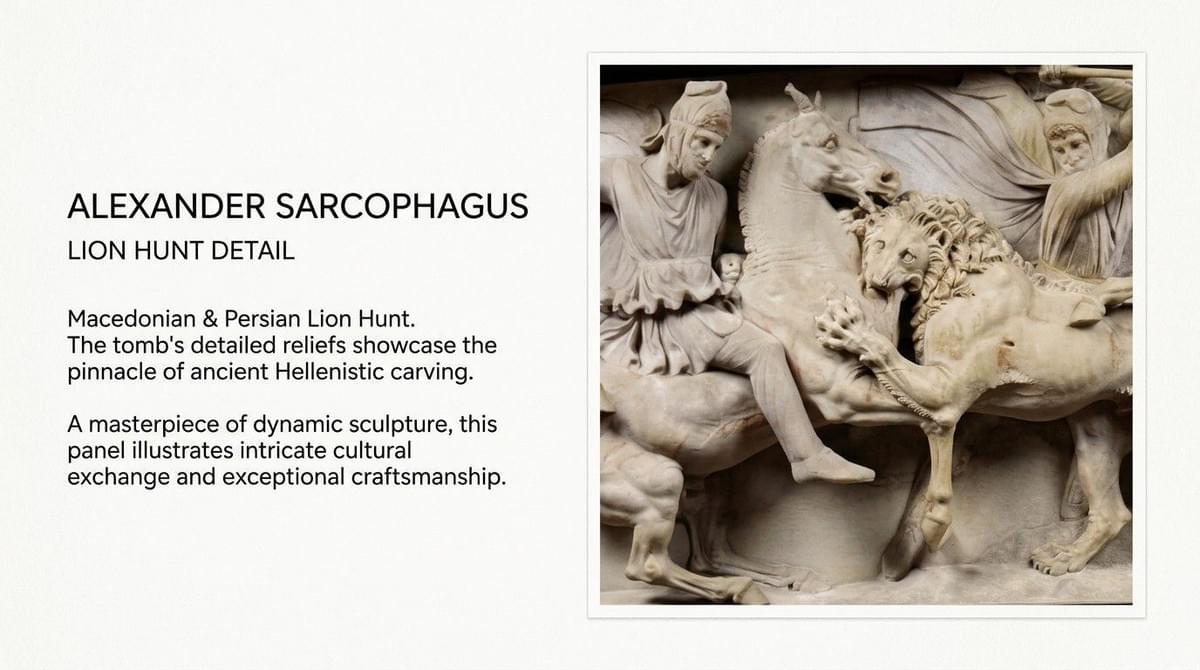
In Classical and Hellenistic Greece, architectural reliefs such as the 5th-century BCE Parthenon Frieze and the 2nd-century BCE Pergamon Altar (discovered in modern-day Turkey) pushed stone to its expressive limits. Using iron chisels and running drills, Greek sculptors undercut marble so deeply that limbs and drapery seemed to break free from the wall. On the 4th-century BCE Alexander Sarcophagus, unearthed in the royal necropolis of Sidon (modern-day Lebanon), a chaotic battle and royal hunt unfold across the marble slab—its tangled horses and warriors surging toward the viewer like breaking waves.
Between Painting and Sculpture: The Renaissance Ideal
During the Italian Renaissance, art theorists viewed relief as the ultimate bridge between drawing and sculpture. Leon Battista Alberti argued that the highest praise for a painting was that it possessed the three-dimensional illusion of relief—while a relief that looked flat was a failure.
Lorenzo Ghiberti proved how seamlessly relief could merge linear perspective with sculptural depth in his bronze doors for the Florence Baptistery. Meanwhile, Donatello pioneered rilievo schiacciato ("flattened relief"), etching ultra-shallow graduations into marble or bronze to create atmospheric depth. Long before the Renaissance, this marriage of crisp narrative clarity and emotional weight was already evident in medieval masterworks like the 8th-century Franks Casket, carved in intricate low relief from whalebone.
20th-Century Revival: Direct Carving and Architecture
In the early 20th century, modern sculptors rediscovered the raw power of relief. Drawn to the directness of medieval stone carving and ancient Indian temple reliefs, British sculptor Eric Gill—alongside contemporaries like Jacob Epstein and Henry Moore—championed a return to "direct carving" in stone.
Between 1910 and 1940, efforts to reunite sculpture with modern architecture produced striking public reliefs on London landmarks such as 55 Broadway at Westminster and the BBC Broadcasting House. Around the same time, European modernists like Jean Arp and Alberto Giacometti experimented with subtle, tonal plaster and wood reliefs on an intimate scale—proving that this ancient medium could still speak in a radically modern voice.