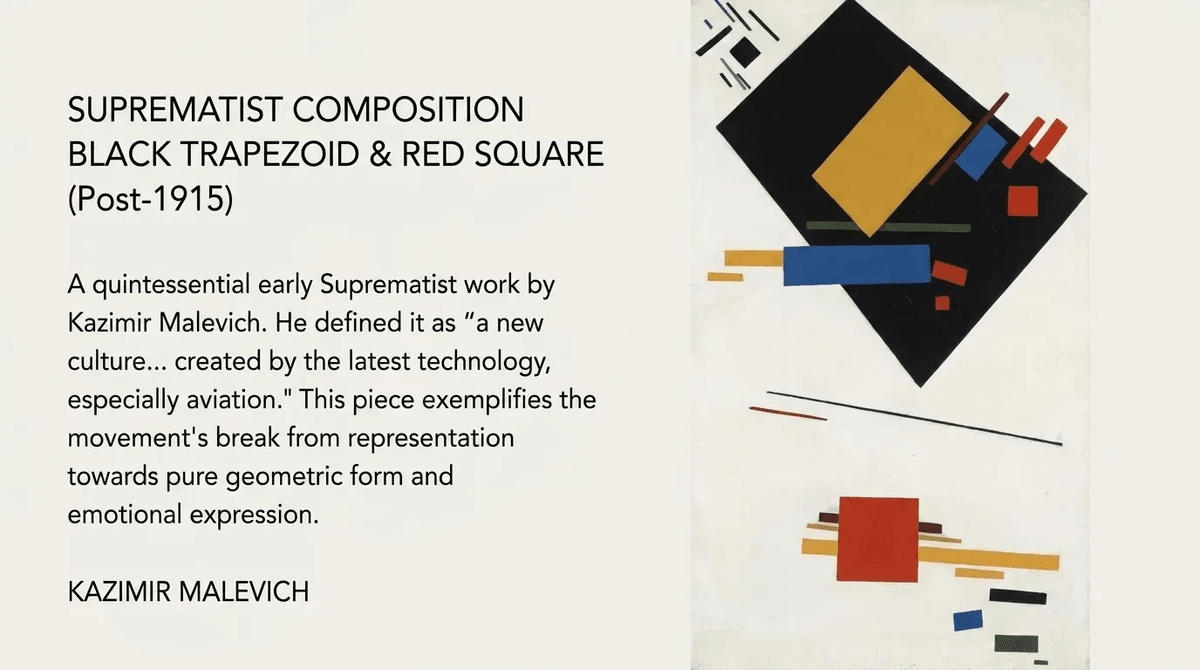
"Abstract art" is a broad term encompassing any art that deviates from the direct representation of the observed world. While some earlier artists considered it a mere departure from tradition, modern practitioners championed abstraction as a means to express a deeper, more profound level of reality. By liberating art from the strictures of mimetic representation, they argued, abstraction could convey essential truths and emotions beyond the limitations of figurative imagery.
Far from being merely the inverse of figurative art, abstract art comprises a spectrum of representational degrees. The influential critic Clement Greenberg once famously remarked: "The presence or absence of a recognizable image has no more to do with the value of a painting or sculpture than the presence or absence of a text has to do with the value of a piece of music." Greenberg viewed the ascent of abstract art in the early twentieth century as a logical evolution, a reaction against illusionistic art that affirmed painting's inherent two-dimensionality and its unique optical qualities. For him, the medium's essential flatness was not a limitation but the very foundation for its autonomy and purity.
Whether geometric, biomorphic, monochromatic, or intensely colored, early twentieth-century abstraction was never intended as mere decoration. Its proponents argued that it possessed a profound philosophical basis, capable of representing the essential qualities of the world more truthfully than objective representation. The Russian painter Kazimir Malevich articulated the pursuit of "non-objectivity" to achieve "the rediscovery of pure art." This quest for a spiritual absolute led him to Suprematism, an art movement that sought to express the essence of modern urban life—such as the sensation of speed on a smooth roadway—through pure geometric forms. His iconic Black Square (1915), in its radical non-representation, was proclaimed the "zero point of painting," a solid black surface on which nothing identifiable remained, yet paradoxically, it was a conduit for pure feeling and spiritual transcendence.
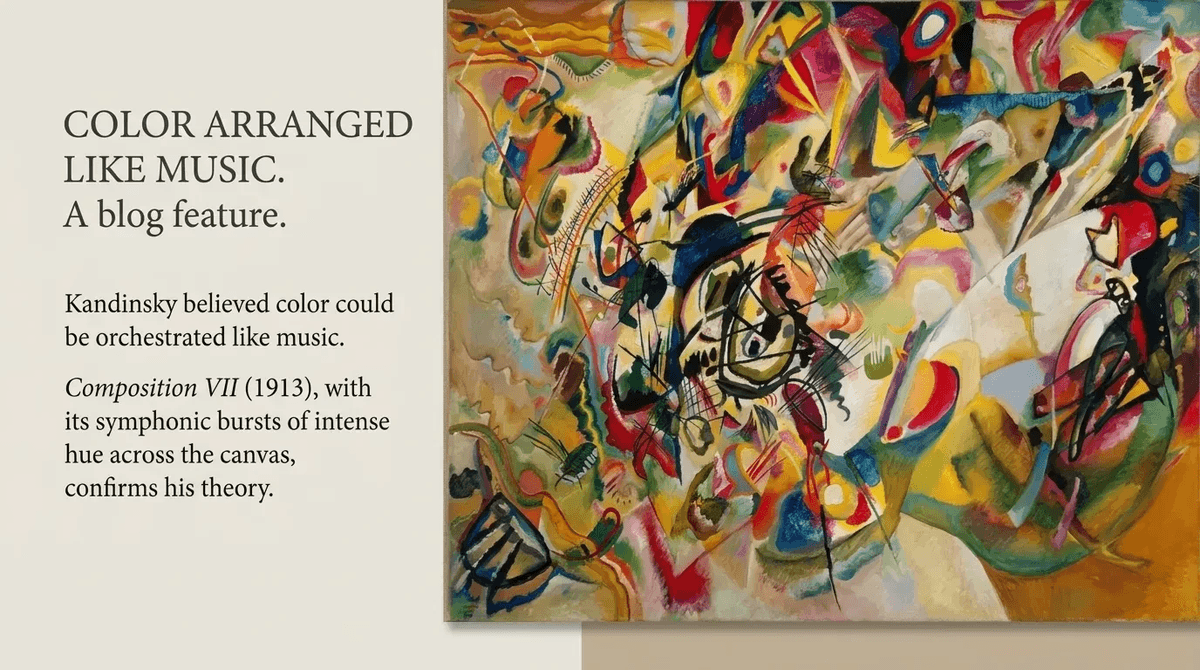
For Wassily Kandinsky, a slightly older contemporary of Malevich, abstract painting offered a new language capable of expressing inexpressible thoughts and feelings, often through synesthesia. Similarly, Piet Mondrian regarded abstraction as the ideal form for the modern "changed consciousness," believing that "pure plastic art would lead to a universal harmony." Through Neo-Plasticism, the term Mondrian coined for his painting, he achieved a peculiar tension and calm by meticulously arranging rectangles of primary color within a grid of black lines, symbolizing a universal order.
In 1954, Clement Greenberg famously asserted his conviction that the finest abstract art was synonymous with "the best art of our time." He had in mind the Abstract Expressionists of the New York School, such as Jackson Pollock and Franz Kline. In their monumental canvases, these artists registered their inner states through abstract marks that often drew upon Surrealist automatism. While later artists moved beyond the explicit spiritual claims of early abstraction, many continued to embrace Kandinsky's fundamental philosophy of painting as a potent medium for pure expression and communication.