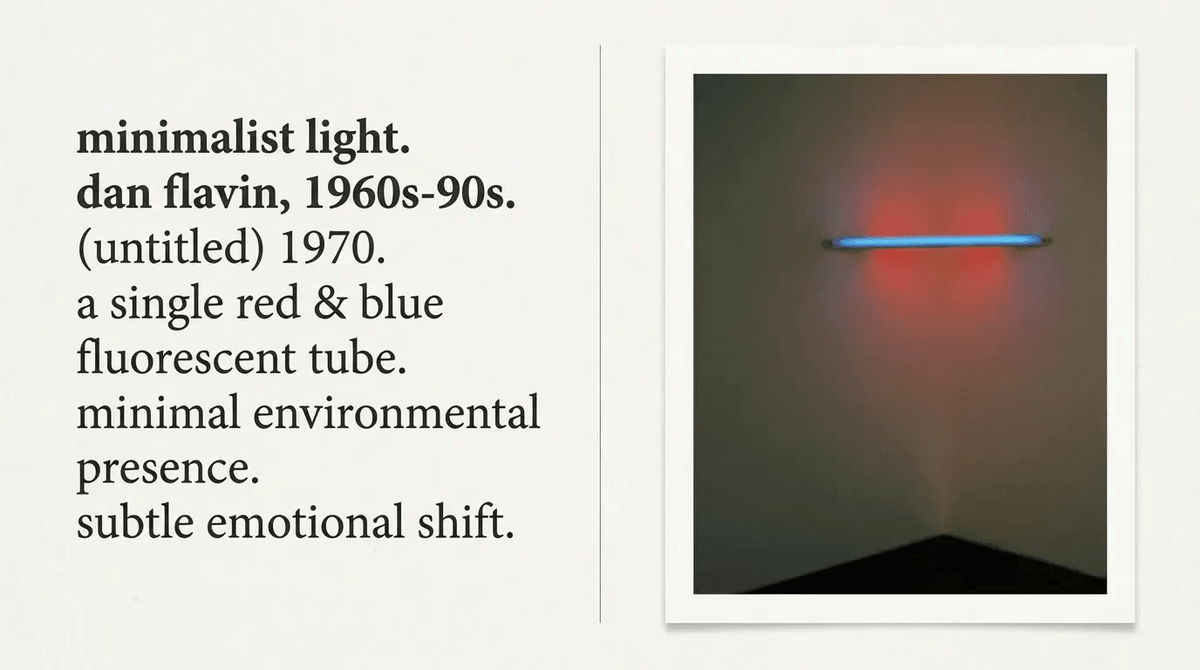
The relationship between art and artificial light is an intimate one, spanning millennia. In the Paleolithic era, artists in caves worked by the flickering glow of torches or the faint filtering of weak daylight. Modern artists, like Francis Bacon, have explicitly preferred the stark glare of electric light, while others have adopted artificial light itself as their primary artistic medium.
In art theory, light predominantly refers to daylight. However, in practice, artificial light has long been one of the artist’s most fundamental tools, crucial for creating a sense of presence and atmosphere. Prior to the advent of widespread gas lighting and electricity in the nineteenth century, artificial illumination consisted of the dim glow of burning animal fat (tallow) or the precious flame of expensive wax candles. It is posited that the flickering, low-light conditions under which Paleolithic cave painters worked—an early chapter in the history of artificial light—imprinted a sense of magical illusion onto the animal forms depicted on the cave walls, suggesting an ancient, primal connection between light, art, and perception.
Before the widespread availability of modern illumination, artists, like most people, typically worked by daylight, though formal instruction could sometimes extend into the evening. An engraving by Enea Vico depicting Baccio Bandinelli’s academy in Rome in the 1530s shows students gathered around a table copying classical sculptures by candlelight. This scene underscores the necessity of artificial light, not merely because artists were manual laborers, but because they were often scholars, poets, and philosophers who metaphorically "burned the midnight oil." The ability to work by expensive candlelight was indeed a status symbol. When Francisco de Goya included a self-portrait working by candlelight in his portrait of his patron, Don Luis de Borbón, he was showcasing not just his artistic dedication but also his elevated social standing.
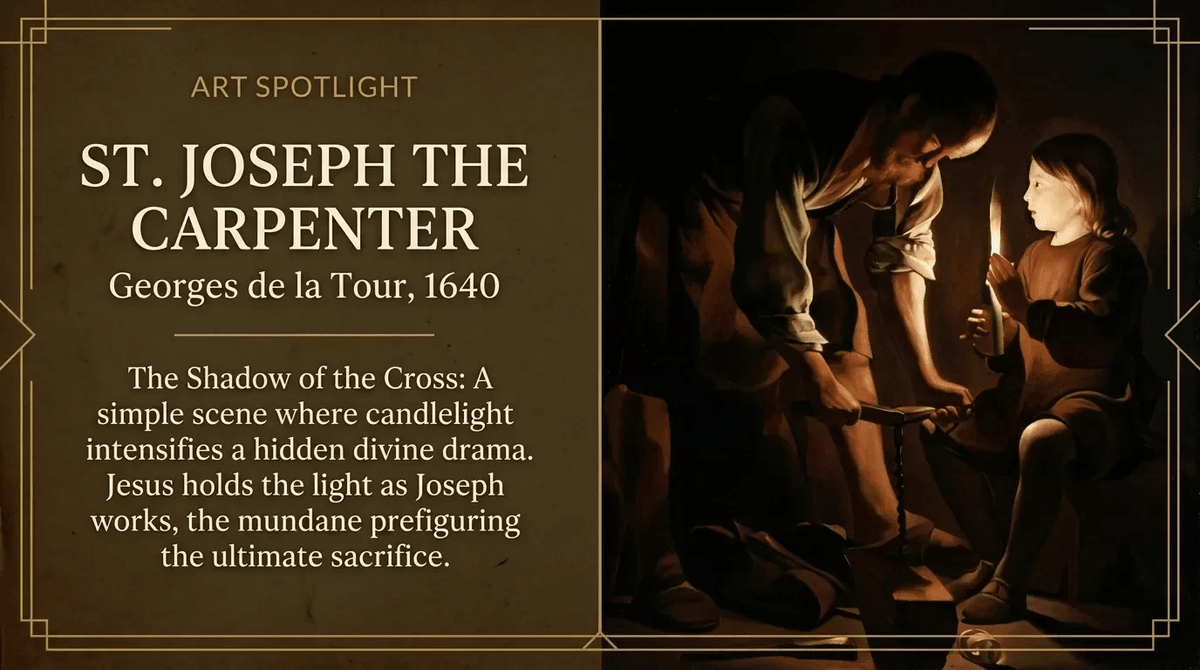
As a subject in painting, candlelight was put to dramatic use. Symbolizing the transience of life, the candle became a staple motif in still-life paintings (vanitas). From the late sixteenth century, the fashion for chiaroscuro illuminated countless night scenes. Luca Cambiaso’s Holy Family with Saint John the Baptist (1578), for instance, depicts Mary reading by the focused light of a single candle, subtly anticipating the dramatic lighting techniques of later masters like Caravaggio and Rembrandt. The French painter Georges de La Tour made a specialty of such intimate, candle-lit scenes, infusing them with profound spiritual and psychological depth.
The electric light bulb freed artists from the practical limitations of daylight, enabling unprecedented flexibility in their working hours and environments. While its widespread adoption marked the decline of single-source lighting as a primary artistic challenge in European painting, it simultaneously presented new aesthetic possibilities. Painters from the Renaissance to Impressionism had consistently explored the representation of natural light and shade. However, artists like Vincent van Gogh and Paul Gauguin had already begun to push the boundaries of color, contour, and spatial representation in ways that fundamentally altered the relationship between the artwork and light, often seeking expressive rather than purely mimetic ends. Electric light, with its distinct qualities, offered a novel subject and a powerful new tool for further exploring these perceptual shifts.
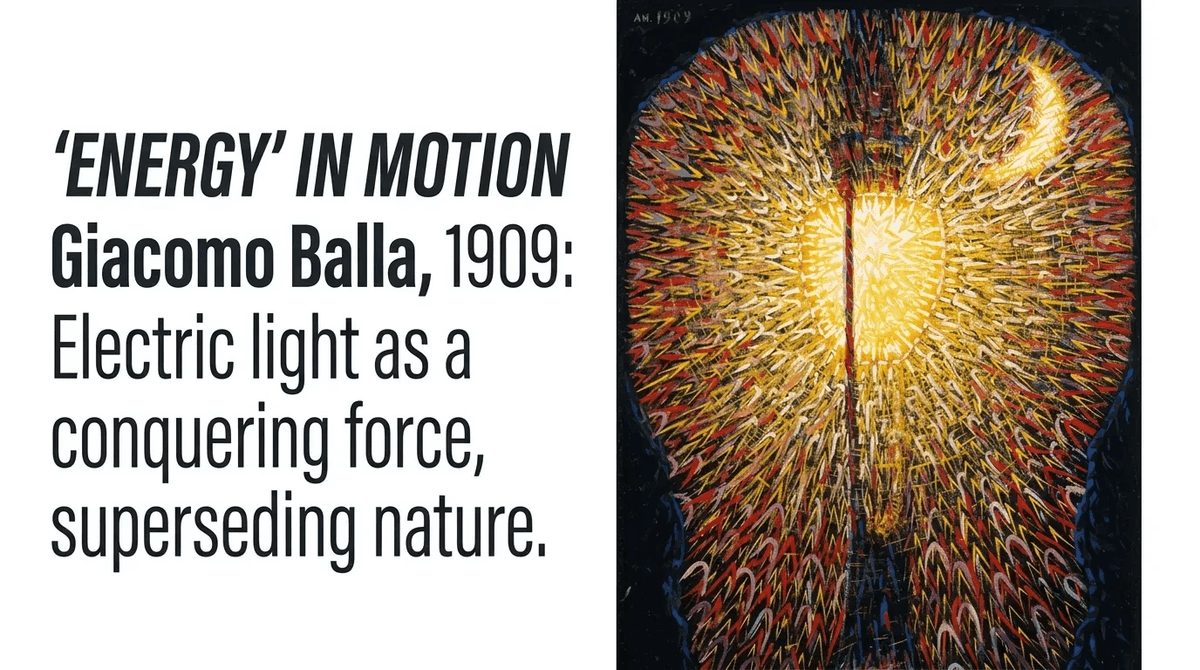
Despite its utilitarian purpose, electricity also imbued art with new poetic and symbolic associations. Giacomo Balla’s Street Light, painted as early as 1909, brilliantly encapsulated the Futurist fascination with modern technology. However, it also famously drew a critical response from Marcel Duchamp, who dismissed it as “the Impressionism of the mechanical world,” highlighting the nascent tension between traditional artistic representation and technologically mediated vision. As an artistic medium in its own right, artificial light was extensively explored and exploited by late twentieth-century artists such as Dan Flavin and James Turrell, whose vast and influential works continue to transform spaces and viewer perception through light itself.