Romantic art, famously described by the German writer Friedrich Schlegel as an art that is "forever becoming" and bound by "no rules," emerged in the 1790s. It introduced a radically creative perspective that championed freedom over authority and intuition over reason. Contemporary artistic practice remains deeply infused with the legacies of Romanticism, through which it continues to redefine the nature of art.
The Elusive Spirit of Romanticism
Romanticism is, in essence, an elusive and sprawling umbrella term encompassing a complex network of interrelated ideas. It not only redefined the roles of Western artists, writers, and composers but also fundamentally transformed our understanding of what it means to be human. The etymology of "Romanticism" traces back to medieval "romances"—narrative poems that aligned extraordinary individuals with legend, fantasy, violence, passion, and the arduous quests of solitary young heroes journeying through untamed wilderness. This archetype was mirrored in the self-conceptions of artists who, from the late 18th century, frequently cast themselves as solitary, heroic figures. They championed creative genius as a law unto itself, privileging the imagination as a unique vessel for accessing sublime truths that lay far beyond the grasp of mere reason—a direct counter to the core rationalism of the Enlightenment.
Defiance and Innovation
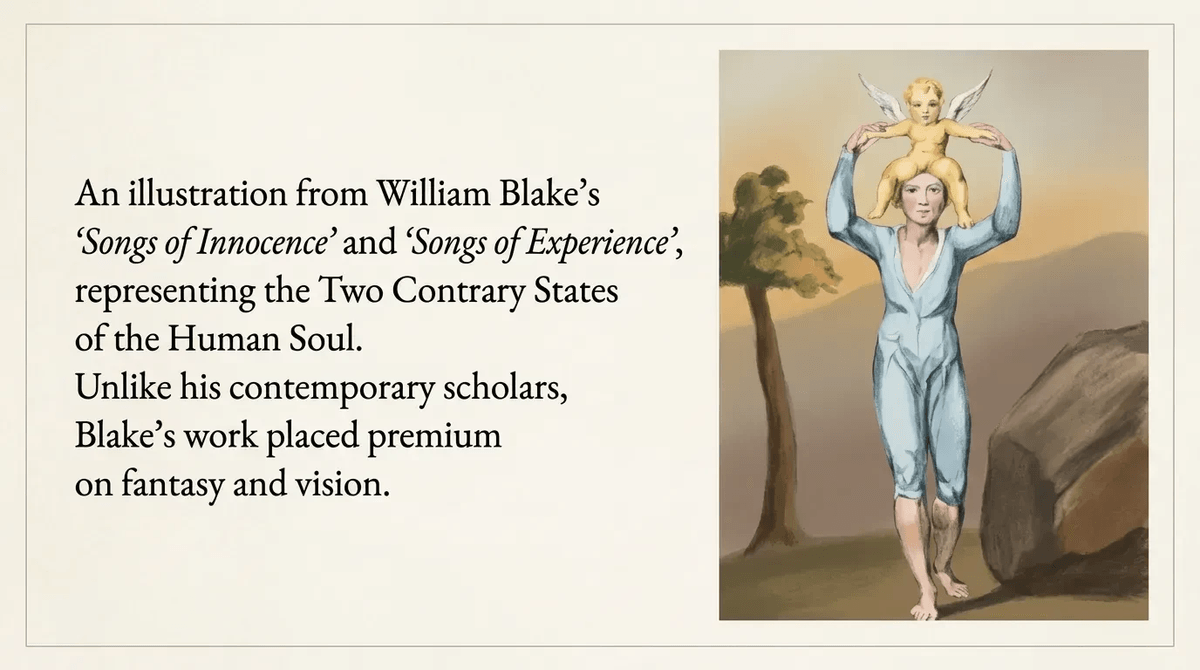
The American War of Independence and the subsequent Napoleonic Wars (1800–1815) ushered in an era of extreme upheaval, a disruption to which academic institutions often struggled to respond adequately. Romantic artists met this bureaucratic orthodoxy with a characteristic mixture of defiance and disdain. William Blake, for instance, famously ridiculed the assertion of Sir Joshua Reynolds, President of the Royal Academy, that "genius can be taught."
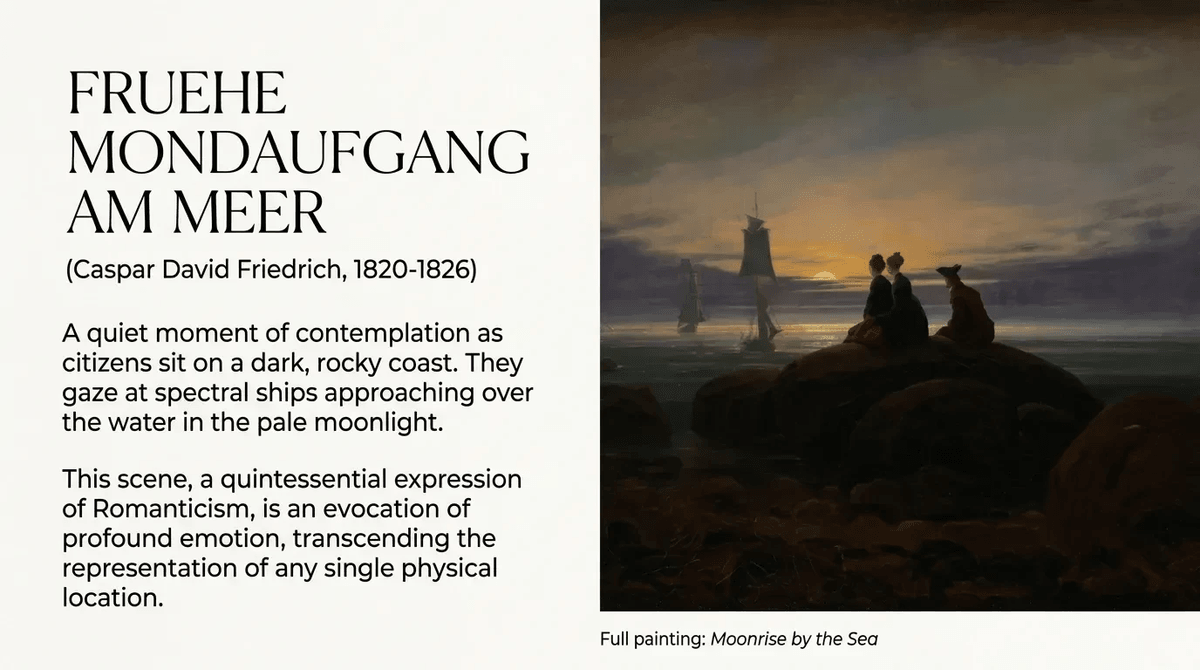
In the early 19th century, artists began to align the term "Romanticism" with their own creative aspirations. Yet, prominent figures of the era, such as French painter Eugène Delacroix or critic Charles Baudelaire, while embodying many Romantic ideals, often resisted such rigid categorization. Delacroix famously asserted: "If by my romanticism they mean the free manifestation of my personal impressions, my aversion to the formulas copied in schools, and my horror of academic rules, but I was so at the age of fifteen." His masterpiece Liberty Leading the People powerfully captures the Romantic motif of repressed energy unleashed.
Legacy in Modern and Contemporary Art
In 1846, Baudelaire described Romanticism not as a style, but as a "feeling" discoverable only through inner observation. He wrote: "To say the word Romanticism is to say modern art—that is, intimacy, spirituality, color, aspiration towards the infinite, expressed by every means available to the arts." This statement stands as a manifesto of subjectivism for many artistic movements that followed. Under Baudelaire’s broad definition, the vibrant palette of Fauvism, the emotional distortion of Expressionism, and the raw energy of gestural abstraction are all heirs to the Romantic spirit.
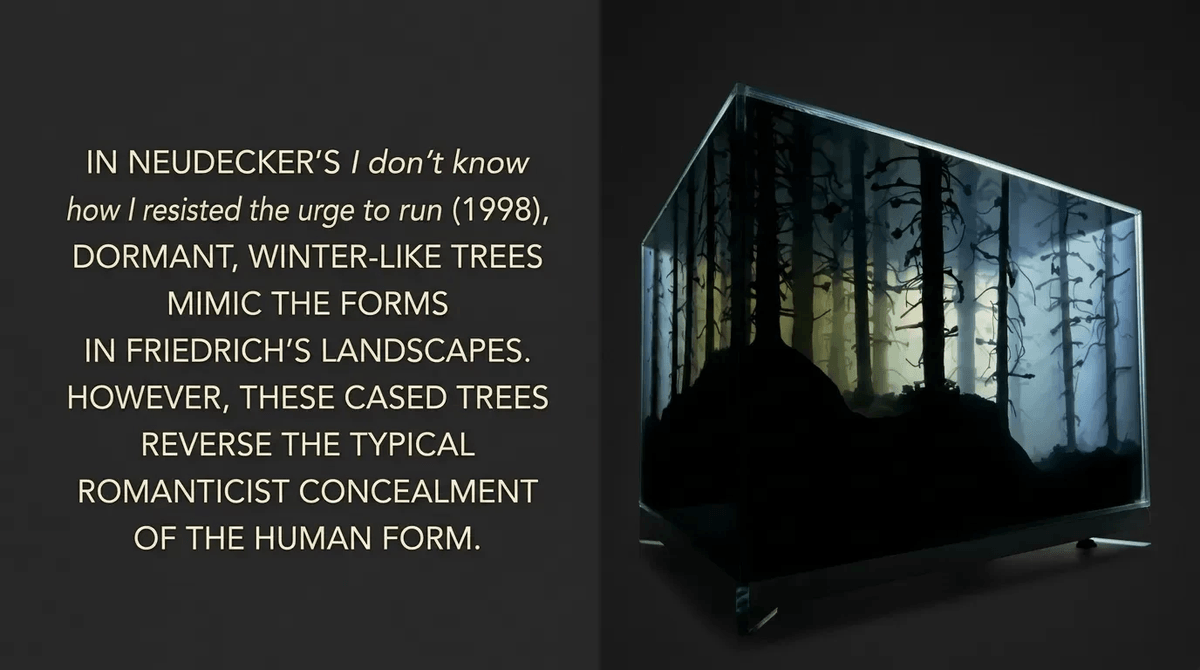
Contemporary artists often re-examine Romanticism through a critical lens. Marielle Neudecker’s vitrine, for instance, contains a three-dimensional model that reconstructs the haunting atmosphere of Caspar David Friedrich’s Romantic landscapes, yet her contemporary approach subtly invites a re-evaluation of these ideals. Nevertheless, the legacy of Romanticism remains deeply entrenched—even in our contemporary canonization of individual creativity and artistic freedom, epitomized by Joseph Beuys’s famous maxim: "Everyone is an artist."