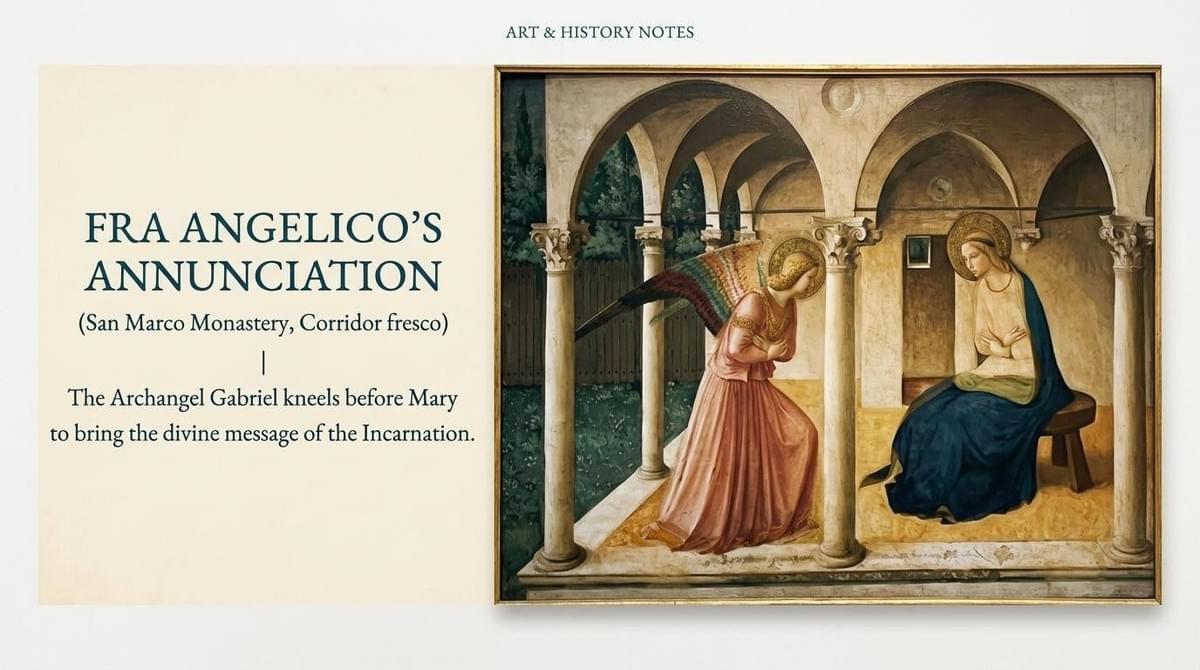
Historically, murals rarely existed as standalone art objects. Painted directly onto walls and ceilings, they worked hand in hand with architecture—dissolving solid barriers, creating illusions of depth, and turning blank rooms into sacred or mythic realms.
Banquets for the Afterlife: Etruscan Tomb Murals
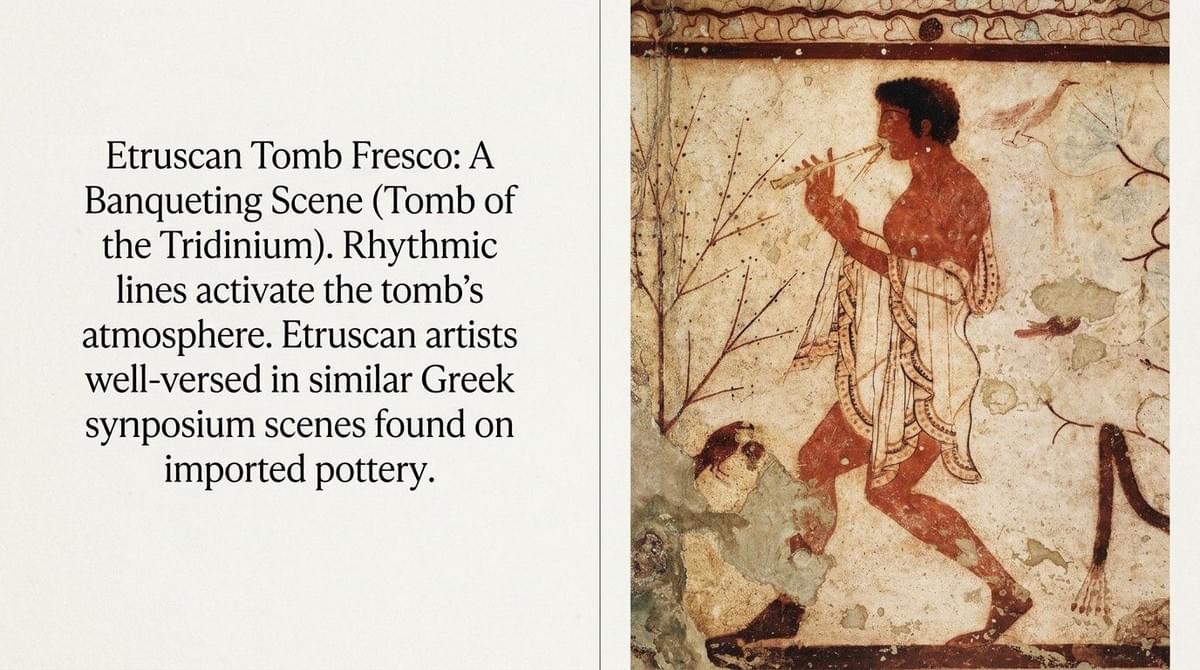
For the ancient Etruscans, murals were a way to transform dark, claustrophobic burial chambers into places of warmth and vitality. Designed to comfort the deceased on their journey into the afterlife, 5th-century BCE tombs at Tarquinia—such as the Tomb of the Leopards and the Tomb of the Triclinium—burst with scenes of music, dancing, and feasting.
Classical historians like Polybius and Diodorus Siculus marveled at the legendary luxury of Etruscan banquets, describing flower-draped halls and silver-laden tables. By painting these joyful gatherings onto underground walls, Etruscan artists turned the house of the dead into an eternal celebration of life.
Wet and Dry Plaster: The Craft of the Mural
Traditional mural painting relies on binding pigments directly to a wall. The most enduring method in European art—buon fresco (true fresco)—involves painting with water-based pigments onto freshly laid, wet lime plaster. As the plaster dries, a chemical reaction locks the pigment permanently into the wall itself.
Closely tied to early Italian Renaissance church architecture, fresco allowed masters like Giotto, Masaccio, and Fra Angelico to create luminous biblical narratives that have retained their clarity fornearly 700 years—though modern air pollution now requires careful conservation. Another ancient method, fresco secco (painting on dry plaster with an organic binder), was widely practiced across ancient China, Egypt, and the Mediterranean.
Much like public sculpture, murals were commissioned by civic and religious patrons to shape how people experienced a space. In Padua’s Scrovegni Chapel, Giotto calibrated the perspective of his frescoes for viewers standing at specific vantage points on the chapel floor. Similarly, in the corridors and monastic cells of Florence’s San Marco Convent, Fra Angelico painted serene devotional frescoes designed to guide friars into quiet spiritual contemplation.
Contemporary Murals and Conceptual Space
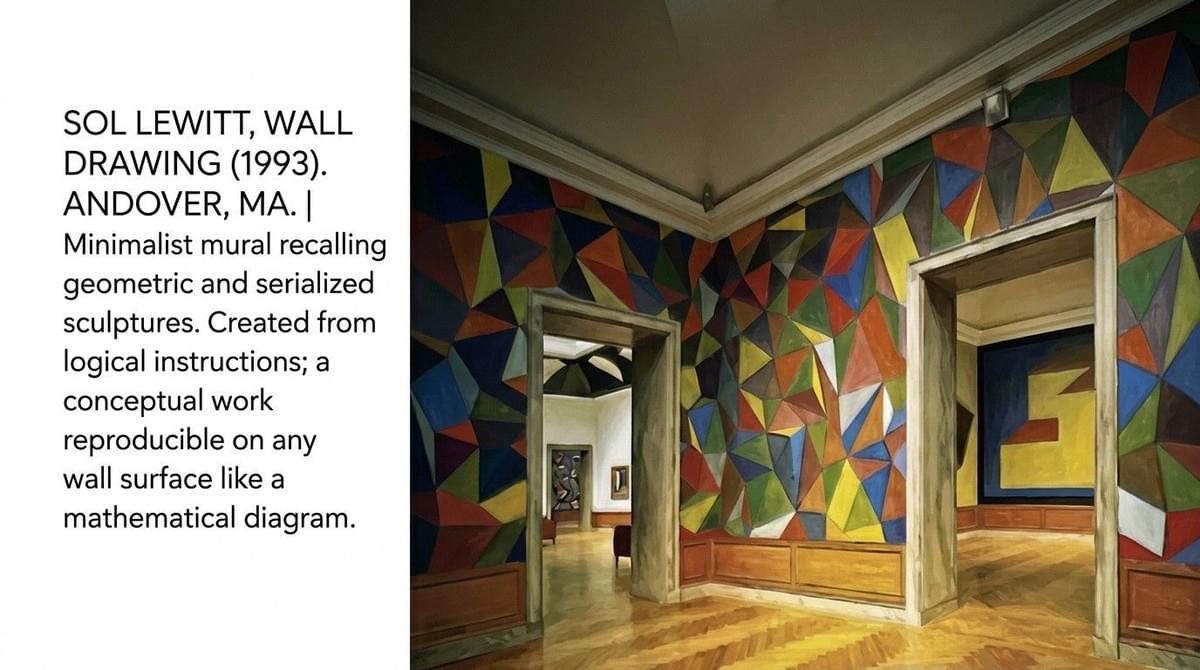
Since the late 20th century, contemporary artists have radically expanded what a mural can be. Rather than painting illusionistic windows onto a wall, conceptual artists like Sol LeWitt used geometric wall drawings to wrap entire rooms—challenging conventional framing and transforming the architecture itself into an immersive visual experience.