Printmaking is the art of reproducing images by transferring an impression from one surface to another. Throughout history, it has transcended its origins as a mere reproductive technique to become a powerful artistic medium, offering unique aesthetic possibilities and a democratic reach that reshaped the dissemination of visual culture.
Early Methods and Global Spread
A print is created by pressing an image from a prepared matrix (such as a woodblock, metal plate, or stone) onto another surface, usually paper, resulting in a reversed impression. While some techniques, like monotypes, yield only a single unique print, most allow for the creation of multiple identical (or near-identical) copies. The specific process (e.g., woodcut, engraving, etching, lithography) determines the quantity and quality of reproductions.
The development of printmaking in China and Japan was deeply intertwined with religious propagation and narrative art, enabling images and designs to be printed on textiles, ornaments, and paper. Woodblock printing, in particular, evolved into a sophisticated art form in its own right, making visual content accessible far beyond the elite.
From Renaissance Dissemination to Baroque Expression
In 15th-century Europe, the advent of mechanical printing radically transformed the cultural and social landscape. Printmaking, alongside the movable-type press, became a crucial medium for disseminating knowledge, religious texts, and visual narratives, democratizing access to information previously confined to costly handwritten manuscripts.
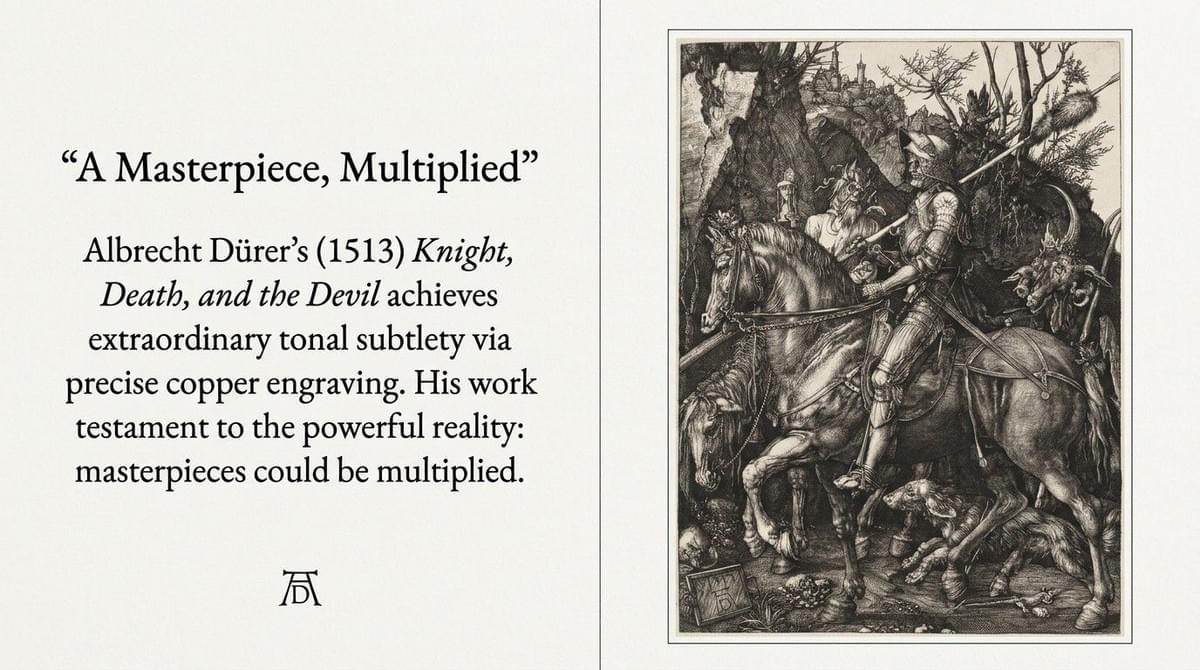
By the early 16th century, artists like Albrecht Dürer (1471–1528) elevated printmaking to an unprecedented level of artistic expression. His monumental woodcut series such as Apocalypse (1498), and his masterful copper engravings like Knight, Death, and the Devil (1513), functioned as powerful visual narratives. These works explored complex themes from human triumph and fear to the forces of good and evil, making profound art accessible to a wide public.
Later, in the Baroque era, artists like Rembrandt van Rijn (1606–1669) pushed the expressive boundaries of etching and drypoint, using printmaking to capture psychological depth and atmospheric effects with unparalleled sensitivity.
Photomechanical Revolution and Japanese Woodblock Legacy
The late 19th century witnessed a dual revolution in image reproduction. The emergence of photography and photomechanical printmaking (such as photogravure and lithography) opened new avenues for multi-color reproduction, allowing for unprecedented realism and detail that traditional methods struggled to achieve. These industrial processes facilitated the layering of colors, producing richer and more vibrant prints.
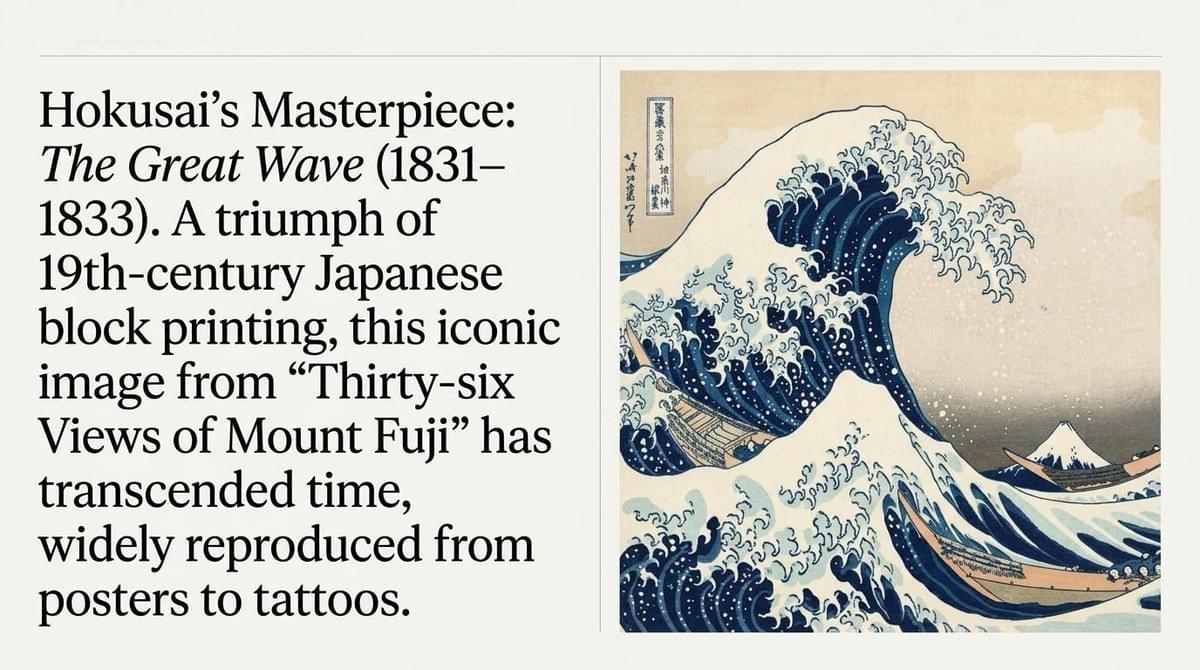
Concurrently, the legacy of sophisticated traditional printmaking thrived elsewhere. Japanese ukiyo-e woodblock prints from artists like Katsushika Hokusai (1760–1849) and Ando Hiroshige (1797–1858) stand as brilliant examples of artistic collaboration between visionary artists and skilled artisans. Their aesthetic vision and practical technique, seamlessly intertwined, created iconic images (like Hokusai's The Great Wave) that transcended geographical and cultural boundaries, achieving global recognition.
Digital Possibilities and Contemporary Expression
In the 20th and 21st centuries, electronic technology and digital printing (including inkjet and laser printing) have propelled printmaking into a new realm. Contemporary artists now utilize an expansive array of digital tools alongside traditional methods to create diverse types of prints. This goes beyond merely reproducing existing artworks; artists are actively developing unique prints that explore new aesthetic territories and resonate with audiences across diverse visual cultures.
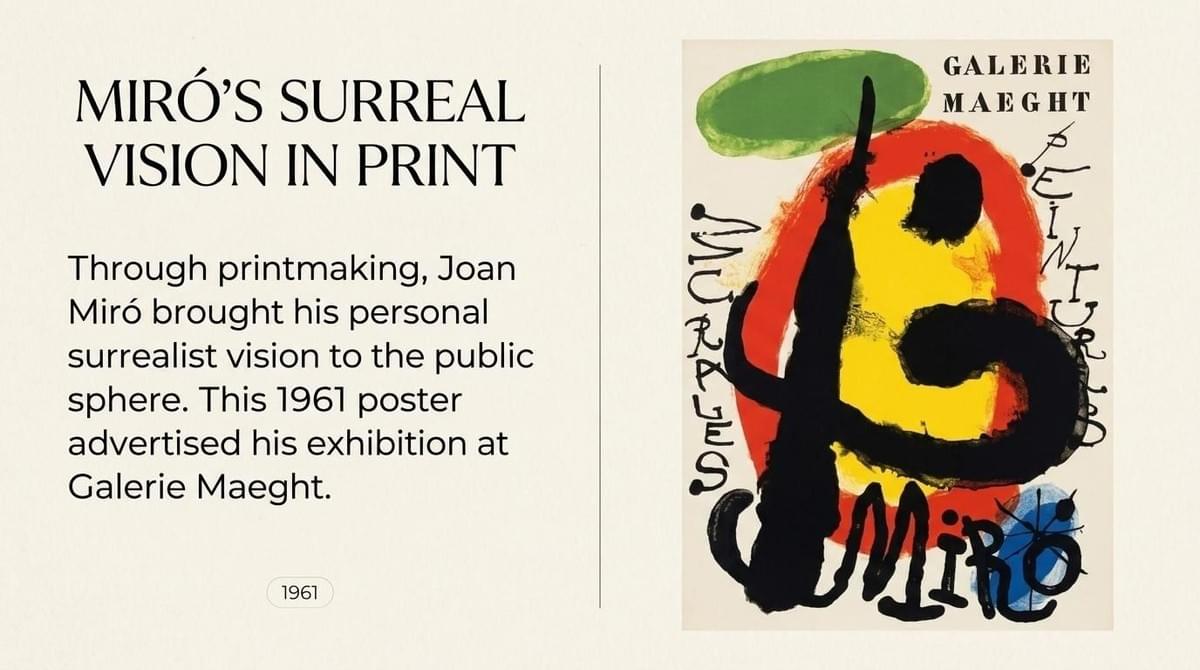
Artists like Joan Miró (1893–1983) and Andy Warhol (1928–1987) embraced printmaking’s reproducibility to disseminate their personal artistic visions widely, blurring the lines between fine art and popular culture. Their prints transformed the way art was consumed and experienced, proving that printmaking continues to offer infinite possibilities for artistic expression and social commentary.