When art deliberately departs from classical harmony to probe the darker recesses of the imagination, it often enters the realm of the grotesque. Born at the crossroads of wonder, comedy, and terror, the grotesque takes shape in fabulous hybrids, grimacing masks, and nightmarish spirits that both unsettle and entrance the viewer.
Underground Rome: Nero’s
Domus Aurea and the Room of the Masks
The word grotesque traces back to late 15th-century Rome, when Renaissance artists lowered themselves by torchlight into the buried ruins of Emperor Nero’s Domus Aurea (Golden House, c. 64–68 CE). Mistaking these subterranean palace rooms for underground caves or grottoes (Italian: grotte), they called the fantastical wall paintings grottesche. Defying rational gravity, these frescoes wove human torsos, winged beasts, and scrolling foliage into weightless architectural candelabrum patterns.
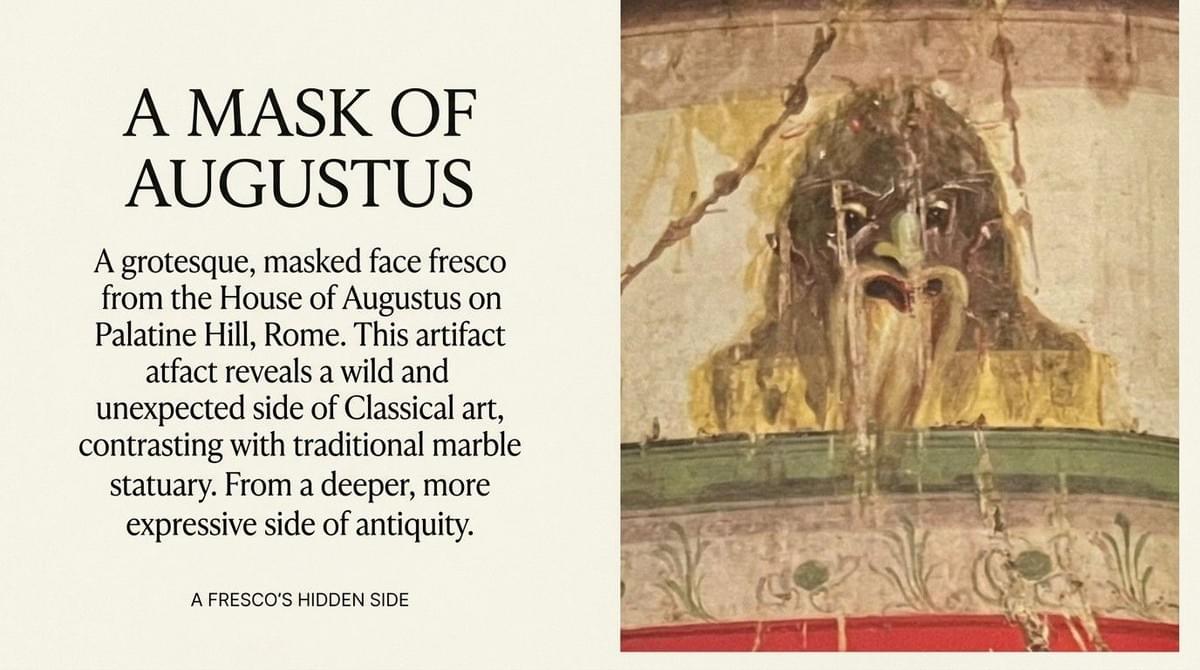
Yet this playful subversion of classical order had even older roots in Roman wall painting—as seen in the Room of the Masks (Stanza delle Maschere, c. 30 BCE) inside the House of Augustus on Rome's Palatine Hill, where wild-eyed theatrical masks stare out from illusionistic stage walls, revealing an unruly Dionysian current beneath the poised calm of imperial marble statuary.
Medieval Shadows, Bosch’s Hybrids, and Baroque Mascarons
Throughout the Middle Ages, while flat sacred icons and altarpieces proclaimed divine order, the grotesque thrived on the margins of Gothic cathedrals. High on roof parapets and tucked beneath choir stalls (misericords), stone gargoyles and chimeras peered out from architectural crevices, giving tangible form to demonic dread and earthy humor alike.
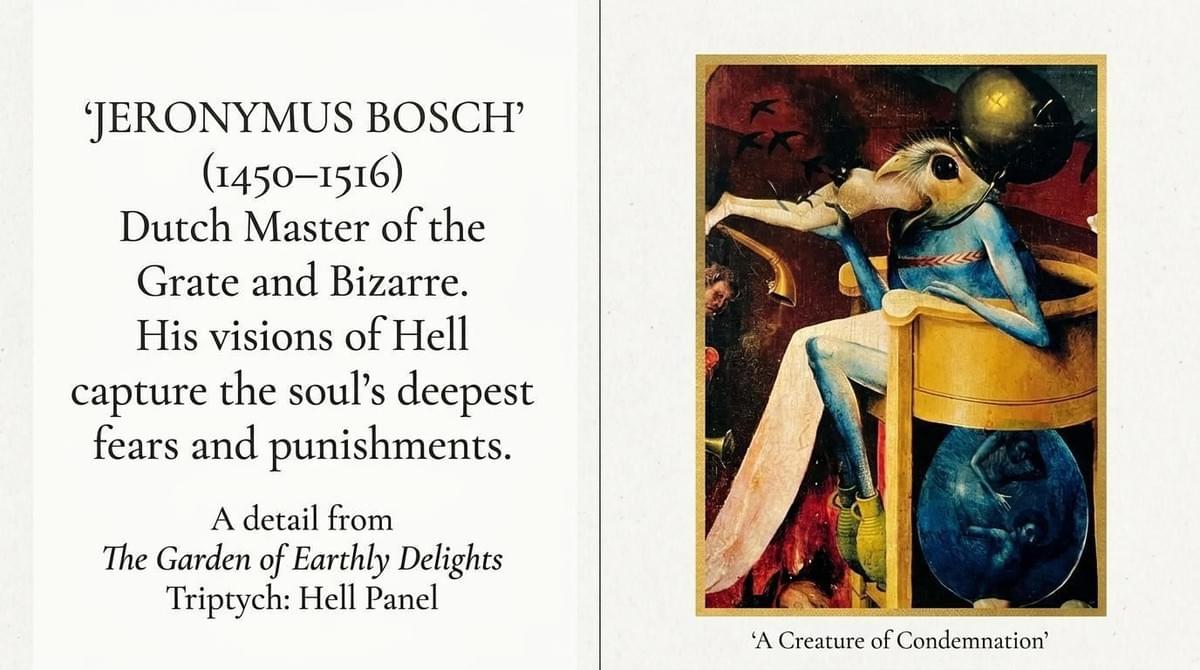
Around 1500, Netherlandish master Hieronymus Bosch brought these marginal monsters to center stage. In his famous triptych The Garden of Earthly Delights (c. 1490–1510), Bosch traces humanity’s trajectory from the innocence of Eden through the intoxicating pleasures of the flesh to the surreal torments of Hell. Classical art theory—famously illustrated by the ancient Greek painter Zeuxis—taught artists to combine the finest features of several human models into a single figure of ideal harmony. In works like The Garden of Earthly Delights and St. John on Patmos (c. 1489), Bosch inverted that classical formula: fusing human limbs with birds, fish, insects, and everyday objects to create unsettling hybrids that mirror the fractures of the human psyche. In the Baroque era that followed, sculptors continued to play off classical beauty against the grotesque, carving exaggerated grimacing masks (mascarons) onto fountains, keystones, and palace facades.
From Freud’s Desk to Modern Pop Culture
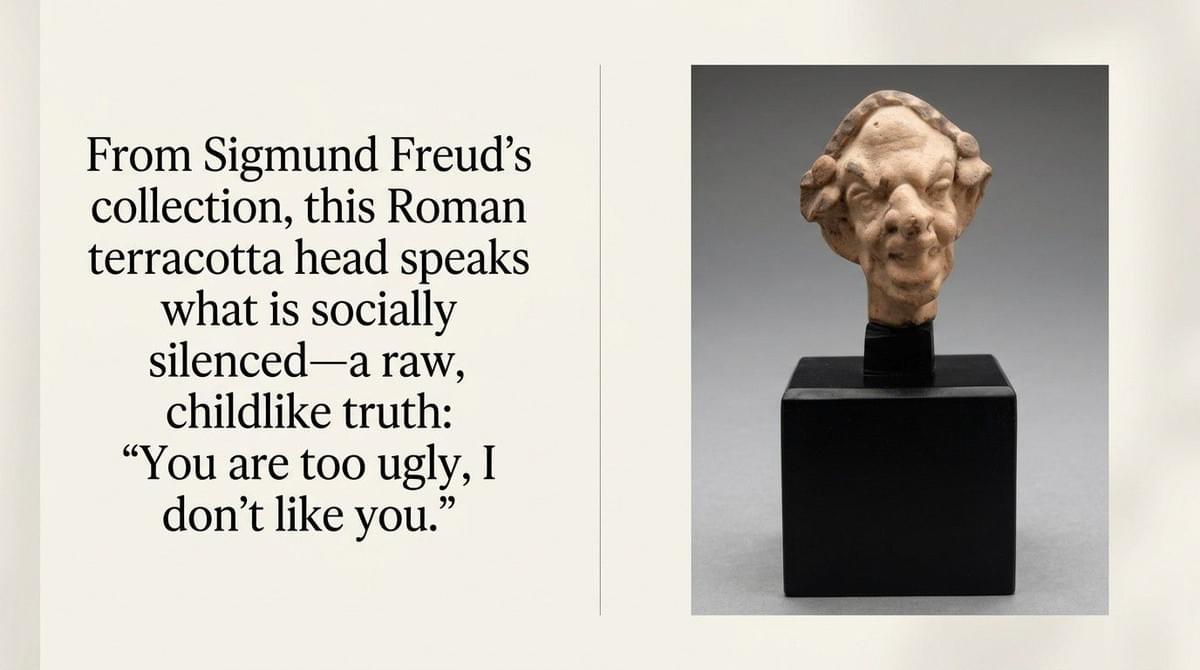
Why does the grotesque hold such enduring power? By fusing categories that rational order keeps apart—human and animal, the comic and the chilling—the grotesque exposes the fragility of our neat classifications and gives voice to impulses polite society represses. It is no accident that Sigmund Freud, who explored this psychological shiver in his landmark 1919 essay on The Uncanny (Das Unheimliche), kept an ancient Roman terracotta grotesque head among his prized antiquities: its distorted features speak with the raw, unvarnished candor of the unconscious.
In the 20th and 21st centuries, the grotesque moved from cathedral ledges and psychoanalytic studies into the heart of global visual culture. While continuing to subvert rational ideals in Dada and Surrealist art, it has also become a powerhouse of modern entertainment—shaping the creatures of fantasy cinema, animation, and contemporary video games.