Canvas, a versatile and enduring painting support, has played an indispensable role in Western art. Its unique qualities of lightness, flexibility, and stability, combined with its ability to hold paint with rich texture and depth, have secured its special place, profoundly shaping artistic practice from the Renaissance to contemporary abstraction.
A Material History: From Ancient Linen to Renaissance Dominance
While textiles have been used as painting supports since antiquity—Pliny the Elder recorded a colossal portrait of Nero painted on linen—it was in the early modern period that canvas truly rose to prominence. In 15th-century Italy, particularly Venice, artists increasingly favored canvas over traditional wooden panels. This shift was driven by canvas's practicality: it was lighter, more affordable, and less prone to cracking than wood, making large-scale works more feasible and portable. Its texture also allowed for richer impasto and luminous glazes, perfectly suited to the burgeoning oil painting techniques.
In Northern Europe, where fresco painting was less suited to the cooler, damp climate than in Italy, artists adapted canvas for wall hangings and altar decorations. The ease of rolling up large canvases for transport and storage further solidified its status as the preferred medium for commissions, especially for itinerant artists and patrons.
The Canvas as Subject: Velázquez’s Las Meninas
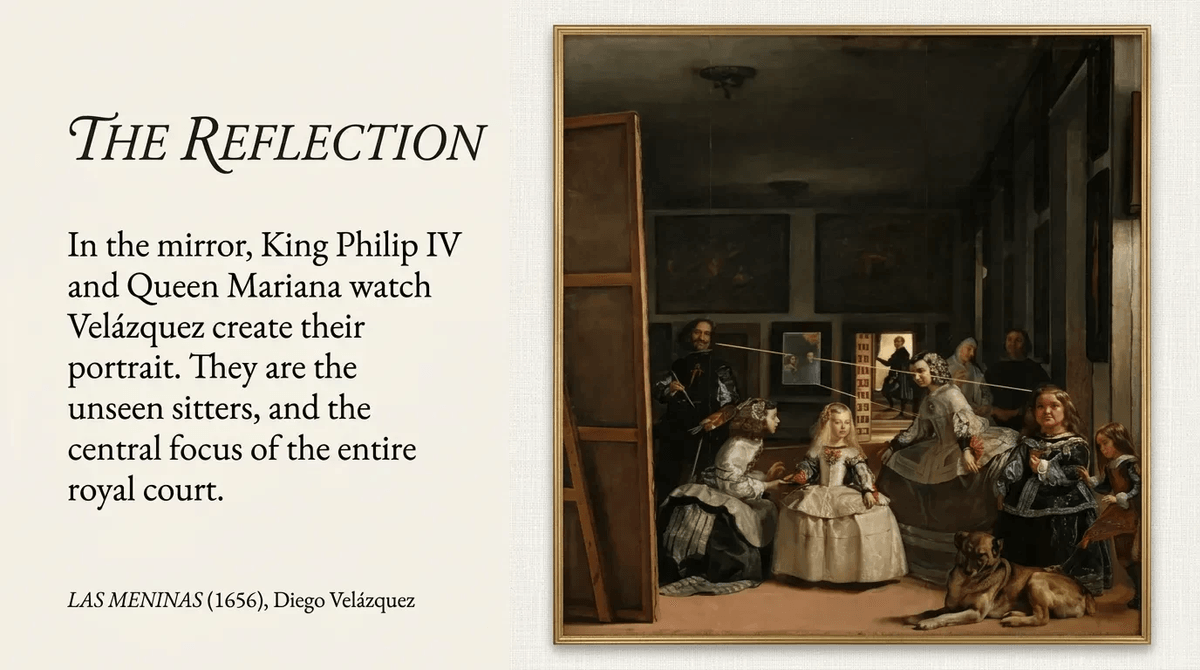
The canvas itself has often become a subject within art, famously in Diego Velázquez’s masterpiece, Las Meninas (1656). The monumental canvas depicted in the painting, turned away from the viewer, sparks profound questions about representation, perspective, and the act of painting. Many interpretations suggest this hidden canvas represents the portrait Velázquez is creating of King Philip IV and Queen Mariana, whose reflections appear in the mirror on the far wall. This complex interplay of gazes and reflections pulls the viewer into a spatial and conceptual dialogue, making the painting a meditation on its own making and the nature of artistic illusion.
Modernism’s Deconstruction and Contemporary Exploration
In the 20th century, modern art theorists, notably Clement Greenberg, emphasized the inherent flatness of the canvas, pushing artists to explore painting’s two-dimensional nature. This led to movements that challenged the illusionistic traditions, focusing instead on the canvas as a physical object.
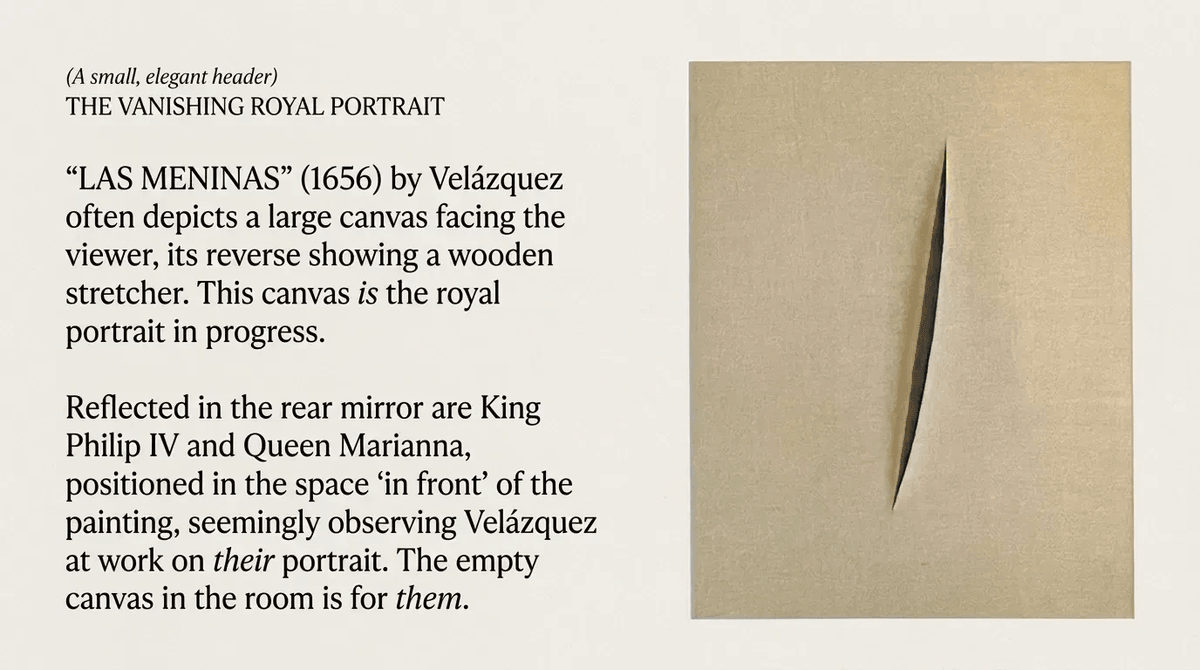
Artists like Lucio Fontana radicalized this concept by directly intervening with the canvas surface. His “Spatial Concepts” series, exemplified by his deliberately slashed canvases, transcends the canvas as a mere support or window to an illusion. By cutting through the fabric, Fontana introduces actual space into the artwork, transforming the two-dimensional surface into a three-dimensional object and inviting the viewer to contemplate the space beyond.
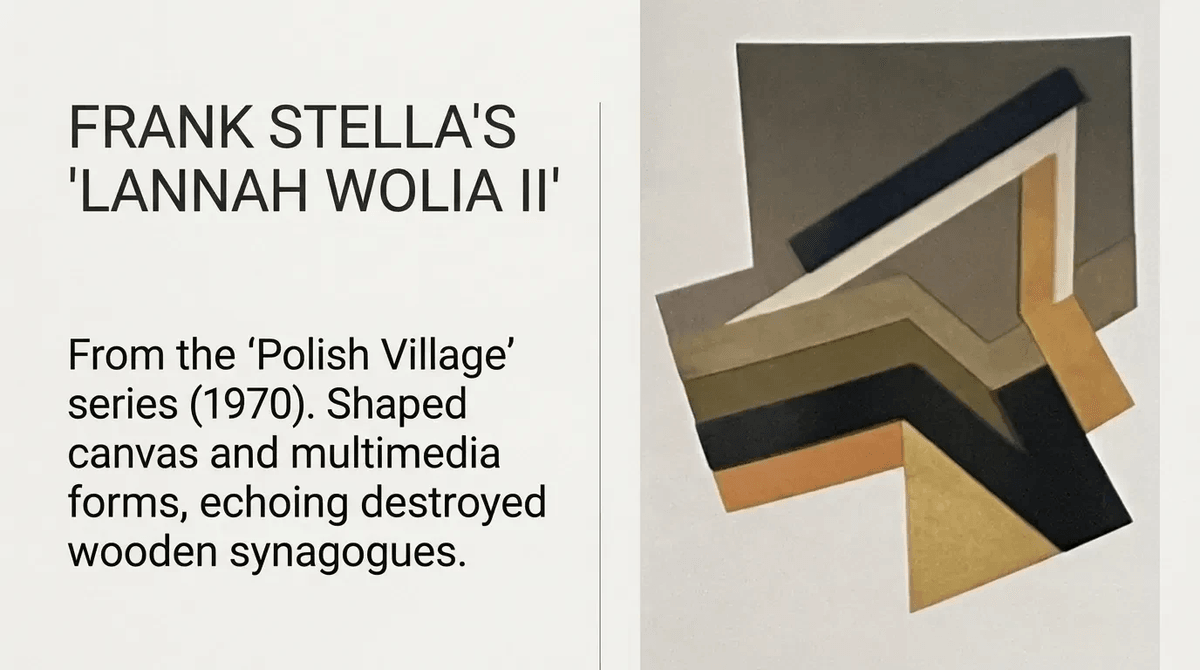
Contemporary artists continue to push the boundaries of canvas. Frank Stella’s “Polish Village” series (1970s) uses shaped canvases and multimedia forms, breaking free from the traditional rectangular format to create three-dimensional structures that merge painting and sculpture. Through these diverse explorations, the canvas remains not just a passive support but an active participant in shaping artistic vision, continually evolving in its role and meaning.